
The Ministry said that during the last five years, 4,323 cases of drone sightings were reported.
However, 967 cases of drone incursions occurred, which were intercepted or neutralised, resulting in the seizure of 710 ammunitions, 75 arms and 641 kg of drugs.
Though the State-wise data was not provided, drone sightings are a regular phenomenon along the Punjab and Jammu and Kashmir borders with Pakistan.
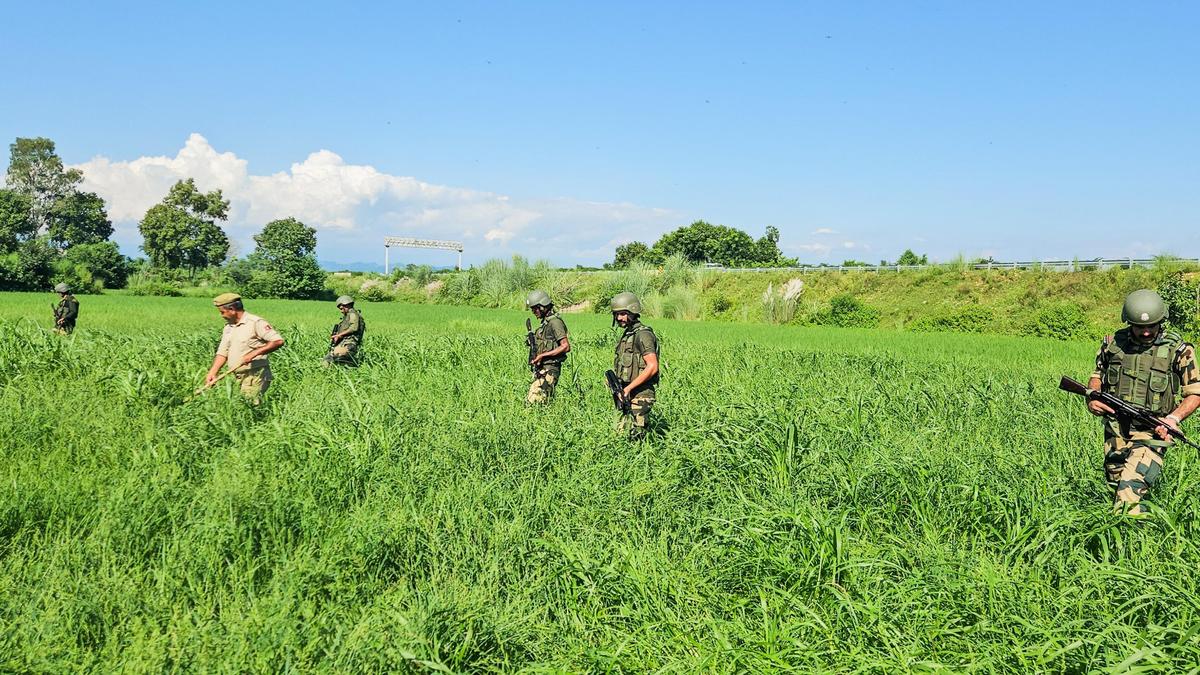
The committee was apprised that unmapped, non-demarcated, forested and riverine stretches are secured through continuous surveillance and physical domination.
Measures include deployment at Border Out Posts (BOPs), regular patrolling, temporary operating bases, use of night vision devices, Hand Held Thermal Imagers, Long Range Reconnaissance and Observation Systems, satellite imagery, watch towers, UAVs and smart fencing pilots, the report tabled in the Parliament on March 17, 2026 said.
The committee sought details regarding measures undertaken to strengthen civil defence and resilient infrastructure in the border districts of Jammu and Kashmir.
“The Ministry informed that a total of 9,663 bunkers have been constructed in border areas of J&K at a cost of ₹357.40 crores to provide protection to civilians during cross-border shelling,” the report added.
It said compensation is being provided for damage to houses and property caused by cross-border firing and shelling as per existing norms.
After Operation Sindoor on May 7, 2025, several incidents of cross-border shelling were reported in the border districts of J&K and Punjab.
The MHA approved additional funds for 2,060 damaged houses in J&K.
The Committee was informed that Border Guarding Forces face complex operational challenges arising from rugged mountains, dense forests, riverine and marshy stretches, unfenced gaps, habitation near the zero line and adverse weather conditions such as fog, heavy rainfall and extreme temperatures.
These factors restrict visibility, mobility and communication, while porous landscapes facilitate infiltration, smuggling and other illegal activities.
Limited road connectivity, absence of lateral roads, power shortages, restricted construction windows and dependence on air/porter logistics further constrain operations.
Terrain masking and adverse weather conditions also reduce the effectiveness of technological systems, and personnel face health challenges in remote and high-risk environments, the committee was told.
Related Stories

Source: This article was originally published by The Hindu
Read Full Original Article →
Comments (0)
No comments yet. Be the first to comment!
Leave a Comment