
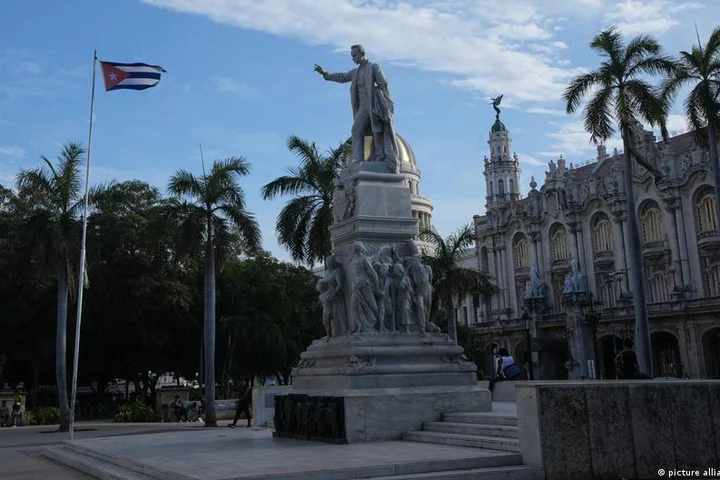
The move, which Cuba has described as a "humanitarian" gesture, comes after the United States allowed a Russian oil tanker to deliver crude to the island.
But tensions between Havana and Washington persist.
The Cuban government has announced that 2,010 prisoners have been pardoned in a "humanitarian and sovereign gesture" during Holy Week and amid diplomatic tensions with the United States .
The Easter pardons, which applied to some young people, people over 60, women and foreigners, were the second such move this year after Havana unexpectedly announced the release of 51 prisoners in mid-March .
The March pardons were reportedly a result of diplomatic efforts by the Vatican , which has been showing signs of playing a mediating role between Havana and Washington.
The US has been ramping up the pressure on the island to agree to economic and political changes.
Cuba, the communist-ruled Caribbean nation off the south coast of Florida, has been mired in an economic crisis for years, which has been exacerbated over the past three months by a US oil embargo .
US President Donald Trump has called for changes to Cuba's system of government and even has mused about "taking" the island — but he did allow a Russian tanker to deliver must-needed crude oil to the fuel-starved country this week.
Whether the temporary lifting of the oil embargo and the pardons were linked was not explicitly clear, but Michael Bustamante, chair of Cuban studies at the University of Miami, told the AFP news agency: "It seems not far-fetched to think that this is a sign that some of the conversation between both governments is advancing.
Perhaps slowly, but advancing.
To where?
Unclear."
He added: "I think we will also have to see who is included in these releases to have a sense of their potential political significance."
What to make of US allowing Russian oil tanker to reach Cuba
To view this video please enable JavaScript, and consider upgrading to a web browser that supports HTML5 video
The Cuban government said that sex offenders and murderers would not be released, but it remained unclear as to whether any political prisoners were among those pardoned.
President Miguel Diaz-Canel said in a statement that the move was based on the nature of the crimes committed, good behavior in prison, health reasons and time served.
It said the decision was "taking place within the context of the religious observances of Holy Week — a customary practice within our criminal justice system and a reflection of the humanitarian legacy of the Revolution."
According to Cuban government figures, more than 11,000 people have now been freed in five prisoner releases since 2011.
The latest comes months after the US deposed ex-Venezuelan President Nicolas Maduro and pressured Caracas to make radical changes, including releasing prisoners detained for political reasons and passing an amnesty law.
US Secretary of State Marco Rubio , a Cuban-American and vociferous critic of Havana's government, has applied similar pressure to Cuba, telling Fox News on Tuesday that the country needs economic and political reforms.
"You cannot fix their economy if you don't change their system of government," he said.
"But they're in a lot of trouble, there's no doubt about it, and we'll have more news on that fairly soon."
US sanctions, silent allies: Where have Cuba's friends gone?
Related Stories
Source: This article was originally published by Deutsche Welle (DW)
Read Full Original Article →
Comments (0)
No comments yet. Be the first to comment!
Leave a Comment