
The Karnataka High Court on Friday granted default bail to four of the 20 accused in a Bengaluru realtor murder case.
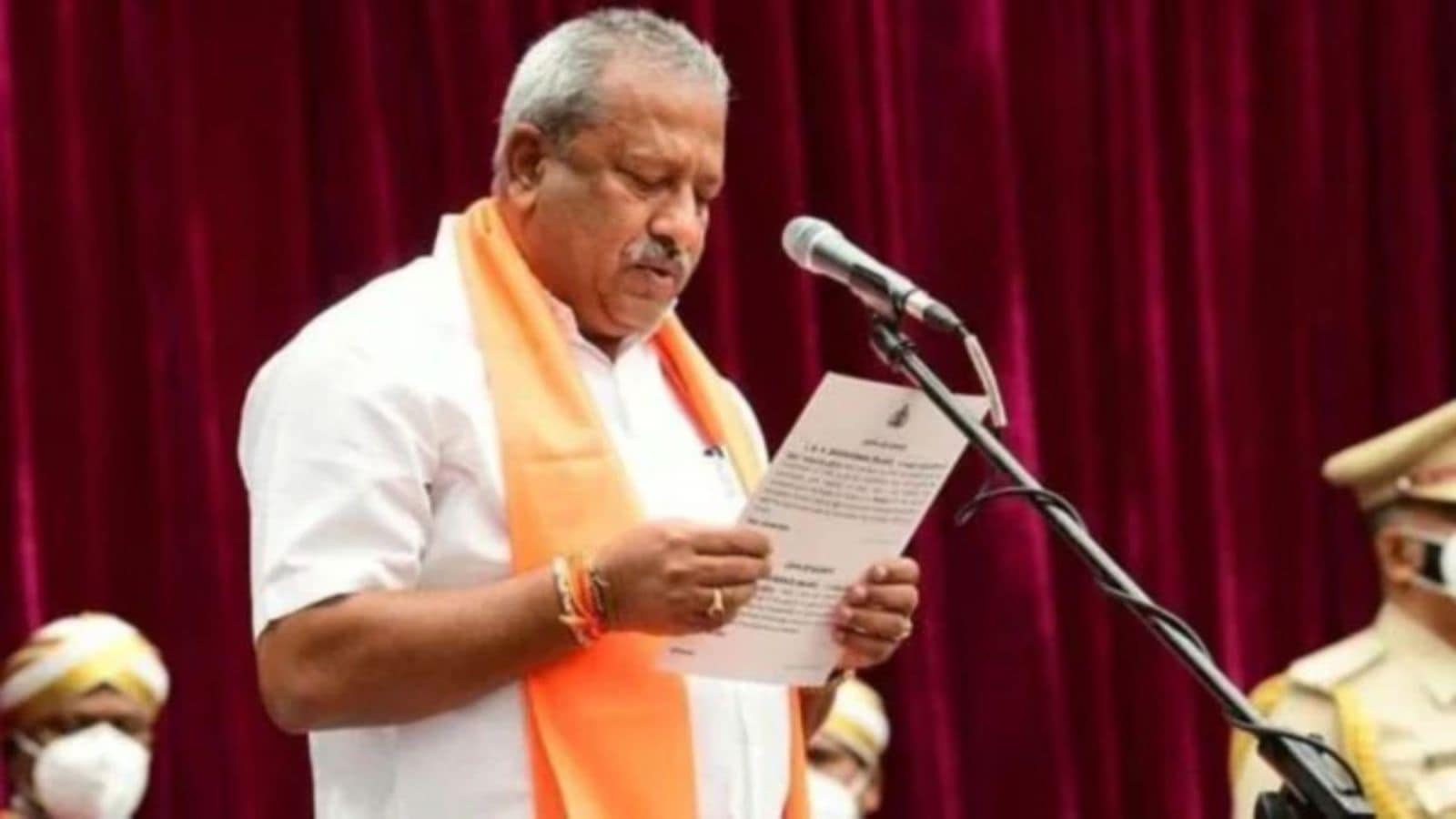
This comes close on the heels of a special court for elected representativesgranting bail to BJP MLA Byrathi Basavarajin the same case.
Jagadish P alias Jaga, 45, a formerBengalurugangster who was nabbed in Bangkok on an Interpol lookout notice, and his associates Kiran K, Vimal Raj, and Madan R were granted default bail on the grounds that the police chargesheet was not filed within the mandatory 90 days.
Realtor V G Shivaprakash alias Bikla Shiva was hacked to death outside his home in east Bengaluru on the evening of July 15, 2025, by a gang of assailants over a real estate dispute.
The gang members were allegedly associated with Basavaraj and involved in the real estate business in east Bengaluru.
The high court bail order came a day after a special court granted bail to Basavaraj, the BJP MLA from K R Pura in Bengaluru, who is also an accused in the murder case.
Earlier, the Karnataka High Court had deferred its orders on the bail to await the outcome of a plea filed by the CID unit of the Karnataka Police in the Supreme Court against a December 19, 2025, decision of the same bench to quash charges in the case under the stringent Karnataka Control of Organised Crime Act (KCOCA), 2000.
The stringent KCOCA law had been used to keep the accused in prison beyond 90 days before filing a chargesheet, as the law grants a 180-day period to file chargesheets.
In December 2025, after the invocation of KCOCA was struck down, the accused approached the high court for default bail on the grounds that they were entitled to it with the removal of KCOCA.
“It is however, made clear that this order granting default bail on account of the quashing of KCOCA approval in W.P No.
31304/2025 dated 19.12.2025, shall remain subject to any orders passed in the proceedings pending before the Hon’ble Supreme Court of India in SLP (Crl.) No.
57/2026 against the said quashing order,” the Karnataka High Court said in its bail order on Friday.
“In the event the Hon’ble Supreme Court allows the petition, then the petitioners shall abide by the legal consequences flowing from such order passed,” the high court added.
The Supreme Court had not granted a stay on the high court order but instead ruled on January 20 that “the order of the high court shall not be relied upon as a binding precedent” while adjourning the CID’s plea for a full hearing on April 15.
However, the CID—which arrested Basavaraj on February 12 after the Supreme Court rejected his anticipatory bail plea—moved the Supreme Court again on February 23 seeking an early hearing of the plea.
A single-judge bench of the Karnataka High Court had set aside the invocation of KCOCA in the Bikla Shiva murder case, saying it was invoked in the absence of evidence of continuing criminal activity by an organised gang—in the form of multiple chargesheets against at least one member of the gang for offences punishable with three years or more of imprisonment.
The Karnataka High Court quashed an August 12, 2025, order of the state police to invoke KCOCA on the grounds that no person who is accused of direct involvement in the murder case has more than one charge sheet for a crime punishable with a prison term of three years or more.
The high court order scrapping the invocation of KCOCA against Basavaraj also extended to the KCOCA charges against 19 others arrested for being part of the gang that carried out Shiva’s murder.
Under KCOCA, investigating agencies have a 180-day time limit to file charge sheets against the arrested accused, and there is no provision for anticipatory bail.
It also allows 30 days of police custody for the accused during the investigation period instead of the regular 15-day custody.
The December 19, 2025, Karnataka High Court ruling is seen as having an impact on all cases involving organised crimes in the country if the KCOCA application is restricted to gangs with previous crimes punishable only by a strictly defined period of three years in prison.
Stay updated with the latest -Click here to follow us on Instagram
Related Stories


Source: This article was originally published by The Indian Express
Read Full Original Article →
Comments (0)
No comments yet. Be the first to comment!
Leave a Comment