
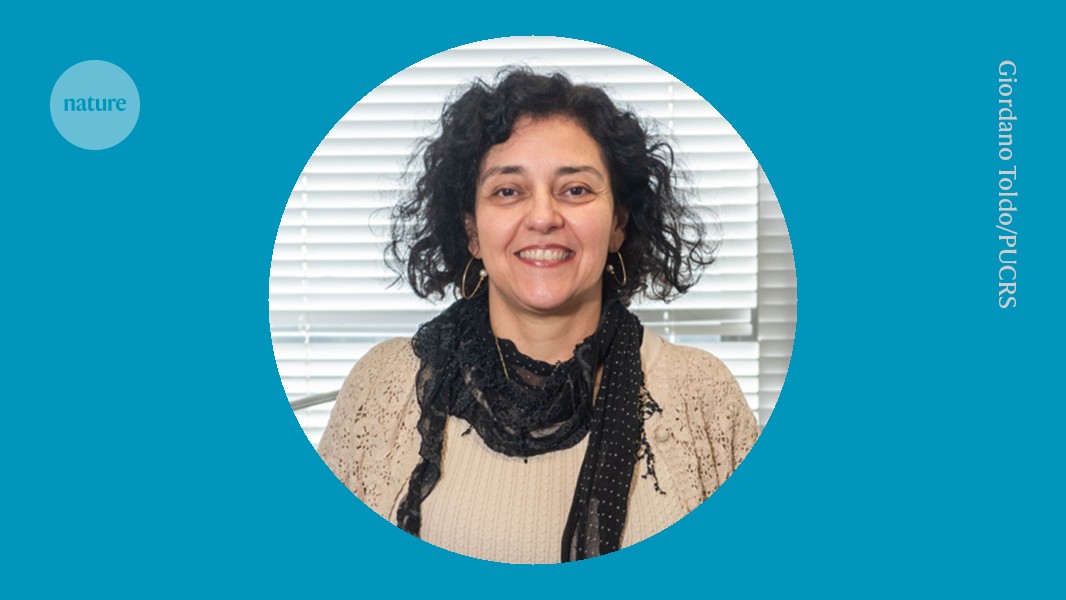
Soraia Raupp Musse is a professor at the School of Technology, Pontifical Catholic University of Rio Grande do Sul, Porto Alegre, Brazil, and coordinator of INCT-SiM-AI.
Search author on: PubMed Google Scholar
A map of past floods and risky spots can help residents to plan future potential evacuations.
Credit: Arthur Musskopf da Luz
How a vast digital twin of the Yangtze River could prevent flooding in China
A tool is needed for community-level sharing of disaster information — information that everyone can navigate and rely on.
Residents need to know what their risks are, how to spot early signs of a natural disaster and where to find reliable, local guidance on what to do.
To this end, Brazil is developing an artificial-intelligence agent that will provide climate-disaster information and advice for its residents.
This is one of the first large-scale national initiatives to integrate AI, simulations and citizen participation into a tool for disaster preparedness aimed at individuals.
It is shepherded by the National Institute of Science and Technology in Simulation and Monitoring for Individual Assistance in Extreme Climate Events (INCT-SIM-AI).
For each household, the tool will store data, including an address and any particular needs relating to potential evacuations.
These will be combined with public data through each state’s emergency-management agency to provide residents with accurate and up-to-date information.
Developing such a tool is a human challenge as much as a technical one.
No community is homogeneous: people differ in terms of their social, economic and educational conditions, and in how they trust technology and interpret warnings.
Scientists must listen to local people and communicate clearly with them.
Climate change and geopolitics threaten water supplies — but disaster is not inevitable
And so, in July 2025, the government launched an interdisciplinary institute to bring together researchers, throughout Brazil and from abroad, in computer science, AI, psychology and social sciences, with 11 million reais (US$2 million) of investment over five years.
A preliminary tool (see go.nature.com/3nhghco ) provides information about the 2024 flood in Porto Alegre.
A pilot is expected later this year.
It will work as a ‘Google Maps from the past’, which residents can use to look at water levels for a specific address and date.
Providing access to data on past disasters is the first step towards informing people about how rain and floods can affect the places where they work and live.
Enjoying our latest content?
Log in or create an account to continue
doi: https://doi.org/10.1038/d41586-026-00835-y
Hurricane risk in a changing climate — the role of uncertainty
AI to the rescue: how to enhance disaster early warnings with tech tools
Spain’s flash floods reveal a desperate need for improved mitigation efforts
How to achieve safe water access for all: work with local communities
Knock knock, no one’s there.
Study finds scientists’ jokes mostly fall flat
AI can ‘same-ify’ human expression — can some brains resist its pull?
The first ‘AI societies’ are taking shape: how human-like are they?
A strong constraint on radiative forcing of well-mixed greenhouse gases
Contrasting thermophilization among forests, grasslands and alpine summits
Marine conservation cities: a model for ocean governance
Paul R.
Ehrlich obituary: pioneering ecologist who caused controversy by predicting a ‘population bomb’
Rethinking AI’s role in survey research: from threat to collaboration
Join HZAU's global faculty team to advance research with competitive benefits.
Huazhong Agricultural University (HZAU)
The Stomatology Hospital, School of Stomatology, Zhejiang University School of Medicine(ZJUSS)
IRB Barcelona invites applications for Group Leader positions in Chemical Biology (one) and Structural Biology (one).
Barcelona (Provincia), Cataluña (ES)
Fundació Institut de Recerca Biomèdica (IRB Barcelona)
The Paris Brain Institute invites expressions of interest from internationally recognized senior and mid-career researchers.
Full Professorship (W3) for ‚Clinical Epidemiology of Early Cancer Detection’ (f/m/d) We are looking for a highly distinguished physician scientist...
Heidelberg, Baden-Württemberg (DE)
Medizinische Fakultät Mannheim der Universität Heidelberg
Related Stories



Source: This article was originally published by Nature News
Read Full Original Article →
Comments (0)
No comments yet. Be the first to comment!
Leave a Comment