
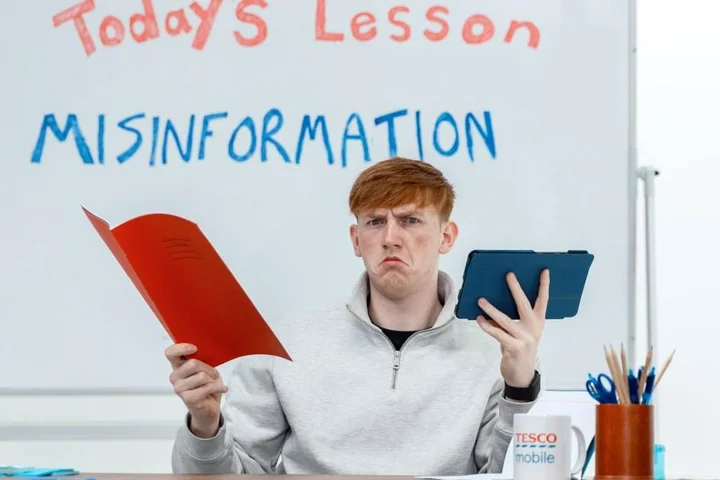
I’m A Celebrity winner Angry Ginge has revealed he was the victim of a deepfake video that spread on social media while he was in the jungle.
The 24-year-old YouTuber said AI-generated clips of him with a girlfriend fooled fans, who inundated him with messages about his non-existent relationship.
He has now teamed up with Tesco Mobile and Internet Matters to educate children on the potential dangers of fake videos and manipulated content.
Angry Ginge, whose real name is Morgan Burtwistle, said: ‘I’ve had so many fans send me AI-generated clips of myself that they genuinely thought were real.
‘It’s scary to see how convincing technology can be and how you can get caught out if you don’t really question some of the key signs.
Get personalised updates on I'm A Celeb
Wake up to find news on your TV shows in your inbox every morning with Metro’s TV Newsletter.
Sign up to our newsletter and then select your show in the link we’ll send you so we can get TV news tailored to you.
‘With so many young followers, I feel that influencers have a responsibility to help kids understand what’s real and what can be altered online, as we’re a trusted voice to them.’
True or false?
How to help your child spot a fake
- Pause before sharing: Encourage kids to stop and think before responding to anything they see online
- Question the content: Edited images, dramatic headlines or “too good to be true” content often signal misinformation
- Check the source: Teach children to look at who posted it, when it was posted and whether trusted sites are reporting the same thing
- Think critically together: Fact-check content side-by-side with your child to build their confidence and digital judgement
- Talk it out: If something feels off or upsetting, kids should talk to a trusted adult instead of keeping it to themselves
Families can visit Digital Matters to access free, interactive stories designed for 9–11-year-olds.
From spotting fake content to using AI responsibly, it’s an easy way to build your child’s critical thinking skills together.
Tesco Mobile is awarding £200,000 in grants to primary schools across Britain as part of the campaign.
This will fund investment in classroom technology, resources and training that support online safety education.
The initiative is being launched after new research revealed that 72% of parents have had to correct their child after they believed something false online.
However, one in four parents doesn’t feel confident helping spot AI-generated fakes.
Meanwhile, an alarming number of parents said their children spread misinformation on their own social media channels (54%) and in classrooms, playgrounds, and among friends (42%), according to the survey by Tesco Mobile.
Clinical psychologist Dr Martha Deiros Collado, who is supporting the initiative, said that children are naturally more vulnerable to misinformation because they are still developing critical thinking skills.
‘As convincing AI-generated images, videos or stories appear in their feeds, it can be very difficult to distinguish fact from fiction, and repeated exposure to misleading content can leave children feeling confused and anxious,’ she added.
‘Initiatives like this help equip parents and primary schools with the tools to support young people to pause, question and think critically about what they see online.’
Sally Marriott, chief technology officer at Tesco Mobile, said: ‘As a parent, I see every day how quickly the online world is evolving, and how important it is that we help children navigate it safely.
‘That’s why we’re incredibly proud of our partnership with Internet Matters and awarding £200,000 in grants to primary schools.
This will help to give pupils the tools they need to question what they see, understand how AI works, and stay safe as they explore the digital world.
‘Together, we’re making sure the next generation can enjoy the benefits of technology with greater confidence, resilience and awareness.’
Families, teachers and schools can access an online safety film with Angry Ginge, which will also be shown in primary schools across the nation.
Got a story?
If you’ve got a celebrity story, video or pictures get in touch with the Metro.co.uk entertainment team by emailing us celebtips@metro.co.uk, calling 020 3615 2145 or by visiting our Submit Stuff page – we’d love to hear from you.
:
Related Stories

Source: This article was originally published by Metro UK
Read Full Original Article →
Comments (0)
No comments yet. Be the first to comment!
Leave a Comment