
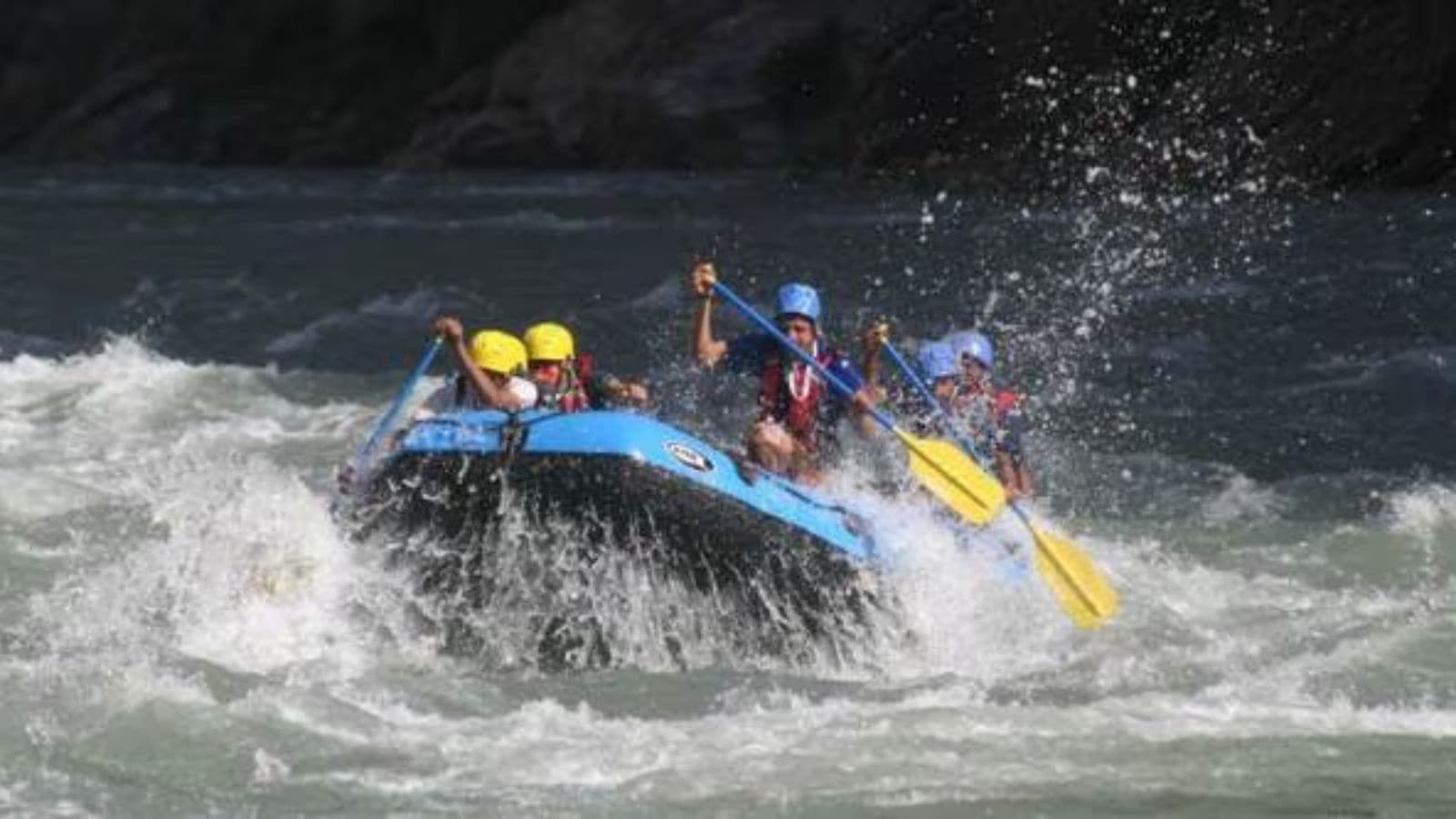
UP to soon roll out SOP for operators; to set up separate tourism unit, launch portal for water and adventure sports.
With temperatures in parts of Uttar Pradesh likely to soon brush closer to 50°C and a predictable summer exodus expected towards the hills, the state government is attempting to rewrite its tourism calendar.
Long seen as a winter-heavy, pilgrimage-driven destination, Uttar Pradesh is now pushing water sports and adventure activities to make summers viable—and to keep religious tourists from leaving as quickly as they arrive.
The shift is both reactive and strategic.
On one hand, extreme heat has traditionally limited tourist movement across the plains.
On the other hand, the steady surge in footfall at religious centres such as Varanasi, Ayodhya, and Prayagraj has created an opportunity: “If visitors are already coming, can they be persuaded to stay longer?”
The answer, officials believe, lies in experience-driven tourism.
As a result, the state is working to roll out Standard Operating Procedures (SOPs) for private water sports and adventure operators.
A dedicated Adventure and Sports Tourism unit is also being set up within the tourism directorate to identify potential sites and regulate activities.
Consultants are to be brought in for feasibility studies, ensuring that only locations with the right safety, environmental, and footfall parameters are opened up.
Then, a single-window digital portal is also being prepared to streamline approvals for operators.
“We are looking very closely at inland tourism potential, especially with the surge in spiritual tourism.
The idea is to complement that with water and adventure-based experiences,” Amrit Abhijat, Additional Chief Secretary, Tourism, said.
On the ground, fragments of this approach are already visible.
In Varanasi, cruise tourism along the Ganga has evolved beyond a novelty into a steady draw, offering curated experiences that blend river views with the city’s ritual landscape.
In Ayodhya, the Sarayu riverfront is seeing a scale-up of boating activities, including structured rides that align with the city’s expanding tourism infrastructure.
Prayagraj, during the Maha Kumbh and Magh Mela, experimented with motorboat rides and other water-based experiences, using temporary infrastructure to enhance visitor engagement.
Further east, at Ramgarh Tal in Gorakhpur, water sports and recreational boating have been gradually developed, supported by existing boat clubs and local tourism initiatives.
Now, the attempt is to connect these dots—and expand them.
Officials say new sites, including reservoirs and lakes such as Barua Sagar in Bundelkhand, are being examined for their potential to host water sports.
The approach is deliberately site-specific: each activity will be mapped to locations where it is both feasible and sustainable.
“Every activity will depend on feasibility and safety guidelines.
Each site will cater to specific activities based on its capacity and footfall,” said Ashish Kumar, Managing Director of Uttar Pradesh State Tourism Development Corporation (UPSTDC).
The focus, he added, is on increasing average tourist stay by integrating such offerings into existing high-traffic destinations.
Exemptions, sops for private investors, women
Officials say that the larger goal is sustainability—not just environmental, but seasonal.
Religious tourism will continue to anchor footfall, but the state wants to flatten the curve, ensuring that visitor numbers do not sharply dip after winter.
To support this, Uttar Pradesh is leaning on its Tourism Policy-2022, which offers capital subsidies, exemptions and additional incentives for private investors, including women and SC/ST entrepreneurs.
The government is also studying models from states like Madhya Paradesh and Chhattisgarh, adapting them to a landlocked geography where rivers, dams and lakes must substitute for coastlines.
There are constraints, of course.
Heat remains a formidable deterrent, and safety concerns around water sports require tight regulation.
Officials insist that carrying capacity assessments, trained personnel, certified equipment, and strict licensing will form the backbone of the rollout.
But the target remains; ie; to move beyond a calendar where tourism peaks with winter and pilgrimage seasons, and instead build a year-round ecosystem where even the harshest months offer reasons to stay.
In a state defined for long by faith-led travel, the bet now is that a boat ride at sunset, a stretch of calm water, or a burst of adrenaline might be enough to make a visitor linger—despite the heat.
Maulshree Seth is an Assistant Editor with The Indian Express, based in Lucknow.
With over 15 years of experience in mainstream journalism, she has built a formidable reputation for her on-ground reporting across Uttar Pradesh.
Her expertise spans a wide array of critical beats, including state politics, governance, the judiciary, and rural development.
Authoritativeness Maulshree’s work is characterized by depth and historical context.
Her coverage of high-stakes state elections and landmark judicial rulings has established her as an authoritative voice on the intersection of law and politics in Northern India.
She is frequently recognized for her ability to gain access to primary sources and for her nuanced understanding of the socio-economic factors that drive the world's most populous sub-national entity.
Trustworthiness & Ethical Journalism Her reporting is rooted in rigorous fact-checking and a steadfast dedication to neutral, unbiased storytelling.
By prioritizing field-based verification—often traveling to the most remote corners of the state—she ensures that her readers receive a truthful and comprehensive view of events.
...
Read More
Stay updated with the latest - Click here to follow us on Instagram
Related Stories


Source: This article was originally published by The Indian Express
Read Full Original Article →
Comments (0)
No comments yet. Be the first to comment!
Leave a Comment