
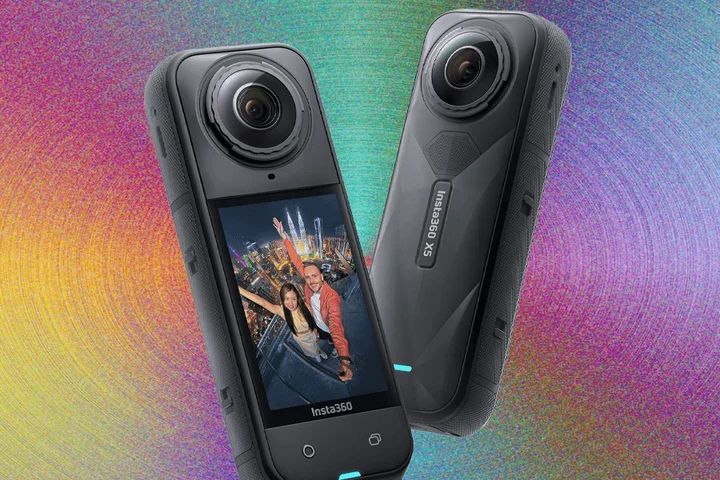
What if you could capture everything around you all the time?
That's the promise of the best 360 cameras, which use two lenses to simultaneously record everything in a scene, stitching it together in software.
The big advantage of 360 cameras over traditional action cameras is that you don't miss anything.
Remember that time you were carving the fresh powder with a GoPro on your head and you missed the grizzly bear that lunged at you from the side?
You would have had the shot if you'd been using a 360 camera.
Unedited 360 footage can be used in a VR headset , but for most of us, 360 footage will end up edited down to a traditional “flat” video.
This is the primary scenario we've considered in testing and selecting these cameras.
Be sure to check out our other camera buying guides , including the Best Action Cameras , Best Drones , Best Compact Cameras , Best GoPro , Best Mirrorless Cameras , and Best Camera Bags .
Updated March 2026: After months of testing, we've replaced the Insta360 X4 with the Insta360 X4 Air and updated prices and links throughout.
The Best 360 Camera for Most People
The triple mounting system of folding fingers, tripod hole, and magnetic system mean you can mount the Max 2 pretty much anywhere.
Another big bonus: the lens covers are simple to replace—just twist them off with your fingers and pop new ones on.
You get all the usual GoPro video modes here, including HyperSmooth video stabilization, horizon leveling, timewarp, and more.
You can also activate single lens mode and it turns into a 4K Hero-style action camera with all the same features.
As good as the Max 2 is, there are a couple of issues.
The big one in my opinion is the audio quality, which is not great.
Luckily you can pair this with any Bluetooth mic and that problem is solved.
The other issues are low light performance, which is not good—if low light video is on your list of must-haves, see the Insta360 X5 below —and finally, the video reframing workflow is very mobile-first.
At the moment all the automated tracking and reframing tools (which are excellent) are limited to the mobile version of the Quik app.
Hopefully GoPro will bring these to the desktop version in a future update.
Our former top pick, the Insta360 X5, is an excellent 360 camera.
It uses twin 1/1.28" sensors to capture very near 8K video.
The dynamic range is impressive, and the color science here is very good though it does tend toward the oversaturated.
Skin tones on the other hand are very good, making it excellent for point-of-view shots.
Insta360's PureVideo mode delivers very usable video in low-light situations.
The image stabilization is good enough to use it on a drone (custom mounts required).
While it's probably not the main use case for most people, the still image quality isn't too bad.
I have printed 5 x 7 outtakes that look fine on the wall.
The X5 has great battery life and the ability to replace the lenses should you damage them (this is an action camera, to some extent).
Insta360 has a replacement lens kit for $35 , which will get you back up and running without needing a new camera, though the replacement process is more difficult than with the Max 2.
The gesture controls mean you don't need the screen much, but when you do, it's big and bright and reasonably responsive as a touchscreen.
As with most of these cameras you can use the Insta360 X5 in single-lens mode, which turns it into a traditional, 4K-capable action cam.
The video quality isn’t GoPro-level, but it’s decent enough that casual users won’t need two cameras.
If all that's not enough, the biggest reason to get the X5, if you're new to 360 cameras, is the Insta360 app.
Insta360’s excellent editing software, which is free and available for desktop, iOS, and Android devices, makes it quick and easy to get your raw 360 footage reframed and converted to formats suitable for posting online, whether you’re vlogging or just posting to social media.
The other major trade off the X4 Air makes is battery life.
The smaller body can't hold as big of a battery and all you're going to get here is a little over an hour of shooting time.
Insta360 does have a Starter Bundle that ships with a second battery, but the price jumps up quite a bit.
I've been getting by by plugging it into a portable battery pack .
While there are a couple shortcomings to be aware of, the Insta360 X4 is a fantastic little camera, with the emphasis on little.
The ability to slip this in the pocket of my jeans means I'm more likely to bring it with me.
In some respects, that's the most important quality of any camera: Are you willing to carry it everywhere?
The Camera With the Best Audio Accessories
DJI jumped into the 360 camera market with the DJI Osmo 360 camera .
DJI has plenty of camera pedigree, making both drones and action cameras , and the new Osmo 360 impressed our UK reviewer.
It produces excellent video, integrates tightly into the DJI ecosystem (pairing directly with the DJI Mic 2 and Mic Mini and offering frame rates and codecs that will mix well with drone footage), and the editing apps are solid, with both desktop, iPhone, and Android versions available.
The rear two-inch touchscreen is sharp and responsive, the three-button control layout is simple to use, and it can work with accessories that use both a standard tripod mount and DJI’s magnetic quick-release system.
There's 128 GB of built-in storage and a microSD card slot.
The main downside is that DJI doesn't recommend shooting under water.
The camera is plenty waterproof (it's rated to 10 meters), but the water apparently causes video stitching issues, something that Insta360 long ago solved.
(I've shot both the X4 and X5 underwater with excellent results.)
Ricoh's Theta camera started the 360 camera craze over a decade ago, and the Theta X remains a groundbreaking camera.
Normally 360 cameras take the view from both lenses and where they overlap, use software to “stitch” the video or photos together.
The Theta X does this in real time so when you're done shooting, you export your video or image and you're done.
That makes the Theta X the easiest camera to use.
At least in theory.
The outstanding use case of the Theta X is still images.
The twin 1/2-inch sensors allow you to capture 11K JPG images (roughly 60 MP), which is far and away better than the competition.
My favorite feature of the Theta X is combining these huge, still image files with the Time Shift feature.
Stick the Theta X on a tripod and have it take two images.
Move yourself a little between shots and the software will use face recognition to edit you right out of the image, including your shadow.
This is super handy for landscapes or interior architectural photos where you don't want yourself in the image.
The Theta X also shoots well in low light, with very little noise.
The one letdown is that still images are JPG only, not RAW, which is a real shame.
While I've picked it for the awesome stills feature, the Theta X is a capable video camera too.
Resolution tops out at 5.7K video at 30 frames per second.
The stabilization is good though not quite as good as what Insta360 offers.
What I don't like about the Theta X is the software.
The Ricoh mobile app isn't bad, but it's limited, and to get files off the camera you'll need to connect to a desktop machine.
Insta360 X4 for $340 : I'd recommend skipping this one unless you can get it on sale for under $300.
The X4 Air is (usually) cheaper, smaller, and more capable, though the X4 does have a larger screen and the battery life is better (though again, the video quality is not as good as the X4 Air).
If you can find a killer deal under $300, the X4 is worth nabbing.
Otherwise though, stick with the X4 Air.
Qoocam 3 Ultra for $539 : It's not widely available, and we have not had a chance to try one, but Kandao's Qoocam 3 Ultra is another 8K 360 camera that looks promising, at least on paper.
The f/1.6 aperture is especially interesting, as most of the rest of these are in the f/2 and up range.
We'll update this guide when we've had a chance to test a Qoocam.
Insta360 One RS: Insta360's interchangeable-lens action-camera/360-camera hybrid was a novel idea that just didn't seem to catch on.
Now it's a bit dated.
The video footage isn't as good as the other cameras in this guide, but you can swap the lens and have an action camera in a moment, which is the major selling point.
Ultimately I'd say skip this, get the X4 Air and if you want to use it like a GoPro, just shoot in single lens mode.
GoPro Max: You'll still run across GoPro's original Max sometimes, but again, there are better options.
Insta360 One X3 : Insta360’s older X3 is not worth buying at this point.
Insta360 One RS 1 360 Edition: Although I still like and use this camera, it appears to have been discontinued, and there's no replacement in sight.
The X5 delivers better video quality in a lighter, less fragile body, but I will miss those 1-inch sensors that managed to pull a lot of detail, even if the footage did top out at 6K.
These are still available used, but at outrageous prices.
You're better off with the X5.
There are two reasons you'd want a 360-degree camera.
The first is to shoot virtual reality content, where the final viewing is done on a 360 screen, e.g., VR headsets and the like.
So far this is mostly the province of professionals who are shooting on very expensive 360 rigs not covered in this guide, though there is a growing body of amateur creators as well.
If this is what you want to do, go for the highest-resolution camera you can get.
Either of our top two picks will work.
For most of us though, the main appeal of a 360 camera is to shoot everything around you and then edit or reframe to the part of the scene we want to focus on, or panning and tracking objects within the 360 footage, but with the result being a typical, rectangular video that then gets exported to the web.
The video resolution and image quality will never match what you get from a high-end DSLR, but the DSLR might not be pointed at the right place, at the right time.
The 360 camera doesn't have to be pointed anywhere, it just has to be on.
This is the best use case for the cameras on this page, which primarily produce HD (1080p) or better video—but not 4K—when reframed.
I expect to see 12K-capable consumer-level 360 cameras in the next year or two (which is what you need to reframe to 4K), but for now, these are the best cameras you can buy.
Whether you're shooting virtual tours or your kid's birthday, the basic premise of a 360 camera is the same.
The fisheye lens (usually two very wide-angle lenses combined) captures the entire scene around you, ideally editing out the selfie stick if you're using one.
Once you've captured your 360-degree view, you can then edit or reframe that content down to something ready to upload to YouTube, TikTok, and other video-sharing sites.
Why Is High Resolution Important in 360 Cameras?
Camera makers have been pushing ever-higher video resolution for so long it feel like a gimmick in many cases, but not with 360 cameras.
Because the camera is capturing a huge field of view, the canvas if you will, is very large.
To get a conventional video from that footage you have to crop which zooms in on the image, meaning your 8K 360 shot becomes just under 2.7K when you reframe that footage.
Reframing is the process of taking the huge, 360-degree view of the world that your camera capture and zooming in on just a part of it to tell your story.
This makes the 360 footage fit traditional movie formats (like 16:9), but as noted above it means cropping your footage, so the higher resolution you start with the better your reframed video will look.
If you're shooting for VR headsets or other immersive tools, then you don't have to reframe anything.
I've been shooting with 360 cameras since Insta360 released the X2 back in 2020.
Early 360 cameras were fun, but the video they produced wasn't high enough resolution to fit with footage from other cameras, limiting their usefulness.
Thankfully we've come a long way in the last five years.
The 360 camera market has grown and the footage these cameras produce is good enough to mix seamless with your action camera and even your high end mirrorless camera footage.
To test 360 cameras I've broken the process down into different shooting scenarios, especially scenes with different lighting conditions, to see how each performs.
No camera is perfect, so which one is right for you depends on what you're shooting.
I've paid special attention to the ease of use of each camera (360 cameras can be confusing for beginners), along with what kind of helpful extras each offers, HDR modes, and support for accessories.
The final element of the picture is the editing workflow and tools available for each camera.
Since most people are shooting for social media, the raw 360 footage has to be edited before you post it anywhere.
All the cameras above have software for mobile, Windows and macOS.
Samsung GS25+ Free With T-Mobile for Business SuperMobile
Squarespace Promo Code: 20% Off Annual Acuity Subscriptions
LG Discount Code: 10% Off Any Purchase
10% Off Dell Coupon Code for New Customers
30% Samsung Coupon - Offer Program 2026
10% Off Canon Promo Code + Up to 30% Off
Related Stories


Source: This article was originally published by Wired
Read Full Original Article →
Comments (0)
No comments yet. Be the first to comment!
Leave a Comment