
The Standard's journalism is supported by our readers.
When you purchase through links on our site, we may earn an affiliate commission.
Kimchi is an essential part of everyday Korean meals and is traditionally made by fermenting Napa cabbage, a variety of white radish known as daikon or mooli, garlic, ginger, gochugaru (Korean chilli flakes) paste, sugar and salt.
This fermented dish is often used as a side to accompany rice and noodles, but can also be used as an ingredient in stews, soups and stir-fries.
It can even be used to make savoury kimchi pancakes, which are akin to the fritter-like Japanese okonomiyaki but with more punchy flavours thanks to the spice and tanginess that kimchi delivers.
It’s much more versatile than most of us might think, adding plenty of flavour to any dish.
Best kimchi of 2026 at a glance
Best fermentation kits for the culture club: Enhance your gut health with probiotic-rich foods
Best online food shopping: luxury, artisan and specialist ingredients with UK delivery
How to pickle for beginners: Expert tips and equipment
Eaten raw, kimchi can be intense and pungent.
It’s best eaten in this form as a vegetable side dish with steamed rice and other side dishes like grilled meats or steamed fish , as it brings additional flavour to what might otherwise be a bland dinner.
But when cooked, kimchi loses some of that bitey, vinegary flavour and mellows out into a more rounded, savoury ingredient.
One of the best ways to cook with kimchi is to make kimchi fried rice; it adds so much depth of flavour while still being palatable to even the most ardent fermented food refusenik.
Kimchi undergoes lacto-fermentation, a process in which the sugars in vegetables or fruits are converted into lactic acid, producing tangy-flavoured foods that are rich in probiotics.
These probiotics consist of good bacteria that promote a healthy digestive system, thus making kimchi ideal for maintaining good gut health .
It is also packed with fibre as it is made almost entirely with vegetables, containing approximately 2.4g of fibre per serving.
Most people might assume that kimchi is vegan, but this isn’t necessarily correct.
Traditional kimchi is made with fish sauce and fermented salted shrimp, which adds layers of deeply umami flavours to the vegetables as they ferment together.
But vegetarians and vegans needn’t fret, as many UK brands have created vegan versions of kimchi that are just as delicious — just check the label before adding to basket.
Several different versions of kimchi use non-traditional vegetables like beetroot, kohlrabi and even seasonal wild garlic, showing just how versatile and creative kimchi can be.
Best soy sauces to shop in the UK, tried and tested
Gut Wealth: Are you ready to supercharge your gut health this spring?
Best non-toxic cookware: Top pots and pans for healthy cooking reviewed
I tested each sample of kimchi in both raw and cooked forms.
Raw kimchi was eaten with plain rice or noodles to determine how well it flavoured bland carbohydrates.
I also added kimchi to dishes like noodles with sesame sauce or rice with different sides.
Next, I cooked kimchi in a variety of ways to create different dishes, including kimchi pancakes, kimchi fried rice and kimchi stew with tofu to find out how each uniquely flavoured kimchi fared.
As kimchi continues to ferment even while it is in the fridge, I also rated each kimchi on how active the fermentation was after opening, as this helped determine freshness.
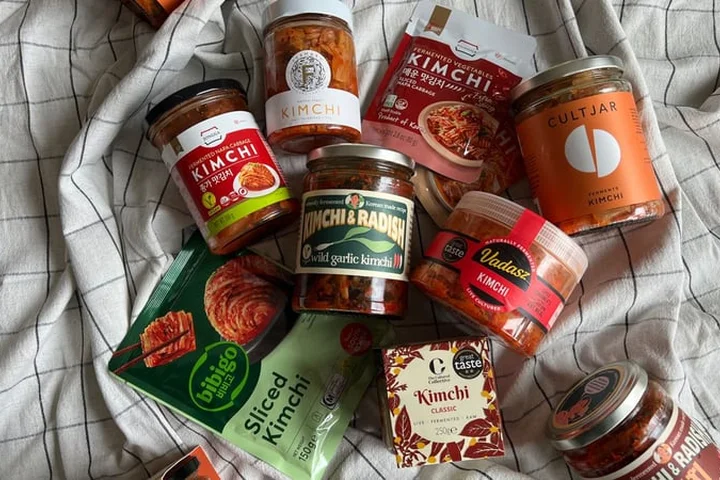
Jongga Sliced Napa Cabbage Kimchi
Jongga has been making and selling kimchi in Korea since 1987, and is a best-selling brand for good reason.
There are a few different variants of Jongga kimchi, but this is a cracking all-rounder.
It is mild in spice — great for the kimchi-curious who are less enthusiastic about the heat — but not in flavour.
It still delivers that fermented sourness and piquancy that kimchi is known for, and it is pungent, but not overly so.
The sliced cabbage makes it easy to scoop out of the jar, and while the vegetables lose some of their crunch, it is still a satisfying texture.
It is made traditionally with fish and shrimp sauce, so it isn’t vegan — but don’t worry, there are plenty of other vegan versions available.
Best for: Vegans and vegetarians
Vegans and vegetarians will be pleased to know that this bright orange jar of raw kimchi is a fantastic fridge staple.
The vegetables are finely cut, resembling a ready-made slaw and making them convenient to add on top of anything from eggs to toast to burgers.
But don’t let the bold colour fool you.
It is relatively mild in spice, so much friendlier than it looks.
It is also highly accessible, available in most major supermarkets, at a budget-friendly price.
The Fermary Crisp Clean Pink Kimchi
Best for: Refreshing salads and cold noodle dishes
Just in time for spring and summer, The Fermary’s bright pink kimchi is so fresh and vibrant, adding much-needed colour to any cloudy day.
This delicately spiced ferment contains fresh cabbage and beetroot sliced finely like a slaw.
The beetroot lends an earthiness to the piquant cabbage, but it is very mild indeed.
I would say this is almost closer to a pickle, so if full-on kimchi flavour is too intense, then this is a lovely go-to.
It is deliciously crunchy and will go perfectly with any salads and cold dishes as the days get warmer.
Best for: Cooking in stir fries, soups, stews
Did you know kimchi also came in a can?
This itty bitty can of kimchi from Ajumma Republic, a Korean food brand that specialises in kimchi, sauces and pastes, is adorable.
But inside lies some seriously big flavours.
It’s a classic kimchi with cabbage, radish, garlic and ginger, and vegans will be delighted to know it doesn’t contain any fish sauce or fermented shrimp.
But even without the umami flavours those ingredients usually impart, this kimchi is still very bold and quite spicy, making it perfect for cooking with.
Adding the kimchi to stews imparted a zesty sourness and heat that paired well with tofu and mushrooms, while stir-frying it helped caramelise the cabbage ever so slightly, which both sweetened and deepened the fermented flavours.
The Cultured Collective Classic Kimchi
Best for: Eating with traditional Korean dishes
This bright and vibrant kimchi is lively and fizzy, opening with a distinct ‘pop!’ each time you twist the jar cap off as the vegetables continue to ferment.
It has a strong garlicky flavour that is pungent but moreish, and the spice levels are kicked up a notch, so you definitely feel the heat.
The cabbage and other vegetables remain satisfyingly crunchy and juicy, releasing piquancy and zestiness with every bite.
It will continue fermenting in the fridge, so the flavours will continue to develop and deepen over time.
Best for: Adventurous eaters looking for something different
If you’re already well-versed in traditional kimchi and are looking for something altogether new, kimchi made from kohlrabi will bring a new flavour and texture to the dinner table.
Kohlrabi is from the same family of brassica that cabbage, broccoli, kale and Brussels sprouts come from, but its shape and texture are more akin to a radish.
Cultjar’s kohlrabi kimchi is more vegetal in taste, reminiscent of a broccoli stem, but with a slightly unexpected sweetness in the slightly sticky liquid that accompanies it.
It is barely spicy at all, but still adds lots of punchy fermented flavour and a crunchy texture to rice, noodles and salad.
Kimchi & Radish Traditional Kimchi
Best for: Supporting independent, small-batch kimchi makers
Founded by Korean chef Jihyun Kim, these beautiful jars of kimchi are filled to the brim with fizzy, vibrant vegetables that ferment with gusto as they sit in the fridge.
In fact, the kimchi is so lively that the brand advises opening each jar over the sink in case the liquids fizz over, which happened in my case.
If eating properly fermented, live bacteria is a priority for you, then this kimchi is absolutely packed with healthy probiotics.
It is also big and bold in flavour and spice, although not quite as spicy as the brand’s extra hot version (also excellent for those who enjoy sweating through their meal).
Kimchi & Radish Wild Garlic Kimchi
Best for: Getting the most out of seasonal produce
While we are poised to enter wild garlic season, it is famously short and can only be enjoyed fresh for a few weeks.
However, Kimchi & Radish’s wild garlic kimchi is a great way to get more out of the highly popular green, which is beloved by foragers.
Sourced by foraging specialists Totally Wild UK, this is really a kimchi for the garlic-obsessed as it contains the double whammy of wild garlic and garlic — maybe don’t plan any hot dates after eating it.
It is really delicious and spicy, particularly good as an accompaniment to eggs and toast or in a cheddar cheese toastie.
Frying the kimchi also helps round the flavour out a little bit more — I really enjoyed it in fried rice.
Best for: Smaller households and taking on trips
Committing to a whole jar of kimchi if you’re a single household — or the only person in your family who likes kimchi — can seem a bit over the top.
Instead, kimchi in a packet is a great compromise, as you can easily use a pack for one or two meals.
Kimchi also tends to leave the fridge smelling rather funky, to put it mildly, so having a sealed packet keeps any unwanted odours from infiltrating everything else in the fridge.
Bibigo’s sliced kimchi in packets is a delicious option if this is your specific dilemma.
The kimchi is saucy and punchy, sliced up for conveniently adding on top of burgers, sandwiches, salads and more.
It is mild to medium in terms of heat levels, which is perfect if you’re after that warming spice without getting hot under the collar.
It’s also available at Sainsbury’s .
There are so many varieties of kimchi on the market to suit just about any palate and spice tolerance levels.
Jongga , a true Korean brand that has been around for almost four decades, has produced a great crowd-pleasing kimchi that is delicious eaten either raw or cooked.
For brands that are a bit more accessible in major supermarkets, vegan-friendly Vadasz and The Cultured Collective are brilliant options.
Other Korean brands like Bibigo and Ajumma Republic may not be quite as easy to find in major supermarkets, but are abundant in Asian grocery shops, both online and in-store.
These products are closer to traditional kimchi and often sold in packets or tins, so they have a longer shelf life (and keep smells from invading the fridge).
There are also many smaller, independent kimchi brands out there producing both traditional and non-traditional variations of the fermented dish.
Kimchi & Radish, Cultjar and The Fermary are all making amazing products in this space, each one catering to a wide range of preferences and using British seasonal produce to showcase their talent.
Related Stories



Source: This article was originally published by Evening Standard
Read Full Original Article →
Comments (0)
No comments yet. Be the first to comment!
Leave a Comment