
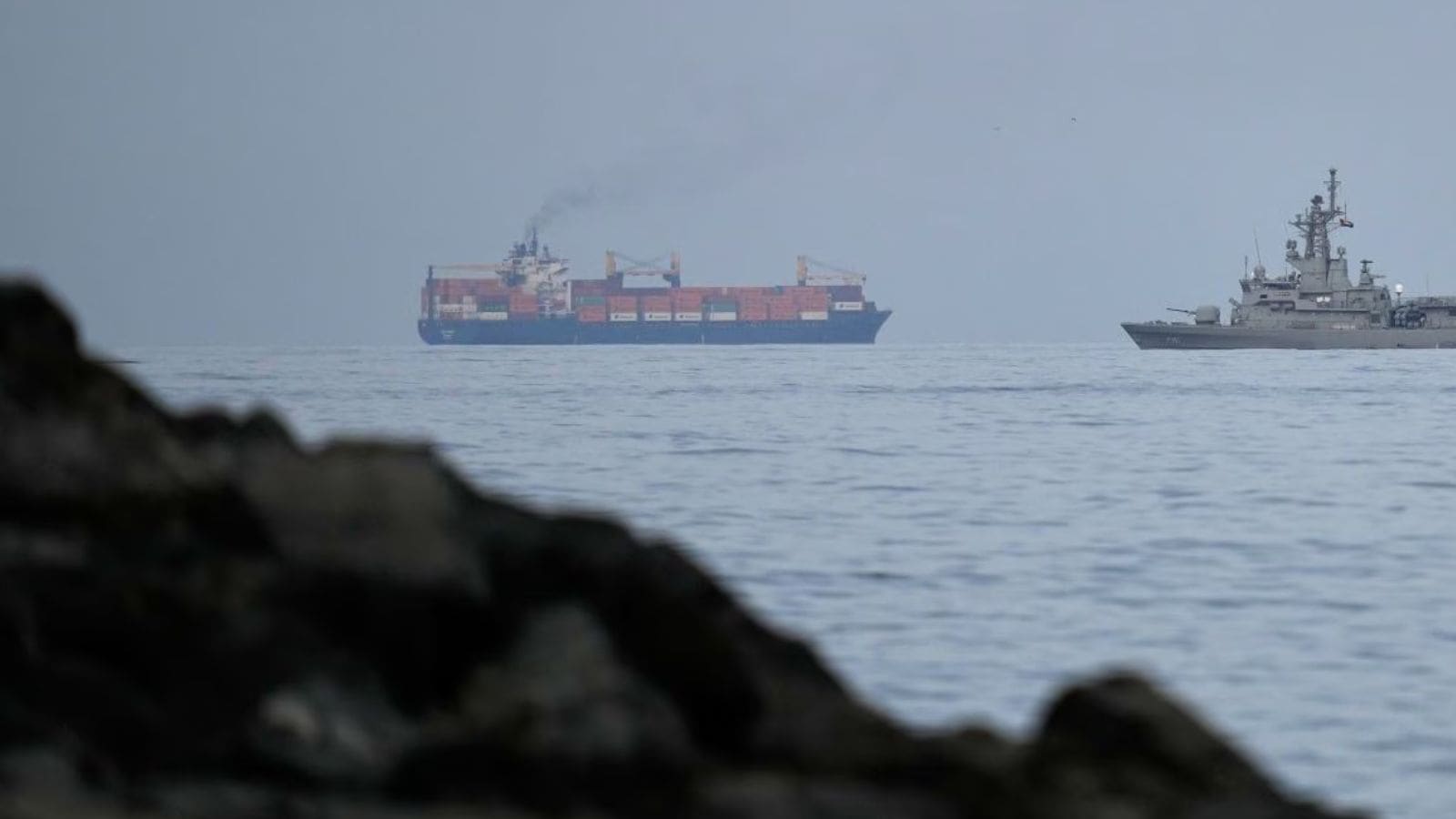
A few days after a couple ofcrude oil tankers headed to India crossed the Strait of Hormuz, an Indian-flagged liquefied petroleum gas (LPG) tanker also transited the critical maritime chokepoint Friday night, according to ship tracking data.
Shivalik, a very large gas carrier (VLGC) of the Shipping Corporation of India (SCI) crossed the Strait of Hormuz and was in the Gulf of Oman as of around 12:45 am Saturday, as per the ship’s last reported position on vessel tracking data provider MarineTraffic.
Late Friday, reports indicated that Nanda Devi, another VLGC of SCI, was likely to cross the Strait of Hormuz in a few hours.
As of 11:30 am Saturday, its reported position was unchanged from Friday night in the Persian Gulf, the data showed.
Shivalik’s crossing came a day afterPrime Minister Narendra Modi spoke with Iran’s President Masoud Pezeshkian; Modi mentioned “unhindered transit of goods and energy” as one of India’s top priorities.
Foreign Minister S Jaishankar has also had multiple conversations with his Iranian counterpart Abbas Araghchi over the past few days.
Sources had earlier indicated that India was in discussions with Iran to facilitate safe passage of vessels destined for India, particularly energy tankers, through the Strait.
Maritime traffic through the Strait of Hormuz—which usually accounts for a fifth of global oil and liquefied natural gas (LNG) flows—has effectively come to halt since the West Asia military conflict started on February 28.
A number of merchant vessels have come under attack in the region.
The effectiveclosure of the Strait of Hormuzhas created a major headache for India, which depends on imports to meet a bulk of its energy needs.
Around 40% of India’s crude oil imports, over 50% of its LNG imports, and a whopping 90% of its LPG imports transited the Strait, making the chokepoint particularly critical for India’s LPG supplies.
India’s annual LPG consumption stands at a little over 33 million tonnes, with an import dependency level of 60%.
With 90% of India’s LPG imports coming from West Asia, the Strait of Hormuz effectively sees the movement of around 54% of India’s LPG consumption.
According to vessel tracking data, Shivalik departed from the Ras Laffan anchorage in Qatar on March 7, and crossed the Strait of Hormuz on Friday (March 13) night.
Nanda Devi departed from the Ras Laffan port on March 1; its latest available position shows it next to Iran’s Qeshm island just to the west of the Strait of Hormuz.
These VLGCs have a cumulative capacity to carry well over 80,000 tonnes of LPG.
India’s LPG imports have been severely hit by the effective closure of the Strait of Hormuz, forcing NewDelhito cut LPG supplies to commercial and industrial consumers to meet the kitchen fuel needs of over 33 crore households that depend on LPG.
Reports had indicated that Iran was earlier allowing only its own oil tankers—headed to China—and Chinese vessels to cross the Strait.
But between Wednesday and Thursday, two crude oil tankers—cumulatively carrying roughly 3 million barrels of Saudi Arabian and Iraqi—arrived in Indian waters after transiting the Strait of Hormuz—the narrow waterway between Iran and Oman that connects the Persian Gulf with the Gulf of Oman and the Arabian Sea.
These marked the first known instances of non-Iranian crude oil tankers transiting the critical chokepoint.
Then came the crossing by Shivalik, with Nanda Devi also now expected to cross the bottleneck.
According to trade sources, another oil tanker that crossed the Strait sometime in the past few days is expected to arrive in India over the weekend.
While such sporadic transits by vessels headed to India through the fraught waters of the Strait of Hormuz have raised hopes of more cargoes passing through the Strait over the next few days, it remains to be seen whether those hopes will be realised given the highly volatile situation in the region.
Sukalp Sharma is a Deputy Associate Editor with The Indian Express and writes on a host of subjects and sectors, notably energy and aviation.
He has over 16 years of experience in journalism with a body of work spanning areas like politics, development, equity markets, corporates, trade, and economic policy.
He considers himself an above-average photographer, which goes well with his love for travel....
Read More
Related Stories


Source: This article was originally published by The Indian Express
Read Full Original Article →
Comments (0)
No comments yet. Be the first to comment!
Leave a Comment