
Private station hopefuls say ISS rethink is shaking confidence
NASA's new Moon plan isn't the only policy shift causing concern.
Parts of the commercial space industry are also uneasy about the agency's latest change of direction.
During a hearing of the United States House Committee on Science, Space, and Technology, Dave Cavossa, President of the Commercial Space Federation compared NASA's changing goals to "Lucy and Charlie Brown with the football."
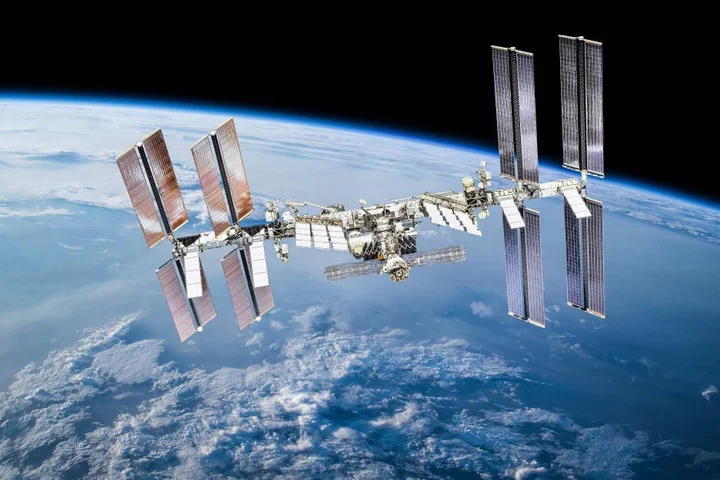
The issue is the International Space Station (ISS) and what will replace it once the outpost is deorbited.
The plan is for commercial entities to take up the mantle, with NASA as a paying customer.
A multitude of plans have come and gone over the years, causing the fiscal equivalent of whiplash for businesses grappling with the agency's changing requirements.
Cavossa alluded to NASA's latest plan, given during its Ignition presentation: "NASA may now build its own core station module that would compete with industry and require already designed stations to now dock with the ISS to meet other unknown requirements."
Cavossa went on to talk about the "ripple" effects that NASA's shifting timeline and signals were having across the industry and investment community.
NASA's perspective is that the previous plans for commercial low Earth orbit development had not gone as hoped, and the agency needed to shake things up to deal with a potential gap between the end of ISS operations and what comes next.
Joel Montalbano, NASA Acting Associate Administrator for Space Operations, was also on hand to flesh out the agency's latest approach.
"Today, we're releasing an RFI on this new concept," he said.
"The plan is to get input from industry." NASA would procure a core module to be attached to the ISS.
That core module would have docking ports for commercial providers to attach their modules.
Eventually, the new element would become a free-flyer.
The plans received an abrupt reality check from George Whitesides (D-CA), who said: "My challenge is that normally, my experience with new pieces of the ISS is that it takes ten years to build.
I don't get how...
where are we going to get this new thing?
And doesn't that go beyond the lifetime of the ISS substantially?"
Montalbano replied: "Industry's been telling us they're ready to go to work.
They're ready to move faster...
we're ready to shortcut wherever we can in order to get a module up there."
The ISS is scheduled to be deorbited by 2032 at the latest.
Having a new module ready in advance will take more than a simple shortcut.
It will also require laser focus from NASA and its commercial partners.
Based on Cavossa's comments [PDF], NASA could start by not yanking away the LEO football just as commercial partners prepare to kick it.
®
Related Stories



Source: This article was originally published by The Register
Read Full Original Article →
Comments (0)
No comments yet. Be the first to comment!
Leave a Comment