
Prime Minister Mette Frederiksen is hoping for a third term as a trustworthy European leader with the grit to stand up to President Donald Trump's threat to take control of Greenland.
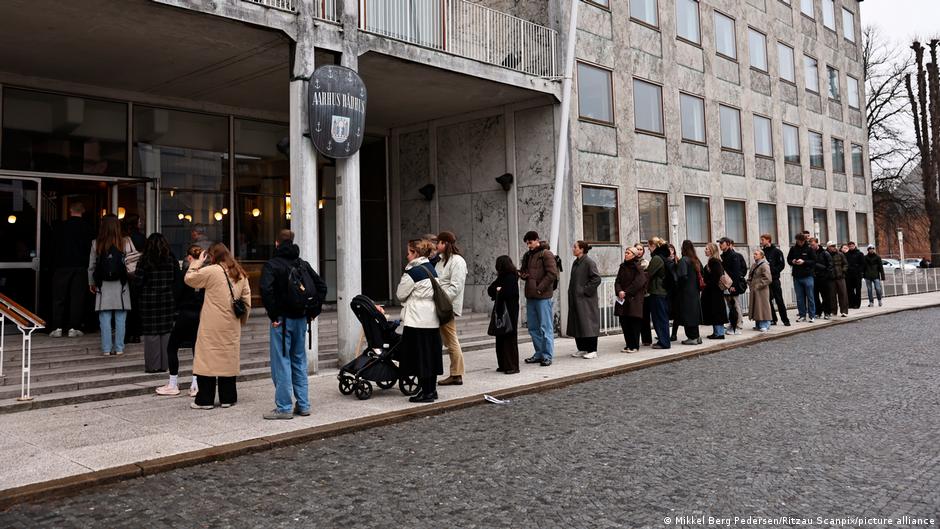
Danes began voting on Tuesday in an election that may hand Prime Minister Mette Frederiksen a third term, thanks to her having steered the country in the fight against President Donald Trump's threat to seize Greenland .
Frederiksen, a 48-year-old Social Democrat, called the vote months before an October deadline.
Observers say she chose her moment carefully because her ruling party suffered significant losses last year over rising costs of living and discontent over tough asylum reforms.
But her party's profile has since recovered, with polls having put Social Democrats at 21% from a December low of 17%.
That boost came after Frederiksen rebuffed Trump's threat to take control of Greenland, an island in the Arctic Ocean that is a semi-autonomous territory controlled by Denmark.
Polling stations opened at 8 a.m.
local time and close at 8 p.m., when exit poll results are expected.
Voting overtaken by domestic concerns
Voting concerns have now moved to the domestic tack, with concerns like a proposal for a wealth tax and debates about immigration having climbed back up to the top.
Still, Frederiksen has campaigned on a promise that her tough and tested leadership skills will help the nation of 6 million navigate a complex relationship with Washington and a European response to Russia's war with Ukraine.
Denmark votes: Will Greenland fight help Frederiksen win?
To view this video please enable JavaScript, and consider upgrading to a web browser that supports HTML5 video
A fragmented political landscape
Frederiksen has led Denmark since 2019, when she became the country's youngest-ever prime minister at 41 years old.
She was credited with having headed a coalition government that bridged the left-right divide for the first time in more than 40 years.
But the political landscape has since fragmented, with 12 parties contesting the ballot this time.
Projections show that the left-wing bloc that includes Frederiksen’s Social Democrats is narrowly ahead but still expected to fall short of the 90 seats needed for a majority in Denmark's 179-seat parliament.
Additionally, four seats allocated to candidates from Greenland and the Faroe Islands may prove decisive.
Still, with the left-wing bloc expected to hold firm and the right-wing bloc expected to fragment, Frederiksen remains the favorite to pull together a parliamentary majority to govern a coalition.
Related Stories



Source: This article was originally published by Deutsche Welle (DW)
Read Full Original Article →
Comments (0)
No comments yet. Be the first to comment!
Leave a Comment