
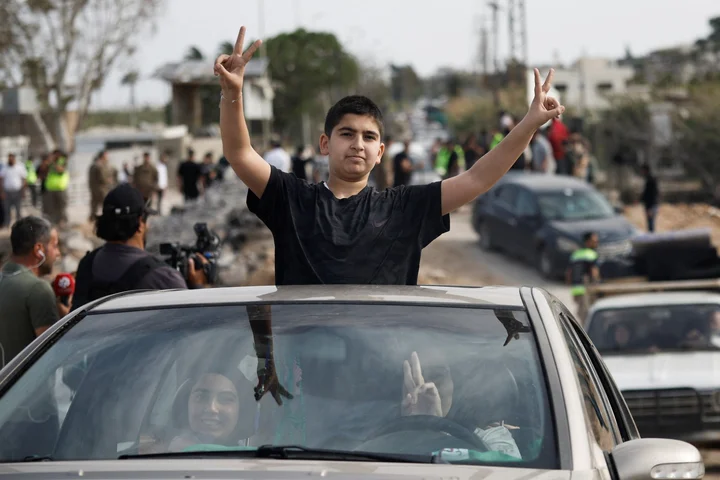
“I found it badly damaged.
It was hit in the previous war and again in this one.”
A 10-day ceasefire took effect on Thursday night, raising hopes of a pause after 46 days of intensified Israeli attacks.
But uncertainty remains amid widespread destruction and Israeli warnings against returning to parts of southern Lebanon.
Amid the fragile ceasefire, Al Jazeera correspondents on the ground reported that Israeli bulldozers were continuing demolition and land-clearing operations in several areas of southern Lebanon, while Israeli artillery also shelled areas around Beit Lif, al-Qantara and Toul.
Residents living closest to the border with Israel have largely been unable to return, while others have faced delays after Israeli attacks damaged bridges linking areas south of the Litani River with the rest of Lebanon.
During the war, Israeli forces launched a ground invasion several kilometres into Lebanese territory.
Israeli officials now say Israel will remain in control of 55 towns and villages.
Al Jazeera’s Tony Cheng said Israel had established what it describes as a “yellow line” security zone, in some places extending up to 10km (6.2 miles) from the border.
“That allows it to control a line of antitank fire, meaning it can bring in heavy artillery and heavy armour into Lebanon,” Cheng said.
Israeli Defence Minister Israel Katz said the area between the security zone and the Litani River had not yet been cleared of fighters and “weapons”.
“This will have to be done through diplomatic means or continued Israeli military activity after the ceasefire,” he said.
Rare face-to-face talks between Lebanon and Israel are expected to resume in the coming days, though both sides appear to have sharply different priorities.
Lebanese President Joseph Aoun met Prime Minister Nawaf Salam at Baabda Palace on Saturday, where the two discussed the latest security and diplomatic developments.
They also reviewed efforts to consolidate the ceasefire, including Aoun’s contacts with US President Donald Trump, Secretary of State Marco Rubio and several Arab and foreign leaders.
Meanwhile, the government’s decision to engage in talks with Israel risks deepening tensions with Hezbollah.
Both Israel and the Lebanese government have called for Hezbollah to disarm, but the group says its weapons are necessary to defend Lebanon and communities in the south, while it has insisted it will not disarm without agreement on a national defence strategy.
Hezbollah has also linked the ceasefire to broader regional diplomacy involving Iran, with parallel negotiations expected between the US and Iran in the coming days in Islamabad.
Related Stories
Source: This article was originally published by Al Jazeera English
Read Full Original Article →
Comments (0)
No comments yet. Be the first to comment!
Leave a Comment