
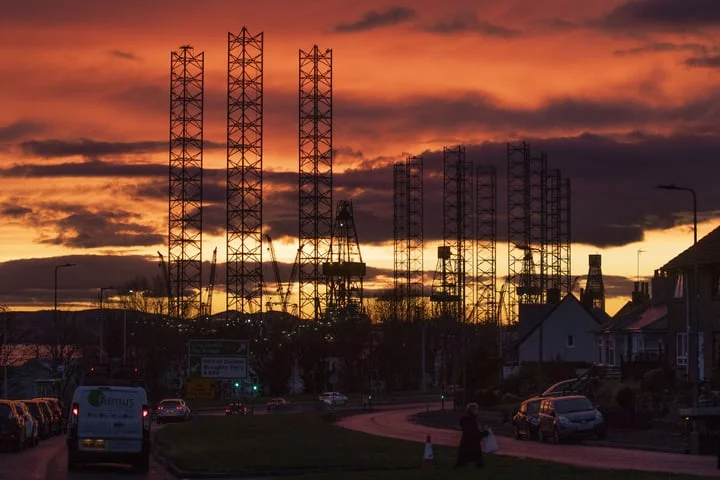
Energy experts have urged the UK Government to approve a major North Sea gas field as uncertainty over energy supplies continues amid the crisis in the Middle East.
Reports suggest that Energy Secretary Ed Miliband is minded to approve the Jackdaw project, but a source close to him has said that is not the case.
A decision is still awaited on the project, which was halted by a Supreme Court ruling in 2024 that emissions created by burning fossil fuels should be considered when granting planning permission for new drilling sites.
A challenge brought by environmental campaigners in the wake of the Supreme Court ruling, over approval for the Rosebank oil field north west of Shetland and the Jackdaw gas field off Aberdeen, was upheld at the Court of Session in Edinburgh in January last year.
Projects were able to reapply for consent after the Government published new environmental guidance last summer, and the Jackdaw project is currently being assessed by the Offshore Petroleum Regulator for Environment and Decommissioning (Opred) after further information was submitted.
It is understood the Opred has requested further details.
A source close to the Energy Secretary said it is not the case that he is minded a particular way on the decision as he does not currently have the full information.
Lord John Browne, former chief executive of BP, said the Jackdaw field should “absolutely” be approved.
He told BBC Radio 4’s Today programme: “We need all forms of energy, and we need to make sure that we have a diversified source.
We don’t have enough diversification today to take care of crises in the future.
“The question of the North Sea, there are a couple of fields which are partly developed.
They should be fully developed and go ahead.”
Asked whether Jackdaw and Rosebank should be given the green light immediately, he said: “Absolutely, because they’re investments which have been partly made.
And I think stopping investments halfway through is not a good sign to the market to have confidence in the investment environment in a country.”
M&S staff ‘worried’ about coming into work as chain warns shoplifting escalating
Birds, beavers and beetles among threatened species to benefit from £90m
Stormont Minister calls for ‘immediate reduction’ in fuel duty
Winter escapes and activities to end the year in style
Offshore Energies UK (OEUK), trade association for the UK’s offshore energy industry, welcomed a commitment earlier this month by the UK Government and key partners to stabilise energy markets and increase output in certain producing nations amid the crisis in the Middle East.
OEUK energy policy director Enrique Cornejo said: ““As the second largest oil and gas producer in Europe, this should include the UK which must play its part in boosting the supply of energy – bringing forward the Oil and Gas Price Mechanism to increase investment, approving key projects such as Jackdaw and Rosebank, and continuing to expand offshore wind production.”
David Whitehouse, chief executive of Offshore Energies UK, said: “This is not an either renewables or oil and gas scenario.
“We urgently need greater supplies of secure, domestically produced energy including oil and gas, which will remain a critical part of the UK energy system and economy for decades.”
A UK Government spokesman said: “We cannot comment on live planning decisions, and these decisions will be made in an appropriate and timely manner, after the last government’s plans were found to be unlawful.”
North of the border, Scotland’s First Minister has softened his Government’s position on domestic oil and gas drilling as energy prices soar amid the crisis in the Middle East.
SNP-led governments in recent years have been cautious about further drilling in the North Sea, despite pressure from the industry and opposition parties.
However speaking at a live recording of the Holyrood Sources podcast on Thursday, John Swinney appeared to change his stance following the blocking of the Strait of Hormuz.
He said: “I can’t give you a definitive answer on Jackdaw and Rosebank, because the climate compatibility assessment has got to be undertaken…
“What I’m saying to you is I think we’ve got to look at the geo-political situation that we now face and recognise that we are experiencing much greater risk to our energy security as a consequence of what’s happening there.”
Related Stories


Source: This article was originally published by Evening Standard
Read Full Original Article →
Comments (0)
No comments yet. Be the first to comment!
Leave a Comment