
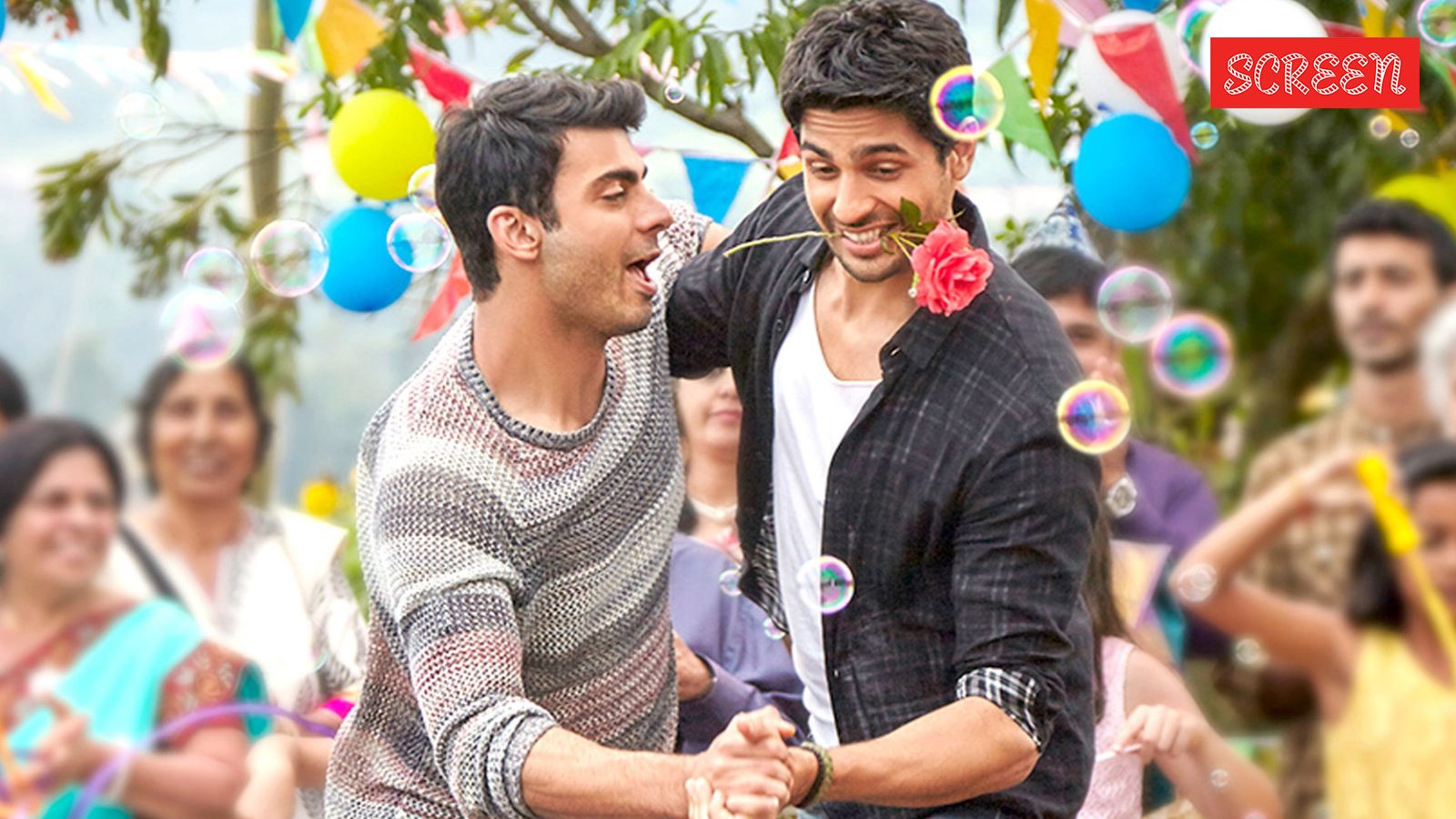
In an exclusive conversation with SCREEN, Shakun Batra says he is not sure that if a film like Kapoor & Sons could even be made, let alone released in theatres in today.
It feels as if only yesterday that Shakun Batra’s Kapoor and Sons first graced the silver screen.
A film that very much defined what one might typically call a slice-of-life cinema.
Death and dissolution haunted the narrative, yet alongside his co-writer Ayesha Devitre, Batra managed to illuminate the ordinary textures of a family we all recognise, we all have lived in, we all continue to inhabit.
Be it the irritable father, ever counting expenses; the mother, whose affections subtly favour one child over another; the gentle grandfather confronting mortality; the siblings, struggling to coexist.
Each figure resonated with the familiarity of lived experience.
The film’s brilliance lies in its ability to connect, across generations, across moods, in ways that feel both intimate and universal.
It is no small wonder, then, that it not only won hearts but also marked its territory at the box office, even as the landscape of the past decade has shifted so drastically.
In an exclusive conversation with SCREEN, as it completes 10 years, Batra reflects on the genesis of the film, the challenges of casting, getting Fawad Khan to inhabit a gay character, collaborating with the Rishi Kapoor, and of course, about the infamous plumber scene.
Excerpts edited for clarity and brevity
Well, it started with a story.
We thought we’d tell one about two brothers and their family.
It felt fun to give them some quirks, like a funny granddad, a dysfunctional core, and then it just grew from there.
You never quite know what it’s going to become when you begin; it slowly turns into a larger journey these characters are on.
(laughs) It doesn’t reflect very well on my family, but yeah I guess these are things you don’t always realise.
You just begin, and they start to show up in your work.
It’s not a conscious choice at all.
It’s something I feel everyone somewhere relates to.
And ‘trauma,’ I know it can be a heavy word, but everyone carries some past with them.
I’ve always felt that we’re all, in some way, a collection of our past until we reach a level of awareness where we can truly let go.
Karan understood the space right from the beginning, because he understands emotions and families very well, so I think that really helped.
And moreover, he was always very supportive of the films I wanted to make.
Of course, in the beginning, we were all a little unsure, especially about how to go about casting, so that took some time, but even there, he always had our back.
We wrote the film almost 12 years ago, at a time when it wasn’t common for actors to play a gay character.
People were concerned about how it would be portrayed and whether audiences would accept it.
So it took us a while to find the right person.
In hindsight, that was the best thing that could have happened, because when Fawad came on board, I realised that no one else could have brought what he did to the film.
He was incredibly generous, because that was always going to be the hardest part to cast.
The film really came together once he agreed to do it.
It all happened then very quickly, Alia came on board, even though it was a small part, but she believed in it.
Sidharth also said yes.
Then Rishi sir, I was truly blessed to have him.
What a legend.
He was initially unsure, wondering how the makeup would work, whether it would look real or not.
But then we got Greg Cannom, the prosthetic artist, who happened to be in India working with Shah Rukh on Fan.
Overall, it was hard, we sent the script to many actors and faced a lot of rejection.
Many people loved the script but weren’t sure about doing it.
I’m just glad it all came together the way it did in the end.
Also Read | 5 Essential Iranian Films You Must Watch, From ‘Close-Up’ to ‘Holy Spider’
Yeah, we did have our disagreements, but not about the dialogues at all.
My writer Ayesha co-wrote those lines, and Rishi sir was completely on board with them.
In fact, he had a lot of fun delivering them and would often crack up on set.
Not many, actually.
One of my all-time favourites is Hannah and Her Sisters by Woody Allen.
Then there’s Rachel Getting Married, the Anne Hathaway film.
And of course, Monsoon Wedding.
Those were the main ones I had in mind and wanted to achieve something like what they did to me when I watched them.
Well, the atmosphere on set was always a bit stressful, because I wasn’t sure if I had enough time to finish, we were always running behind, trying to wrap up and get all the shots in.
So that pressure was always there, even for this scene.
But we had rehearsed it multiple times, and even during the readings, it was already funny.
I remember at the end of one of the readings, everyone kept laughing, and Rajat told me not to change a thing.
I knew the scene was working, so I didn’t try to alter it on the day.
I usually keep a day off before shooting a big scene so everyone can prepare, and that’s what we did, we got together, discussed it, and everyone knew exactly what they were doing.
After that, you just go and shoot.
Honestly, on set, most of the time you don’t have the luxury to overthink, you’re just focused on keeping things moving and getting through the day.
That’s an interesting question.
Sometimes it feels like it’s happening to them organically, and sometimes it feels you’re creating it.
It’s about whether you make things happen, or if it’s luck, or destiny.
Those questions keep me philosophically engaged while writing.
I stay involved because I want to see what happens to these characters as I often don’t know myself when I write.
He actually died in the second draft of the script.
In the first draft, Rishi Kapoor’s character died, and we weren’t sure if the story was working.
Then, while jamming on the script, we realized that if Rajat died, the movie made much more sense.
It gave the film impact, you see that you don’t have control, and the only time to act is now.
It just heightened the emotional stakes.
Also Read | Bold gamble behind Kohrra 2’s shocking ending: Sudip Sharma, writers on how migration, generational trauma define Punjab
I don’t know, it’s a tough one to answer.
Honestly, I’m not sure what could happen today.
Times are very different, so I feel fortunate it got made when it did.
I’m not sure it would happen now.
No, I’ve never gone there.
It feels odd, Rajat’s character is dead, and I don’t know what I’d do next with them.
And it’s one of those stories that felt complete and right as it was.
Anas Arif is a prolific Entertainment Journalist and Cinematic Analyst at The Indian Express, where he specializes in the intersection of Indian pop culture, auteur-driven cinema, and industrial ethics.
His writing is defined by a deep-seated commitment to documenting the evolving landscape of Indian entertainment through the lens of critical theory and narrative authorship.
Experience & Career
As a core member of The Indian Express entertainment vertical, Anas has cultivated a unique beat that prioritizes the "craft behind the celebrity." He has interviewed a vast spectrum of industry veterans, from blockbuster directors like Vijay Krishna Acharya, Sujoy Ghosh, Maneesh Sharma to experimental filmmakers and screenwriters like Anurag Kashyap, Vikramaditya Motwane, Varun Grover, Rajat Kapoor amongst several others.
His career is characterized by a "Journalism of Courage" approach, where he frequently tackles the ethical implications of mainstream cinema and the socio-political subtext within popular media.
He is also the host of the YouTube series Cult Comebacks, where he talks to filmmakers about movies that may not have succeeded initially but have, over time, gained a cult following.
The show aims to explore films as works of art, rather than merely commercial ventures designed to earn box office revenue.
Expertise & Focus Areas
Anas's expertise lies in his ability to deconstruct cinematic works beyond surface-level reviews.
His focus areas include:
Auteur Studies: Detailed retrospectives and analyses of filmmakers such as Imtiaz Ali, Anurag Kashyap, and Neeraj Ghaywan, often exploring their central philosophies and creative evolutions.
Cinematic Deconstruction: Examining technical and narrative choices, such as the use of aspect ratios in independent films (Sabar Bonda) or the structural rhythm of iconic soundtracks (Dilwale Dulhania Le Jayenge).
Industrial & Social Ethics: Fearless critique of commercial blockbusters, particularly regarding the promotion of bigoted visions or the marginalization of communities in mainstream scripts.
Exclusive Long-form Interviews: Conducting high-level dialogues with actors and creators to uncover archival anecdotes and future-looking industry insights.
Authoritativeness & Trust
Anas Arif has established himself as a trusted voice by consistently moving away from standard PR-driven journalism.
Whether he is interrogating the "mythology of Shah Rukh Khan" in modern sequels or providing a space for independent filmmakers to discuss the "arithmetic of karma," his work is rooted in objectivity and extensive research.
Readers look to Anas for an educated viewpoint that treats entertainment not just as a commodity, but as a critical reflection of the country's collective conscience.
...
Read More
Click here to follow Screen Digital on YouTube and stay updated with the latest from the world of cinema.
Related Stories


Source: This article was originally published by The Indian Express
Read Full Original Article →
Comments (0)
No comments yet. Be the first to comment!
Leave a Comment