
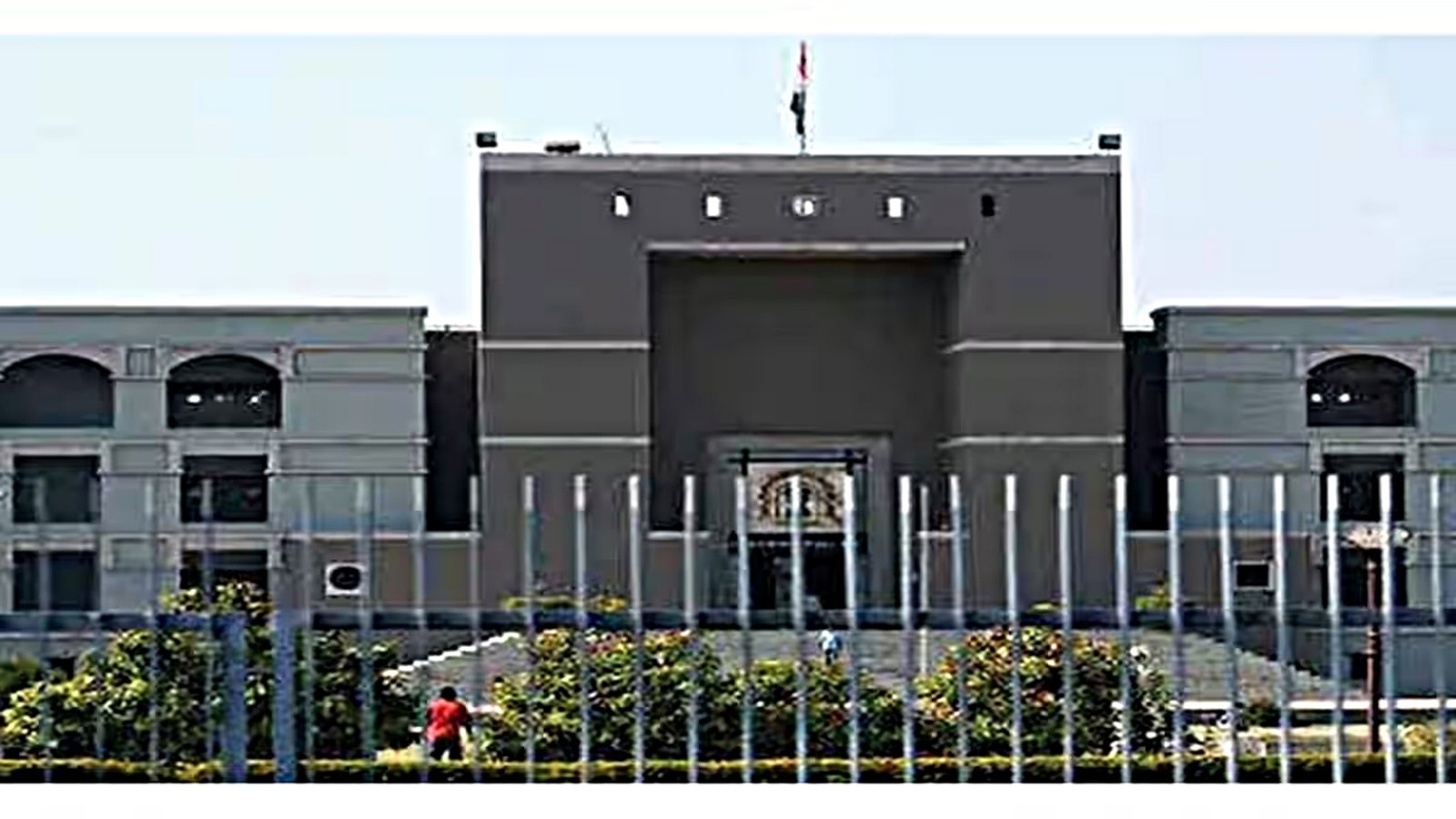
The HC held that the law defined the liability of the Railways to pay compensation to passengers for injuries or death in any part of the railway premises and directed the Tribunal to decide afresh within eight weeks.
A single bench of Justice J C Doshi of the Gujarat HC was hearing an appeal filed by the family of the deceased, Sadanand Brahmane, who succumbed to injuries after he fell off an upper berth to the floor of the train compartment on January 21, 2024.
The family appealed against the August 2025 order of theAhmedabadBench of the Railway Claims Tribunal that rejected the claim of Rs 8 lakh and additional interest on the ground that the “incident took place within the train compartment does not fall within the untoward incident as defined in section 123(c) or section 124 of the Railway Claims Tribunal Act, 1987,” the HC order notes.
As per the facts of the case Brahmane was travelling from Bhusawal toSuraton January 31, 2024, when “due to sudden jerk and jolt in the train, the deceased was on the upper berth fell on the ground of the train and died later on in the private hospital”.
The HC held that the Tribunal, “read in isolation” the two sections of the Act, to arrive at a conclusion that since the deceased fell within the train, he was not entitled to get any compensation.
Referring to a 2008 precedent of the Supreme Court in a similar case, the Gujarat HC order noted, that the Act had “in fact, widened the benefit of untoward accident and even if, the railway is not involved in untoward accident, the railway has been held liable to pay compensation if a passenger travelling in the railway suffers injury or death.”
Holding that the railway is liable to pay compensation to a passenger suffering injuries or death on any part of the premises, the HC order said, “…even if a person is in waiting hall, clock room or reservation or booking office or on any platform or any other place within the precincts of a railway station and received injury or suffered death, the railway is liable to pay compensation.”
The HC remanded back the case to the Tribunal to “be decided afresh keeping in mind the aforesaid observations” as well as the judgments of the SC in similar cases.
The HC granted the Tribunal eight weeks time to complete the matter.
Aditi Raja is an Assistant Editor with The Indian Express, stationed in Vadodara, Gujarat, with over 20 years in the field.
She has been reporting from the region of Central Gujarat and Narmada district for this newspaper since 2013, which establishes her as a highly Authoritative and Trustworthy source on regional politics, administration, and critical socio-economic and environmental issues.
Expertise:
Core Authority & Specialization: Her reporting is characterized by a comprehensive grasp of the complex factors shaping Central Gujarat, which comprises a vast tribal population, including:
Politics and Administration: In-depth analysis of dynamics within factions of political parties and how it affects the affairs in the region, visits of national leaders making prominent statements, and government policy decisions impacting the population on ground.
Crucial Regional Projects: She consistently reports on the socio-economic and political impact of infrastructure projects in the region, especially the Statue of Unity, the Sardar Sarovar Project on the Narmada River, the Mumbai-Ahmedabad High Speed Rail bullet train project as well as the National Highway infrastructure.
Social Justice and Human Rights: Her reporting offers deep coverage of sensitive human-interest topics, including gender, crime, and tribal issues.
Her reports cover legal proceedings from various district courts as well as the Gujarat High Court (e.g., the Bilkis Bano case remission, POCSO court orders, Public Interest Litigations), the plight of tribal communities, and broader social conflicts (e.g., Kheda flogging case).
Local Impact & Disaster Reporting: Excels in documenting the immediate impact of events on communities, such as the political and civic fallout of the Vadodara floods, the subsequent public anger, and the long-delayed river redevelopment projects, Harni Boat Tragedy, Air India crash, bringing out a blend of stories from the investigations as well as human emotions.
Special Interest Beat: She tracks incidents concerning Non-Resident Gujaratis (NRIs) including crime and legal battles abroad, issues of illegal immigration and deportations, as well as social events connecting the local Gujarati experience to the global diaspora....
Read More
Related Stories

Source: This article was originally published by The Indian Express
Read Full Original Article →
Comments (0)
No comments yet. Be the first to comment!
Leave a Comment