
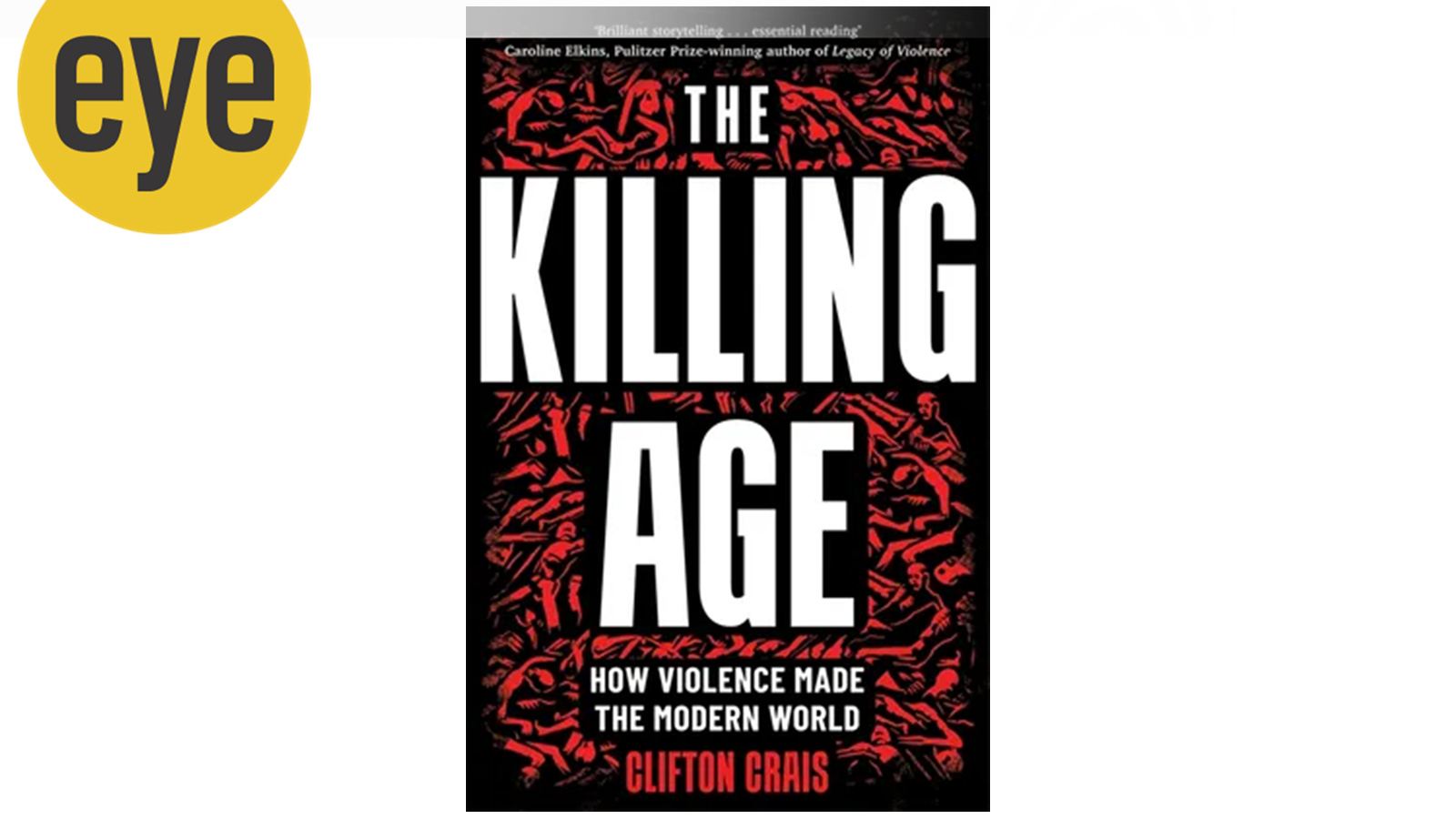
The making of the modern world was accompanied by extraordinary violence, exploitation and environmental devastation.
But what if modern history is darker still: so dark that it requires a new name?
Clifton Crais proposes the “Mortecene”, the Killing Age, as a rebuke to both the Enlightenment’s self-congratulation and the more scientific language of the Anthropocene.
Modernity, on his account, is not primarily an age of reason or simply an era of human environmental impact.
It is a machine for systematic killing.
The book marshals vast statistical and historical evidence, mainly from 1750 to 1900, to defend this stark thesis.
Its through line is disarmingly simple: follow the guns.
Guns, Crais argues, are at the heart of modernity.
Almost every facet of modern capitalist development depended on them.
It was not the steam engine but the proliferation of millions of guns across the globe that transformed the trajectory of development.
Britain led the world in gun production in the 18th century.
India mattered to Britain not only as a territorial possession but because it allowed control over saltpeter, the key ingredient in gunpowder produced in Bihar, giving Britain a near monopoly over the material basis of firearms.
Through the empire, guns spread across the Americas, Africa and Asia, unleashing an unprecedented capacity to kill.
This capacity, Crais contends, laid the foundations of the modern economy.
Slavery is ancient but the introduction of firearms in Africa and Asia enabled slavery on a scale and with a brutality previously impossible.
Guns underwrote the labour regimes central to 18th-century capitalism.
The argument grows even more startling.
Many of the material foundations of the Industrial Revolution, Crais suggests, were inseparable from gun-enabled violence.
The near extermination of indigenous peoples and the obsession with land were sustained by armed conquest.
Before the widespread availability of reliable fossil-fuel lighting, whale oil illuminated homes and cities; firearms facilitated the slaughter of whales on a massive scale.
Industrial belts required immense quantities of leather, contributing to the destruction of tens of millions of bison.
Bison bones became central to phosphorus production.
Even lubricants such as vegetable oils depended on land transformations secured by violence.
Sugar production flowed from plantation slavery.
The rise of American finance, including figures like John Jacob Astor, cannot be disentangled from armed trade and predation.
Individually, many elements of this story are familiar.
But the cumulative force is bracing.
Crais, literally covers the entire world, following guns and their consequences in far reaches of the world, from China to South East Asia; from the Americas to Africa.
The most effective globalisation is not that of commerce but guns.
Outside Europe, unnecessary human deaths between 1750 and 1900 may have reached as high as 200 million.
The destruction of animal life was staggering: some 60 million bison, 10 million elephants, two million whales and countless other species pushed to extinction.
Humanity had become, in effect, a systematic killing machine.
Crais’s empirical reconstruction makes even radical critiques of the violence in modern civilisation, like Gandhi’s, seem restrained.
Yet, the book is not only about violence as foundation; it also offers a political history of state formation.
Until the late 19th century, empires proliferated guns, often through warlords, producing anarchy rather than order.
By the late 19th century, however, imperial powers began consolidating authority through disarmament.
Laws such as the Indian Arms Act of 1885 sought to outlaw private gun ownership as part of a broader project of state consolidation; similar efforts elsewhere met uneven success.
The same empires that had globalised guns now sought monopolies over violence.
The book’s global range is astonishing.
Figures such as four million pounds of gunpowder exported to Africa in a single year, enough for more musket shots than there were people on the continent, force a reckoning with the scale of proliferation.
Institutions like the British East India Company emerge not merely as trading corporations but as vast gunrunning and looting operations embedded in global capitalism.
This is not simply a provocative reinterpretation of modernity; it is a bracing moral reckoning.
In a world accustomed to social scientists speaking of “institutions”, “innovation” and “growth” in antiseptic tones, and even winning Nobel Prizes in the process, Crais forces us to confront what those abstractions concealed: slaughter, dispossession, extinction, and the routinisation of death.
By placing organised violence at the centre of development, he does more than revise a narrative.
The Mortecene is not a metaphor but a structure of history.
After this book, it becomes impossible to invoke the rise of the modern world without hearing the echo of gunfire behind it.
Related Stories



Source: This article was originally published by The Indian Express
Read Full Original Article →
Comments (0)
No comments yet. Be the first to comment!
Leave a Comment