
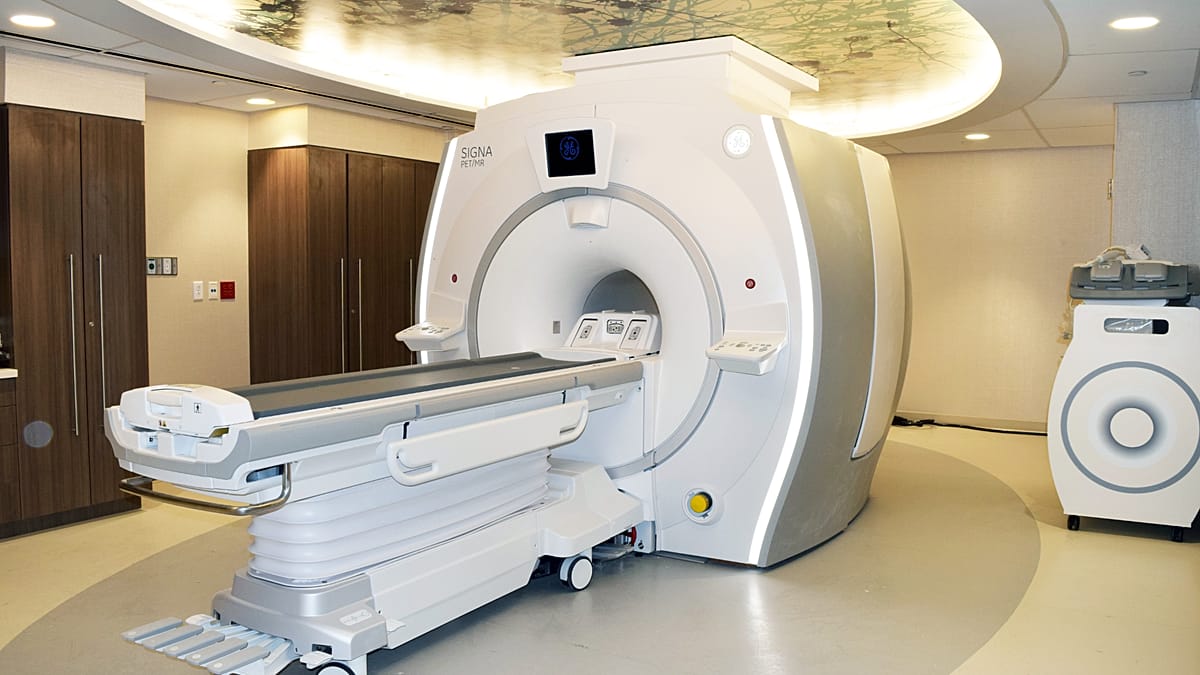
An MRI scanner used in medical imaging, which relies on liquid helium to operate.
-
Copyright
AP Photo
Published on 25/03/2026 - 13:16 GMT+1•Updated
14:36
Iran's strikes on Qatar's Ras Laffan gas hub have disrupted helium production, showing how the conflict is rippling beyond energy markets to hit industries from technology to healthcare.
A disruption to Qatar's helium production is raising urgent concerns about a squeeze in global supplies — and the fallout is spreading fast.
The gas is a niche but critical material used in industries from semiconductor manufacturing to medical imaging, and recent strikes on the Ras Laffan facility have sent warnings of tighter supply rippling through global markets.
Qatar accounts for roughly a third of global helium production
Damages to the facility have prompted warnings of tighter supply in the weeks ahead, as shipments are delayed and containers remain stuck in the region.
Helium is essential to semiconductor manufacturing and has no viable substitute
But industry experts say the impact on chipmakers may be limited, pointing to diversified global supply and the sector's ability to reroute materials and prioritise critical uses.
The bigger concern is healthcare
MRI machines depend on liquid helium to cool their superconducting magnets, and the medical sector has fewer options to absorb a sudden supply shock.
The key question is whether those adjustments can happen quickly enough — and for hospitals, the answer may matter more than for chipmakers.
A semiconductor chip displayed on a fingertip
Helium is used in the manufacturing process of advanced chips.
AP Photo
Helium plays a key role in chipmaking, particularly in cooling silicon wafers during production, where precise temperature control is needed.
G
Dan Hutcheson, vice chair at TechInsights, said the gas remains indispensable to the industry
He highlighted that “Helium is absolutely critical
Without it, you can’t make advanced chips.”
He added that there are no alternatives if supply tightens
“There are no substitutes for helium,” he said.
Despite this, Hutcheson downplayed the likelihood of any meaningful impact to chip output, arguing that the industry has repeatedly adapted to supply shocks.
“Qatar’s helium disruption is likely a nothing burger for semiconductor sales, because supply chain managers have always acted rapidly to resolve issues," he said.
He pointed to past crises, saying the sector has weathered major shocks with limited long-term impact, with only marginal dips in sales following supply shocks.
Helium is produced as a byproduct of natural gas extraction, and supply is not limited to Qatar, with producers in the United States, Algeria and Canada also contributing significantly to global output.
Hutcheson said a sustained impact on production would only occur under extreme circumstances
“Never, unless all other sources are cut off,” he continued.
Markets may be underestimating how the Iran war could hit the global economyEuropean chip research giant imec opens Qatar hub in Middle East push
MRI systems under pressure
While the semiconductor industry may be able to absorb the shock, the risks could be more immediate in healthcare
MRI scanners rely on liquid helium to keep their superconducting magnets at extremely low temperatures, allowing them to operate efficiently.
Tobias Gilk, an MRI safety consultant, said the machines depend on maintaining helium at around minus 269 degrees Celsius.
“Without sufficient helium, the scanner can’t operate and effectively becomes a very expensive paperweight," he explained.
Most MRI machines require large volumes of liquid helium, and if supplies tighten, some systems could be taken offline if they cannot be refilled after faults or maintenance.
“There will be MRIs that go down,” he said, adding that shortages could delay repairs if service providers cannot access enough purified helium.
Any immediate impact will depend on how long the situation lasts and how quickly supply chains adjust.
Egypt deepens diplomacy amid Iran war tensions
Five European nations and Japan to 'contribute' to Hormuz security
QatarEnergy declares force majeure as attacks halt gas production
Related Stories

Source: This article was originally published by Euronews
Read Full Original Article →
Comments (0)
No comments yet. Be the first to comment!
Leave a Comment