
More of the same talking points, but it seems Nvidia has seen the backlash.
Get Tom's Hardware's best news and in-depth reviews, straight to your inbox.
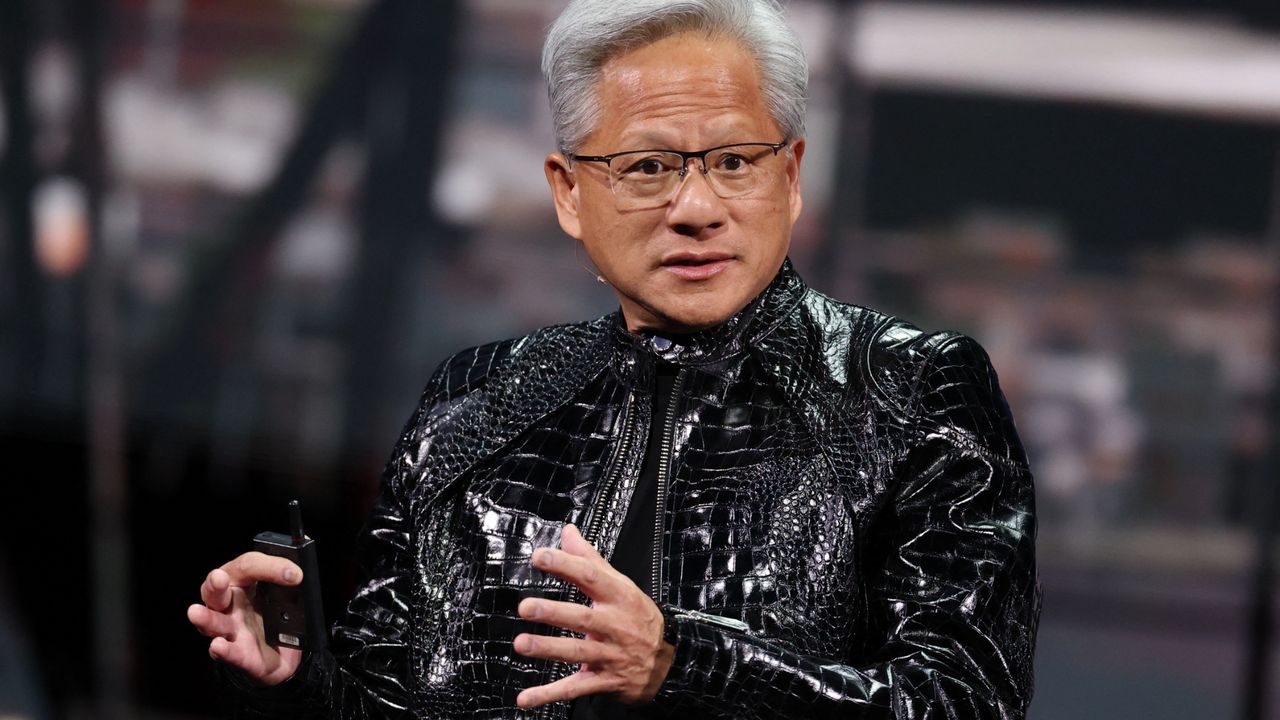
Nvidia CEO Jensen Huang is conceding to backlash, following comments the executive made at GTC 2026 where he said gamers were "completely wrong" about their criticisms of DLSS 5, as first reported by Tom's Hardware .
During a recent appearance on the Lex Fridman podcast , Huang seemed more sympathetic to the vocal crowd that has framed DLSS 5 as "AI slop."
"I think their perspective makes sense," Huang said.
"And I could see where they're coming from because I don't love AI slop myself.
You know, all of the AI-generated content increasingly looks similar, and they're all beautiful...
so I'm empathic toward what they're thinking.
That's just not what DLSS 5 is trying to do."
Although Huang is striking a more conciliatory tone, much of his response is similar to what we heard at GTC.
"The artist determines the geometry, we are completely truthful to the geometry...
so every single frame, it enhances, but it doesn't change anything."
There was some confusion about how DLSS 5 worked when it was first announced, and although the inner workings of it still aren't clear on a technical level, Huang has said that it isn't a general-purpose generative AI model.
He describes it as "content-controlled generative AI." On the other end of the spectrum, Huang also said that it isn't a post-processing filter.
The technical details of DLSS 5 live somewhere between that space, and we likely won't know them until later this year when the feature is set to release.
"The question about enhancing, DLSS 5...
in the future, you could even prompt it.
You know, I want it to be a toon shader.
I want it to look like this, kind of.
You could even give it an example and it would generate in the style of that, all consistent with the artistry, the style, the intent of the artist," Huang continued.
"All of that is done for the artist so they can create something that is more beautiful but still in the style that they want."
Although the talking points about DLSS 5 remain unchanged, it seems that Huang has at least heard the criticism.
"I think that they got the impression that the games are going to come out the way the games are...
and then we're going to post-process it.
That's not what DLSS is intended to do."
Huang also made assertions that DLSS is "integrated" with the artist, and suggested that it would put the power of generative AI in the hands of artists working in game development; although, we've already seen generative AI show up in shipping releases, from Clair Obscur: Expedition 33 to the recently-launched Crimson Desert.
Up to this point, DLSS hasn't been a tool developers have much interaction with.
It's not post-processing, either, but it comes late in the rendering chain and is largely governed by Nvidia's models and various DLSS presets.
Although DLSS 5 looks like it's doing a lot, Huang said that it's just another tool, not an essential feature.
"The gamers might also appreciate that, in the last couple of years, we introduced skin shaders to game developers, and many of those games have skin shaders that include sub-surface scattering that makes skin look more skin-like...
[DLSS 5] is just one more tool.
They can decide what to use," Huang ended the conversation about DLSS 5.
Immediately after, without missing a beat, he said 1993's Doom was the most influential video game ever made.
Follow Tom's Hardware on Google News , or add us as a preferred source , to get our latest news, analysis, & reviews in your feeds.
Jake Roach is the Senior CPU Analyst at Tom’s Hardware, writing reviews, news, and features about the latest consumer and workstation processors.
Whereas that infamous thumbnail was rightfully criticized by all, this other, far less discussed comparison demonstrates how the technology can largely preserve a game character's original facial structure while still greatly improving its lighting and shading.
The image choice suggests that someone at NVIDIA wanted to maximize the wow factor with that specific thumbnail choice, and in doing so, essentially condemned DLSS 5 to a fierce backlash.
I would even recommend delaying the actual release of the technology beyond Fall, if at all necessary.
I doubt there's any risk of anyone getting a similar neural rendering tech out before NVIDIA, and it's important that the next time DLSS 5 is shown, most of the rational critiques (not the ideological, preconceived ones against any form of AI) are addressed properly.
DLSS 5 doesn't integrate with a game engine yet (which was one of the side criticisms), but that certainly sounds like the next step for the technology and would ensure better harmony with a game's original style.
CelicaGT said: The end result is that it does alter the image.
But he can totally say it doesn't change the geometry, because it can't.
usertests said: This wccftech editorial argues that Nvidia messed up by choosing the Grace thumbnail when more subtle alterations of her face were available:
Related Stories



Source: This article was originally published by Toms Hardware
Read Full Original Article →
Comments (0)
No comments yet. Be the first to comment!
Leave a Comment