
The Standard's journalism is supported by our readers.
When you purchase through links on our site, we may earn an affiliate commission.
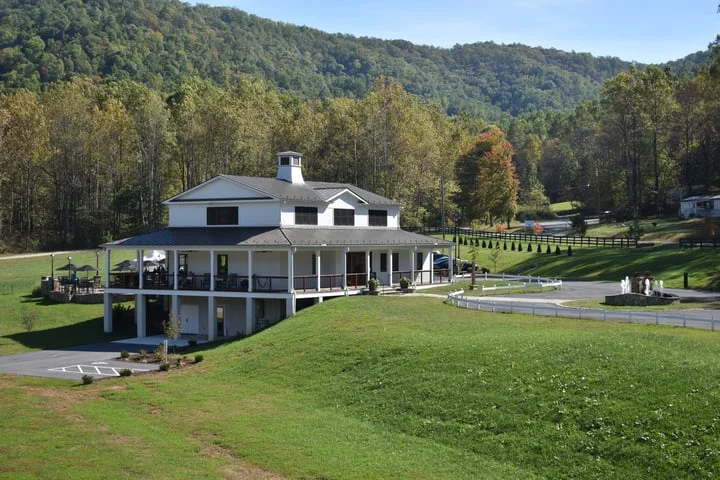
In Virginia ’s Blue Ridge Mountains, casks expand and contract like lungs, driven by heat and humidity, pushing spirit deep into oak before drawing it back again.
The effect is immediate and physical, creating constant interaction between wood and liquid.
Maturation does not drift forward slowly here but moves with pressure, concentration and loss.
Virginia Distillery Company begins with a gap which one man refused to ignore.
George Moore arrived in the United States from Ireland on a scholarship before building a career in California’s early technology sector, where he helped bring caller identification into use.
The work trained him to notice what was missing from otherwise complete systems, and he carried that instinct into whiskey .
His collection was rigorous, almost obsessive.
A single malt for every day of the year, organised across Scotland , Ireland, and Japan, and informed in part by his connection to Dr.
John Teeling, the distiller behind Cooley and later Teeling Whiskey Company, who played a central role in reviving independent Irish whiskey.
It was a comprehensive map of the category, but it contained a notable absence.
For a country so closely associated with whiskey, the United States had yet to establish a widely recognised single malt tradition which could stand alongside those established styles without explanation.
Rather than work within Kentucky, where bourbon had already fixed the terms, Moore chose Virginia, which offered no precedent and no established style.
If the category did not exist in a coherent form, it would have to be built.
The distillery was still unfinished when Moore died in 2013.
Its future depended on a decision rather than momentum.
His wife, Angela chose to fund the project, and his son, Gareth returned to Lovingston to complete it.
The phrase Moore repeated throughout his life, “have the courage of your convictions”, became a practical instruction, shaping choices which carried both financial and creative risk.
Amanda Beckwith did not arrive as a distiller but with a way of thinking about flavour.
Much of it came from time spent in the kitchen with her brother, Josh, a chef, where dishes were taken apart and rebuilt to understand why they worked.
Some combinations made no immediate sense, while others revealed their logic over time.
One of her clearest memories is pairing crème brûlée with Johnnie Walker Blue Label and pulling it apart to understand how it held together.
“I wanted to dial it all out and play detective,” she says.
Before she was legally able to drink in the United States, she was already training her palate through tea, focusing on aroma, texture and balance.
Trips to Scotland confirmed that flavour could carry a sense of place with precision, but they did not provide a template to follow.
At the time, she was working in banking while completing a doctorate in English literature, until she came across a distillery in Virginia attempting to define an American single malt on its own terms.
She wrote to them and received a reply within minutes.
Within weeks, she had left her job and moved to Lovingston.
There, she met Gareth Moore, his wife, Maggie and their infant son, George, named after his grandfather.
Over time, she watched him grow alongside the casks as they were filled, which gave the work a different sense of pace and continuity.
It was measured less in release cycles and more in people, seasons and wood.
This internal language developed alongside the physical distillery, which was built under the direction of Harry Cockburn, former distillery manager and engineer at Bowmore.
In 2016, Dr.
Jim Swan joined as a consultant and shifted the focus decisively towards Virginia itself.
“He opened my eyes to Virginia,” Beckwith says.
“To what it actually does.”
The consequences are immediate.
Losses can be extreme, in some cases reaching up to half a cask within six years, which places pressure on both stock and decision-making.
Maturation is accelerated, but it is also less forgiving, narrowing the margin for error.
Ministers defend response to fuel protests ahead of confidence vote
UK Labour PM will always work with Scottish Government, says Sarwar
Scotland’s main political party leaders set for first TV debate of election
Discover a hidden island paradise in the Indian Ocean
Beckwith’s education continued in practical terms.
In Kentucky, she learned to handle barrels directly, understanding the resistance and variability of oak as a material.
Nancy Fraley, known as “the nose” and respected for her work across multiple spirits categories, recognised her palate and encouraged her to move into blending.
Outside the distillery, that same instinct carries into her writing.
Beckwith writes poetry and non-fiction, and has long been drawn to historical subjects, researching places and events in detail before reimagining them on the page.
The process is not far removed from her work with whiskey, where understanding structure comes through breaking things down and rebuilding them with intent.
The distillery’s early use of Scotch spirit matured in Virginia demonstrated the impact of climate, but it was always intended as a transitional step.
The long-term aim was to produce a whiskey which belonged entirely to Virginia rather than relying on external foundations.
Courage and Conviction, first released in 2020, reflects that shift.
The first batch, drawn from thirty-seven casks and bottled at 46 percent, was released during the uncertainty of the COVID-19 pandemic, when holding it back would have been the safer decision.
Beckwith recalls returning to Moore’s words at that point.
“Have the courage of your convictions.
If you believe in something, now’s the time.
Go for it.” The release was not just named for the phrase but acted on it, demonstrating in practice what that conviction required at the point of risk.
It sold out quickly and received a score of 96 points from Wine Enthusiast, reinforcing that the approach was working in practice.
New make spirit is filled directly into its final casks, with part of the stock managed through a solera-style system to maintain continuity over time.
Ex-bourbon barrels provide a structural base, while STR wine casks, sherry casks and locally sourced oak introduce layers which are shaped with control rather than left to chance.
“It gave me more levers,” Beckwith says.
“I could build without covering.”
The STR process, developed by Swan, reshapes wine casks by shaving, toasting and re-charring them, balancing residual wine influence with fresh wood character.
Beckwith extends that control through carefully calibrated toast levels, building flavour in layers without obscuring the underlying distillate.
Reduction follows the same principle.
“You can’t just dump water in,” she says.
“You break it.” Instead, water is added gradually over extended periods, sometimes taking months, allowing the whiskey to retain its structure.
It is bottled without chill filtration or added colour, and at a strength which allows it to hold across different ways of drinking.
Beckwith identifies four to eight years as the point where Virginia single malt reaches balance, with orchard fruit developing into spice and structure supported by texture.
“Mouthfeel is everything,” she says, a priority which shapes decisions across maturation, blending and reduction.
Alongside this core range, the distillery also produces the Virginia Distillery Company line, which focuses on cask finishing and secondary maturation, offering a more flexible expression of the same house style.
Virginia Distillery Company works within established single malt conventions, using 100 per cent local malted barley, copper pot stills and oak casks, while allowing climate and cask to reshape the outcome.
It offers a point of familiarity for Scotch drinkers before moving into something distinctly Virginian.
In its Blue Ridge Toasted Barrel Finish, this extends to the use of local quercus virginiana with carefully calibrated toast levels, offering a more directed expression of that approach.
American single malt is beginning to take clearer shape as a category, with more than 100 distilleries across the United States now producing or developing it, and formal recognition recently established at a federal level.
Virginia alone is larger than Scotland, with enough variation in landscape and conditions to support a wide range of styles over time.
George Moore did not live to taste the whiskey which carries his words, but the idea he identified is no longer theoretical.
It has taken form through the work of those who continued it, shaped by place, defined by decisions and now stands on its own terms, without reference or permission.
The Courage & Conviction range and Virginia Distillery Co.
expressions are available via masterofmalt.com
Related Stories

Source: This article was originally published by Evening Standard
Read Full Original Article →
Comments (0)
No comments yet. Be the first to comment!
Leave a Comment