
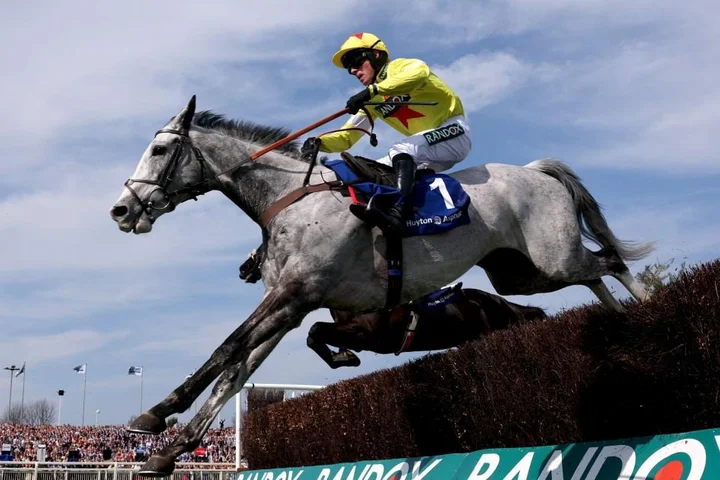
The Grand National is the most famous horse race in the country, but while it creates thrills and excitement, it is also associated with tragedy.
The 30 jumps at Aintree provide incredible drama but also huge danger for the horses and jockeys who are tasked with navigating their way around the four mile and two-and-a-half furlong course.
There have been significant changes at Aintree in recent years to improve the safety of the course, but the inherently dangerous sport remains risky.
And the runners and riders will once again risk their lives for the 2026 edition of the famous horse race which gets underway at 4pm today.
How many horses have died at the Grand National?
A total of 88 horses have died in the Grand National since the race was first run in 1839.
Of these 88 deaths, 16 have come since the year 2000, with several of these taking place in the last few years.
One horse died at the main Grand National race in 2019, named Up For Review.
Ridden by jockey Danny Mullins, the animal was brought down at the first fence by another fallen horse.
Up For Review was the first to be killed in the steeplechase in seven years, since the deaths of Synchronised and According to Pete in 2012.
The tragic scene involving Up For Review was quickly covered from view as Tiger Roll won the competition for the second year in a row.
There was no Grand National race in 2020 due to the pandemic, and in 2021, one horse died: The Long Mile.
The 2022 race saw two fatalities with Discorama pulling up before the 13th fence, whilst Eclair Surf died following a heavy fall at the third fence.
The 2023 Grand National, which was delayed after a protest by an animal rights group, claimed the life of Hill Sixteen.
There were no fatalities in 2024 or 2025.
The Aintree Festival as a whole, meanwhile, has seen far more deaths with 67 alone dying since the turn of the millenium.
The latest fatality is Gold Dancer, who was put down on Friday after suffering a broken back during his win in the Mildmay Novices’ Chase.
The 2023 meeting was a particularly sombre occasion, with Hill Sixteen one of four horses to have died across the festival that year.
According to the British Horseracing Authority (BHA), steeplechasing events have an average of four deaths per 1,000 horses taking part, although this average is higher at Aintree.
How many jockeys have died in the Grand National?
Only one jockey has lost their life in the famous old race.
On March 12, 1862, O’Connell’s rider Joseph Wynne suffered fatal injuries when another horse, Playmate, caused a pile up when it fell at The Chair – a formidable obstacle at a height of 5’3” and preceded by a 6’ open ditch.
Playmate landed on top of Wynne, crushing his breastbone and knocking him unconscious.
The jockey died at 8pm that evening without ever regaining consciousness.
Improvements in safety
In recent years, a number of physical changes to the course have been introduced in an attempt to make the Grand National safer for both horses and jockeys.
For example, fences now use softer materials – such as foam cores – to reduce the impact force if a horse makes a mistake and brushes a fence.
A number of fences have had their height reduced, whilst in 2024 the first jump was moved 60 yards closer to the start line in an attempt to reduce the speed at which the fence is taken at.
Landing zones have also been reprofiled in places to soften the impact of horses hitting the ground.
As well as the physical changes, the field was reduced from 40 horses to 34 in 2024 to ease congestion, and a standing start has been introduced in favour of a rolling start in order to provide greater control over the horses at the beginning of the race.
However, despite these changes, many within the community think these alterations have actually led to jockeys taking more risks.
Related Stories


Source: This article was originally published by Metro UK
Read Full Original Article →
Comments (0)
No comments yet. Be the first to comment!
Leave a Comment