
In August 1997,the murder of music baron Gulshan Kumaroutside a Mumbai temple shocked the nation and forced India to confront the connection between Bollywood and underworld gangsters.
But months before that killing made headlines across the country, another film producer had already been gunned down in the city.
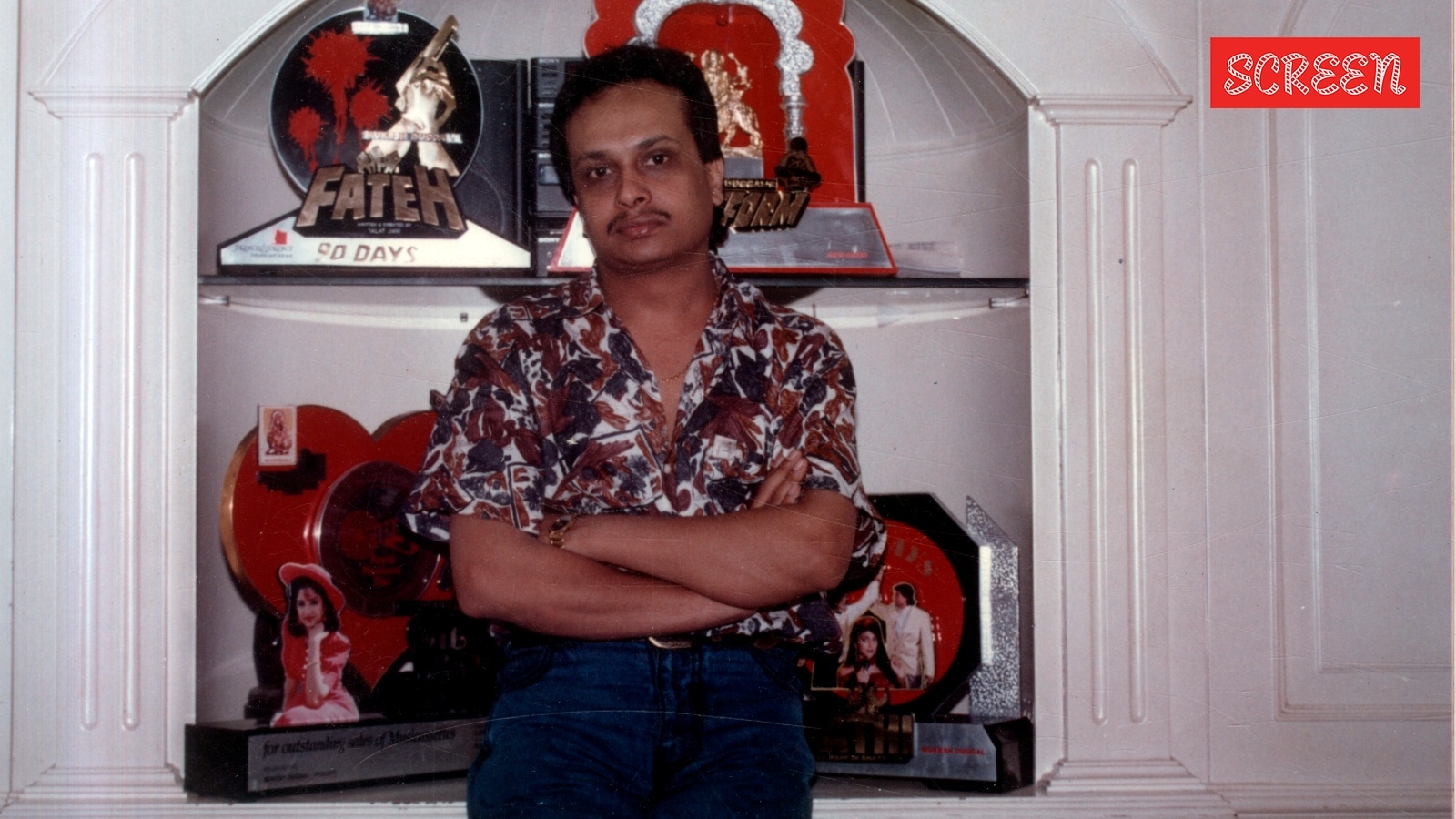
His name was Mukesh Duggal.
On March 7, 1997, Duggal was shot dead in his office in Seven Bungalows, Andheri.
His killing sent a signal in the film industry that the underworld’s grip on Bollywood had tightened, and no one in the business was safe anymore.
The relationship betweenMumbai’s underworld and the Hindi film industry did not suddenly appear in the 1990s.
As early as the 1960s, gangsters like Haji Mastan were seen as “alternative financiers,” often photographed socialising with legends of the film industry.
But by the late 1980s and 1990s, the relationship had turned far more sinister.
Gangsters were no longer just mingling with film personalities, they were financing films, influencing casting decisions and allegedly using the industry to convert black money into legitimate earnings.
From forcing stars to perform at “Dubai parties” to dictating casting choices, the underworld had a lot of influence.
According to former Mumbai Police Commissioner D Sivanandhan, several films of that era were believed to have been funded by the underworld.
“Films like Satya, Company, Daddy, Shootout At Wadala, Shootout At Lokhandwala were made to lift the image of the gangsters.
They were all funded and financed by them only,” he said in an interview with ANI.
Actors also faced intimidation.
In journalist Anupama Chopra’s book King of Bollywood: Shah Rukh Khan and the Seductive World of Indian Cinema, actor Shah Rukh Khan recalled receiving threatening calls from gangster Abu Salem.
“He would tell me that he could see me.
It was like living under a telescope.
It was very depressing and very scary,” Shah Rukh said.
It was during this volatile period that Mukesh Duggal emerged in Bollywood.
ALSO READ:Dawood Ibrahim’s gangsters asked Naseeruddin Shah to return fee of my film, claims Lilliput: ‘I was in wrong company’
According tosenior crime journalist Baljit Parmar, Mukesh Duggal hailed from Amritsar and built his initial fortune through cloth smuggling.
“Before coming to Mumbai, he was associated with cloth smuggling and made a lot of money.
With that money, he started film financing and then became a producer,” Baljit said in his YouTube channel.
By the early 1990s, Duggal had transitioned into full-fledged film production.
Despite his relatively short career, Duggal produced several mainstream Hindi films during the early and mid-1990s.
His early production ventures included the 1991 action film Fateh starring Sanjay Dutt and the Mahesh Bhatt-directed Saathi, featuring Aditya Pancholi.
He followed these with films such as Dil Ka Kya Kasoor, starring Divya Bharti, and Platform, which featured Ajay Devgn.
In 1994, Duggal also stepped into the director’s chair with Gopi Kishan, starring Suniel Shetty in a double role alongside Karisma Kapoor and Shilpa Shirodkar.
The film became a commercial success and remains the most widely remembered project associated with his name.
He also produced films such as Milan and the thriller Khilona.
By the mid-1990s, Duggal had carved out a visible space for himself among Bollywood’s mid-budgetproducers.
One of the names closely associated with Mukesh Duggal’s career in the mid-1990s was actor Monica Bedi.
Duggal launched Bedi in Bollywood with the 1996 film Khilona.
At the time, the two were believed to share a close personal relationship.
It was through this Bollywood-underworld pipeline that Monica Bedi eventually caught the eye of Abu Salem, one of the key figures linked to the Dawood Ibrahim network.
Their relationship later made headlines when the two were arrested in Portugal in 2002 and eventually extradited to India.
According to Parmar, Duggal had connections with members of the Dawood Ibrahim network, particularly Chhota Shakeel.
However, the underworld landscape shifted dramatically in 1994 when Chhota Rajan split from Dawood Ibrahim.
With Dawood’s network relocating its base to Karachi, Duggal thought the D-gang’s hold was weakening and he shifted his allegiance to Chhota Rajan
“He had developed connections with the Dawood gang, particularly with Chhota Shakeel.
He felt the situation had changed and the Dawood gang’s hold had weakened, so he shifted his allegiance towards Chhota Rajan,” Parmar said.
As his underworld links became public knowledge, legitimate distributors and financiers began to distance themselves.
Duggal reportedly began planning a Punjabi film to revive his career.
According to Parmar, the project was expected to feature singer Gurdas Maan with Monica Bedi as the female lead.
The film was also expected to include guest appearances by Madhuri Dixit and Suniel Shetty.
Around the same time, Parmar recalled an incident during one of his visits to Duggal’s office.
A well-known music baron, whose name Parmar declined to reveal, reportedly arrived at the office visibly anxious.
“He told Mukesh, ‘Trouble is coming for us… I need to leave Mumbai; the pressure from the police and the other side is too much,'” Parmar narrates.
The man reportedly said he was under pressure from both the underworld and the police.
Duggal advised him to leave the city immediately but his passport had expired.
“Mukesh Duggal advised him to take a flight toDelhiimmediately and said he would be able to get a passport there,” Parmar said.
Later, Parmar said he learned that the man had indeed travelled to Delhi, obtained a passport and left the country.
On March 7, 1997, three men entered Duggal’s office and opened fire.
According to Baljit Parmar, the hit squad consisted of Sadiq Kalia, Salim Chikna, and Munnar Jhagda (the man who would later attempt to kill Chhota Rajan in Bangkok in 2000).
Police investigations from that era closely mirror Parmar’s accounts.
As per The Guardian, police believed the killing was linked to his alleged financial dealings with gangster Chhota Rajan, from whom he was said to have borrowed money to finance his films.
Investigators suspected that the murder was carried out by associates of Chhota Shakeel as part of a revenge attack.
The killing sent shockwaves through the film industry.
Years later, gangster Abu Salem made sensational claims during a narco-analysis test, alleging that actor Manisha Koirala had ordered Duggal’s killing.
“Manisha Koirala gave a supari and had film producer Mukesh Duggal killed by Chhota Rajan.
She also got her former secretary Ajit Deewani murdered through Anees Ibrahim, brother of Dawood Ibrahim,” Abu Salem said during the narco-analysis test, as quoted by India Today.
Police officials, however, dismissed Salem’s claims as an attempt to manipulate legal proceedings and settle personal scores.
The official stance remained rooted in the gang-war theory: Duggal was a victim of the Shakeel-Rajan rivalry.
The blood spilled in 1997 (Mukesh Duggal, Gulshan Kumar) eventually led to a structural change.
In 2000, the government granted “Industry Status” to Bollywood, allowing filmmakers to get legitimate bank loans.
The scandal surrounding Chori Chori Chupke Chupkein 2001 marked the beginning of the end for Bollywood’s long-standing underworld nexus.
When the police seized the film’s prints and arrested financier Bharat Shah and producer Nazim Rizvi, it was revealed that the film was being funded by Chhota Shakeel.
The case became a turning point.
For the first time, a major film starring Salman Khan, Rani Mukerji and Preity Zinta was directly tied to underworld financing, forcing the industry to shift toward legitimate corporate investment.
Clickhere to follow Screen Digital on YouTubeand stay updated with the latest from the world of cinema.
Related Stories


Source: This article was originally published by The Indian Express
Read Full Original Article →
Comments (0)
No comments yet. Be the first to comment!
Leave a Comment