
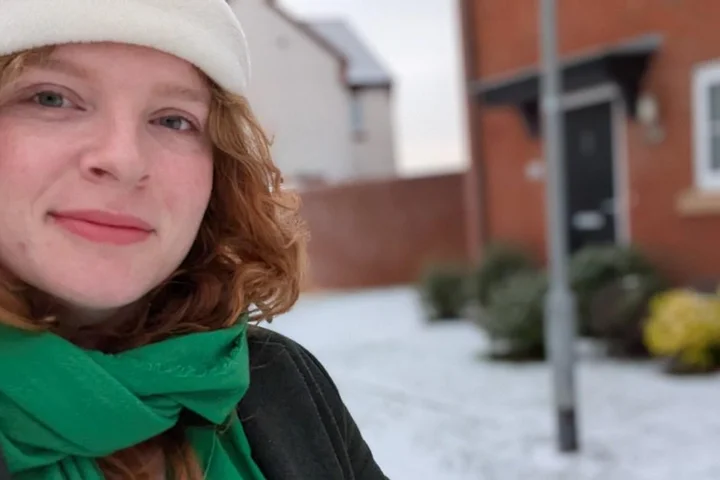
As I waddled from my car to the office, I heard a shrill voice call out from behind me: ‘Are you sure you’re only carrying the one?’ it said.
Surprisingly, I didn’t think this question was too intrusive.
I was eight months pregnant with my child, but looked, and moved, like I was carrying quadruplets.
And because I was having a number of complications, meaning there was seldom a moment I wasn’t in pain or struggling to maintain my breathing, waddling was really all I could do in those days.
But it was what this voice – the voice of a colleague – said next that made me see red.
Sticking her head back out of the window to address me once more, she shouted, ‘I bet you wish you’d kept your legs shut now!’ before cackling as if it was the funniest joke ever made.
However, the joke fell completely flat (not that she noticed) and made me feel like I’d been punched in the gut.
I couldn’t believe that someone would have the audacity to shout this directly at a heavily pregnant woman – let alone in the workplace, and especially someone who was not anywhere near close enough to me to joke like that.
What this woman didn’t know was that I had desperately wanted to become pregnant, and struggled hard for it, too.
I had spent over a year taking tablets, tracking my ovulation using strips and apps.
I checked online forums for advice, tried various diets, and timed intimacy with my partner for our best chances at conceiving. I was militant.
Yet every month that I didn’t conceive was just another month left feeling that my body had utterly failed me.
I was struggling mentally with my lack of progress, and what hurt even more was the instances of false hope: the positive pregnancy tests that turned into pain, tears and quickly discarded bloodied tissues.
So when I finally managed to conceive, after much strain on my relationship, it almost felt too good to be true.
Which is probably why I spent the entire first trimester in an awful amount of stress as I was convinced I was going to miscarry.
Instead, my pregnancy progressed well, until the complications started.
Right off the bat, my pregnancy was deemed high risk thanks to my hypothyroidism.
It meant that I had to have increasingly regular appointments, scans and blood tests to ensure me and the baby were healthy throughout.
I’d never felt so ill and in constant pain.
The diet plans were awful – nothing seemed to work.
Then at around four months I had too much fluid, and just weeks later I was diagnosed with diabetes.
Pelvic pain came in my third trimester, as did the rapid fluid retention, about two weeks before I was induced.
To make matters worse, I was then told I had polyhydramnios – too much amniotic fluid, gestational diabetes (something that was completely out of my control), pelvic girdle pain, and then rapid fluid retention that left me unable to stand or walk without crying.
And if that still wasn’t enough, as soon as I was able to tell people about my pregnancy, it was like I’d invited people to treat me in a whole new way – and I hated it.
People became insensitive, asking me personal questions about how I’d conceived, and the kicker was that most assumed it had been an accidental pregnancy.
It was utterly demeaning.
All I wanted was for someone to notice that I was struggling and offer a few kind words – particularly if they were a parent themselves, which my loud, former colleague was.
I remember feeling so upset after her comments in the car park that I told my team immediately.
One woman, who I’d worked closely with and understood what I had gone through with my pregnancy and fertility, had even witnessed a moment of false hope that turned into devastation in that very same office.
She agreed that this other colleague’s comments were utterly despicable.
I debated reporting the comments to HR, but the company was very clique-y, and I wasn’t part of the friend group.
I felt that my upset would not be heard.
I preferred to keep my head down.
Thankfully, as I rarely had run-ins with her department, it was easy enough to avoid her – which I did successfully for a couple of weeks until my maternity leave began.
In February 2020, just three weeks before the nation would lockdown for two years.
I was induced into a 16-hour labour which gave me back-to-back contractions in my lower back that never stopped.
Then came an emergency incision (episiotomy) and forceps, and my baby was finally welcomed into the world.
I still think about her thoughts to this day.
It was so insensitive, especially as I was so desperate to become a mum and had struggled with fertility.
Even now, if someone said it to me – when I do not want any more children – I’d still be so upset.
When I fell pregnant again (ten months later and planned) – through a, thankfully, much quicker process – I decided to leave the company.
I was being moved around in the departments because they couldn’t find a space for me after I returned from maternity leave, but wouldn’t commit to giving me the higher pay for the work I was doing.
Leaving was the best move for my career and for my mental health.
My second pregnancy was the exact same as the first, apart from the fluid retention and amniotic fluid.
However, I was more equipped to deal with it – I was prepared this time.
As we were still in lockdown, I rarely saw people in 2021 other than my bubble and doctors, which I was actually thankful for.
I felt a lot calmer without people trying to touch my stomach.
Since going through all that, I’ve learned to keep my comments to myself.
When I see a heavily pregnant woman waddling along in pain, I don’t make assumptions about whether they regret their pregnancy choices or dress something up as a ‘joke’, I simply smile and sympathise.
You never know what someone has been through and, just as I’m teaching my two children now, sometimes if you have nothing nice to say, it’s better to say nothing at all.
Originally published January 27th, 2026
Related Stories


Source: This article was originally published by Metro UK
Read Full Original Article →
Comments (0)
No comments yet. Be the first to comment!
Leave a Comment