
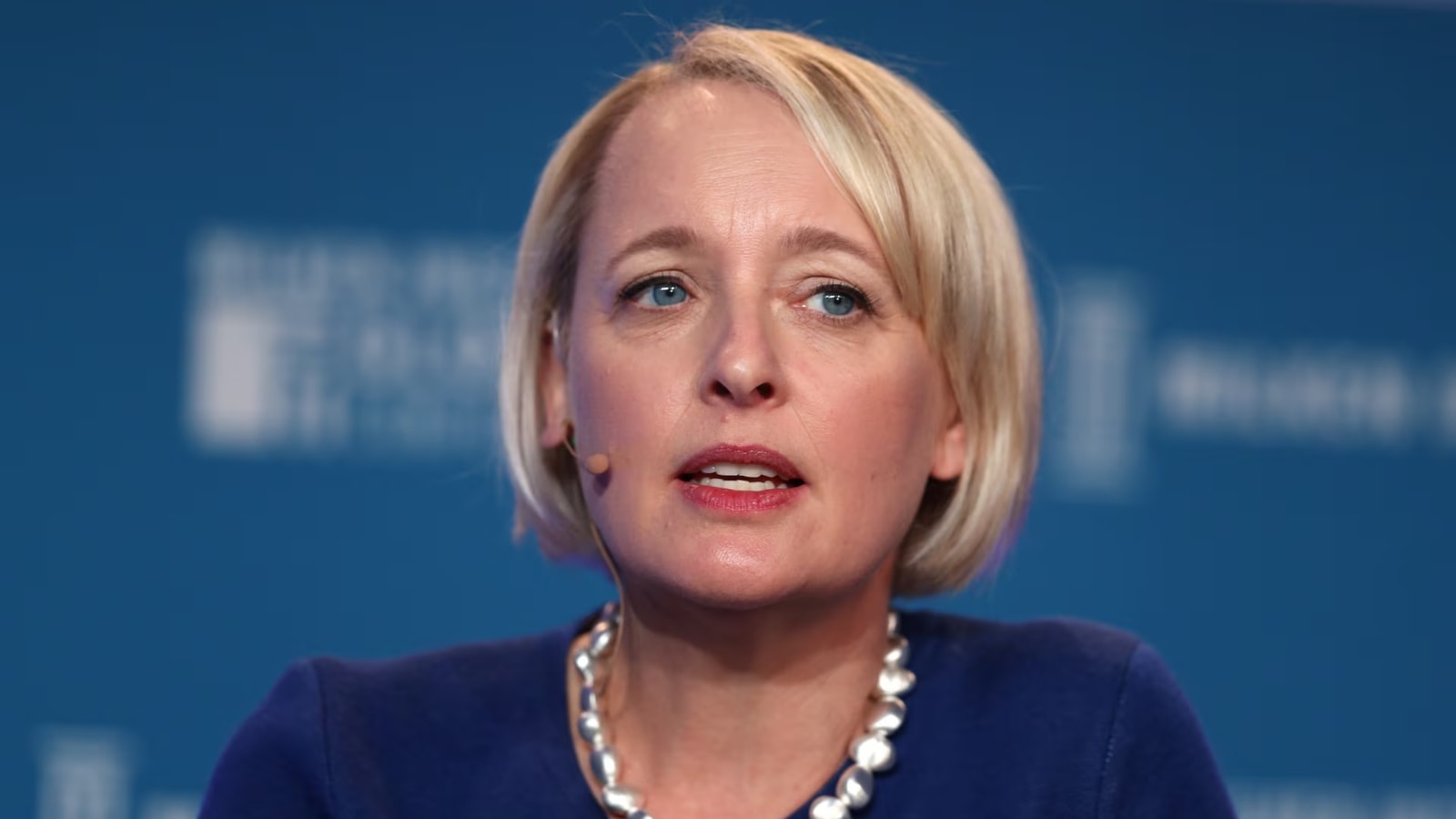
Climbing the corporate ladder at Accenture now comes with a clear expectation: employees need to be comfortable using the company’s AI tools.
Speaking on a recent episode of the“Rapid Response” podcast,Accenture CEO Julie Sweetsaid that being skilled in AI is no longer optional for those aiming for promotions within the firm.
Back in September, the consultancy revealed it had put over $865 million into a “six-month business optimization program,” which focused on retraining large sections of its workforce.
Those unwilling to adapt to new workplace technologies were eventually let go.
“If you want to get promoted, you’ve got to do the things that we do to operate Accenture,” Sweet said.
“These are the new tools to operate a company,” she added.
“We didn’t go from zero to ‘you won’t get promoted’ in a month.
It’s over a three-year period of getting used to the technology, making sure it’s user-friendly, making sure we have the right workbench for people to use, and then saying, ‘Hey, this is Accenture and how we operate.’”
Sweet compared the current push for AI literacy to earlier technological shifts, such as when computers became standard in offices.
In her view, today’s AI training mirrors the typewriter lessons of the past.
“No one would have said that requiring someone to use a computer is coercion,” Sweet said.
“It’s how the companies were going to get work done.
Today, AI at Accenture is how we do work.”
At the same time, she acknowledged that many organisations remain cautious about adopting AI at scale.
In a previous conversation with Fortune Editor in Chief Alyson Shontell, Sweet noted that some companies struggled because they tried to fit AI into existing systems instead of redesigning workflows around it.
“First of all, I think we’re a good lesson in something that I’m advising CEOs all about: In order to capture the opportunity with AI, you really have to be willing to rewire your company,” Sweet said.
Monitoring how employees use AI is part of her broader effort to make Accenture an “AI-first” company.
According to Sweet, this approach demands that leaders clearly understand both the strengths and limitations of the technology.
When ChatGPT was released in November 2022, Accenture prioritised training its top 50 leaders first, according to Business Insider.
Sweet said this was crucial because senior executives needed to fully grasp AI’s potential before they could reshape the firm’s services and guide clients on using the technology effectively.
“I knew that if they didn’t understand the power, they would not be able to help us actually transform how we’re delivering our services and what our clients could use it for,” she said.
The large-scale retraining drive is part of Accenture’s broader three-year, $3 billion AI strategy unveiled in 2023.
One of its key targets is to expand the company’s AI workforce to 80,000 professionals through recruitment, acquisitions, and internal training.
The firm currently employs more than 770,000 people.
Despite Accenture’s aggressive push, widespread AI adoption across businesses has been slower.
A Gallup poll showed that by the fourth quarter of 2025, 38% of companies had incorporated AI to boost productivity, efficiency, and quality – only a slight increase from the previous quarter.
Still, usage among workplace leaders has grown significantly, with 69 per cent reporting they used AI by late 2025, compared with under 40 per cent in mid-2023.
Executives have also expressed doubts about AI’s real-world impact.
A February study by the National Bureau of Economic Research found that while about two-thirds of 6,000 C-suite leaders had used AI, they spent just 1.5 hours per week on it.
Nearly 90 per cent said that over the past three years, the technology had made little difference to jobs or productivity.
Related Stories


Source: This article was originally published by The Indian Express
Read Full Original Article →
Comments (0)
No comments yet. Be the first to comment!
Leave a Comment