
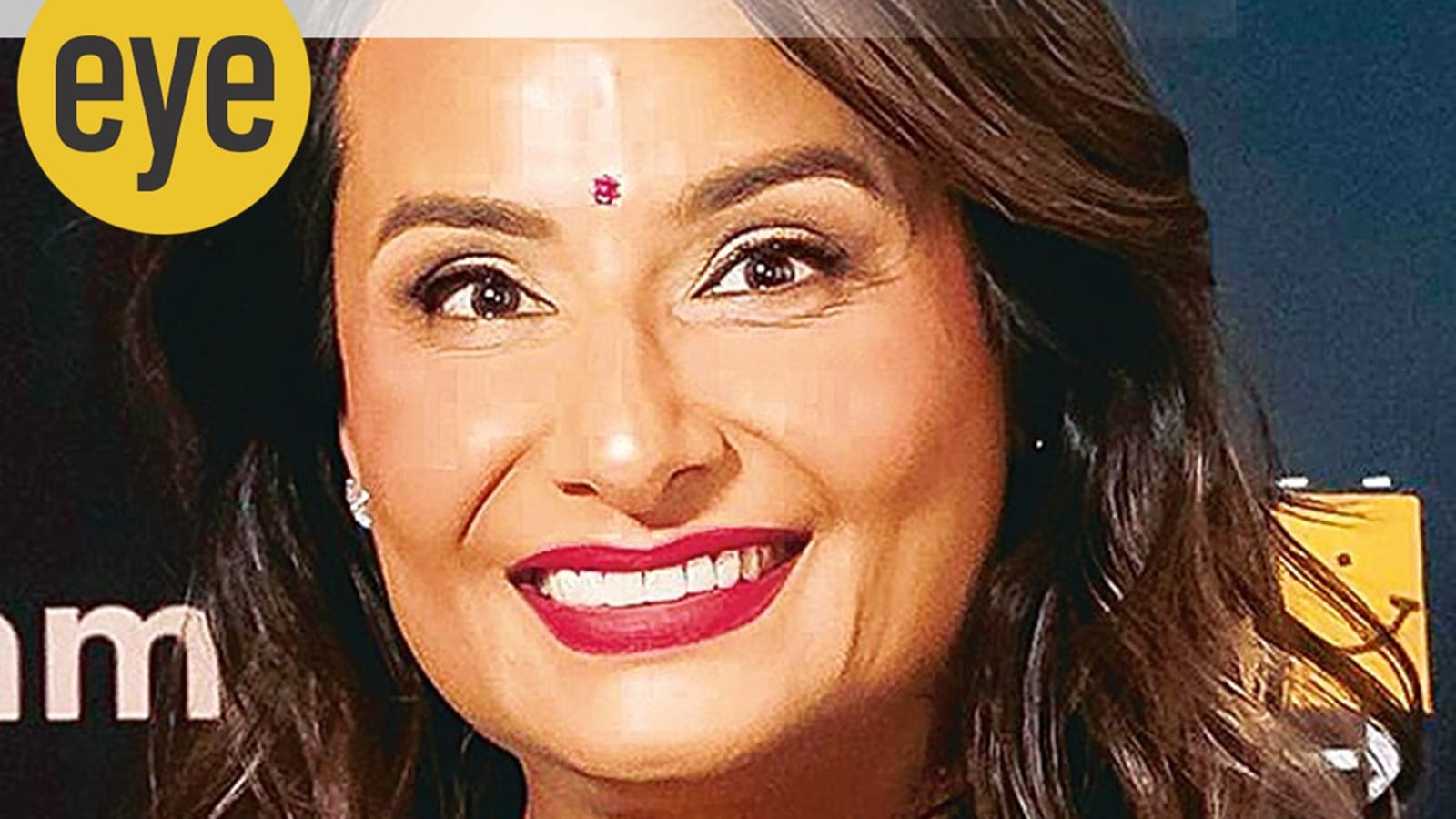
On occasion, when New York-based philanthropist and musician Ila Paliwal and her businessman husband, Dinesh, would make their way to the famed Carnegie Hall to listen to itsIndian classical musicperformances, they often left the corner of 57th Street and Seventh Avenue wishing there was more.
What lingered, specifically with Ila, was that while the concerts were brilliant, Indian music wasn’t quite part of the hall’s regular musical life.
For all its reputation as the mecca of classical music, Carnegie Hall seemed to have an intermittent relationship with India.
“Usually, it would just be a weekend and that was it.
None of these institutions would actually adopt this music into their bloodstream and into their programming.
And I thought that we have 1.4 billion people and such amazing talent, so there is a need to have a permanent address so that it’s not just one spectacular event but something more long-term,” says Paliwal who, as the co-chair of Ila and Dinesh Paliwal Foundation, recently gave a sizeable $10 million endowment for an Indian music festival set to debut in May 2027.
“It took us two to three years to think about this,” says Ila.
Featuring a wide gamut of Indian classical artistes (Hindustani and Carnatic) as part of the annual festival, which will go on at least for a decade, select ones will also be recognised with the Carnegie Hall Fellow Award, besides getting their work featured in the Hall’s programming.
Ila, who is involved with several American charities, is also on the board of the American branch of the NGO, Pratham.
She says this festival was a condition she set after being asked to serve on the Carnegie Hall board.
The couple had also weighed directing their donation to nearby Lincoln Centre, which also houses the New York Philharmonic as well as Juilliard but Ila eventually insisted on Carnegie for the venue’s long-term association with classical music and her own interest in the genre.
“Then there is excellence in the craft of whatever is showcased at Carnegie, besides the audience always being so educated,” she says.
Financed by steel baron Andrew Carnegie and opening its doors in 1891, the last decade of the Gilded Age, marked by extreme wealth and extreme poverty, the Hall rises in tiers of cream and gold with those iconic curved balconies.
But besides the grandeur, it is the precise acoustics that have been its hallmark.
The coveted address, where the inaugural concert was conducted by the Romantic period’s famed composer, Tchaikovsky, has also been a host to jazz legends, including Duke Ellington and Louis Armstrong besides The Beatles and Bob Dylan.
Among Indian musicians, it is Pandit Ravi Shankar who performed the maximum number of times (29 times), followed by Ustad Zakir Hussain (22 times) at the 135-year-old hall.
Other Indians who have performed include Ustad Vilayat Khan, Pandit Hari Prasad Chaurasia, Ustad Amjad Ali Khan, Pandit Jasraj, Indo-jazz band Shakti, Anoushka Shankar, flautist Rakesh Chaurasia, pianist Charu Suri and vocalist Kaushiki Chakraborty.
Ila says she will be deeply involved with the curation in collaboration with the Carnegie team, and that the selection will be based on talent and not personal connections.
“But, of course, you do need some names who can bring the crowd in,” says Ila, who is planning on featuring AR Rahman and popular playback singer Shreya Ghoshal.
“Once the festival is established, I would also like to showcase artistes who are talented but do not have a platform,” says Ila, adding that a bunch of masterclasses ingrained in the Hall’s digital education platform have also been planned.
Ila is also a musician and launched her album Navratana at Carnegie in 2015.
A nine-song diversity record, produced by Rahman and percussionist Ranjit Barot, the album featured songs for festivals, including those for Pongal, Eid, Diwali, Baisakhi andChristmas, among others.
Growing up in Agra with culturally inclined professors for parents (her father was a poet and her mother, an English and Sanskrit professor, who also played the sitar), Ila grew up with music at home, besides a bunch of concerts her mother, an ardent fan of Lata Mangeshkar and MS Subbulakshmi, took her to.
Ila trained in classical music under Pandit Sitaram Vyavhare of the Gwalior gharana.
She married Dinesh, an engineer from IIT Roorkee and moved to Singapore, later living in China and spending the last 30 years in the US, working in the world of music.
She kept training under Padma Talwalkar, Arti Anklekar and Raghunandan Panshikar — all students of Kishori Amonkar and also began the Gaansarawati Mahotsav in Amonkar’s name in 2013.
The festival is now in its 13th year.
Considering that artistes in India continue to have almost no institutional support, does Ila want to do more in India?
“I do think about it and I have talked to Carnegie Hall as well.
So we want to do an exchange.
They want to bring their Youth Orchestra to India.
If that happens, we can bring some artistes here,” she says.
Suanshu Khurana is an award-winning journalist and music critic currently serving as a Senior Assistant Editor at The Indian Express.
She is best known for her nuanced writing on Indian culture, with a specific focus on classical music, cinema, and the arts.
Expertise & Focus Areas Khurana specializes in the intersection of culture and society.
Her beat involves deep-dive reporting on:
Indian Classical Music: She is regarded as a definitive voice in documenting the lineages (Gharanas) and evolution of Hindustani classical music.
Cinema & Theatre: Her critiques extend beyond reviews to analyze the socio-political narratives within Indian cinema and theater.
Cultural Heritage: She frequently profiles legendary artists and unearths stories about India’s tangible and intangible cultural heritage.
Professional Experience At The Indian Express, Khurana is responsible for curating and writing features for the Arts and Culture pages.
Her work is characterized by long-form journalism that offers intimate portraits of artists and rigorous analysis of cultural trends.
She has been instrumental in bringing the stories of both stalwarts and upcoming artistes to the forefront of mainstream media.
Find all stories by Suanshu Khurana here...
Read More
Related Stories
Source: This article was originally published by The Indian Express
Read Full Original Article →
Comments (0)
No comments yet. Be the first to comment!
Leave a Comment