
The Victorians had a name for it: Melancholia.
However, underlying the overwhelming sense of sadness that permeates much of Ananya Vajpeyi’s new book, there is also a warmth and a disarming honesty about herself and her vulnerabilities.
Then, there is the empathy that lights up the sombre vistas she encounters; like a shaft of sunlight breaking through massed clouds, it illuminates what would otherwise be an occasionally dolorous narrative.
It lingers with a quietude that, one suspects, comes from a deep reservoir of reflection and repose.
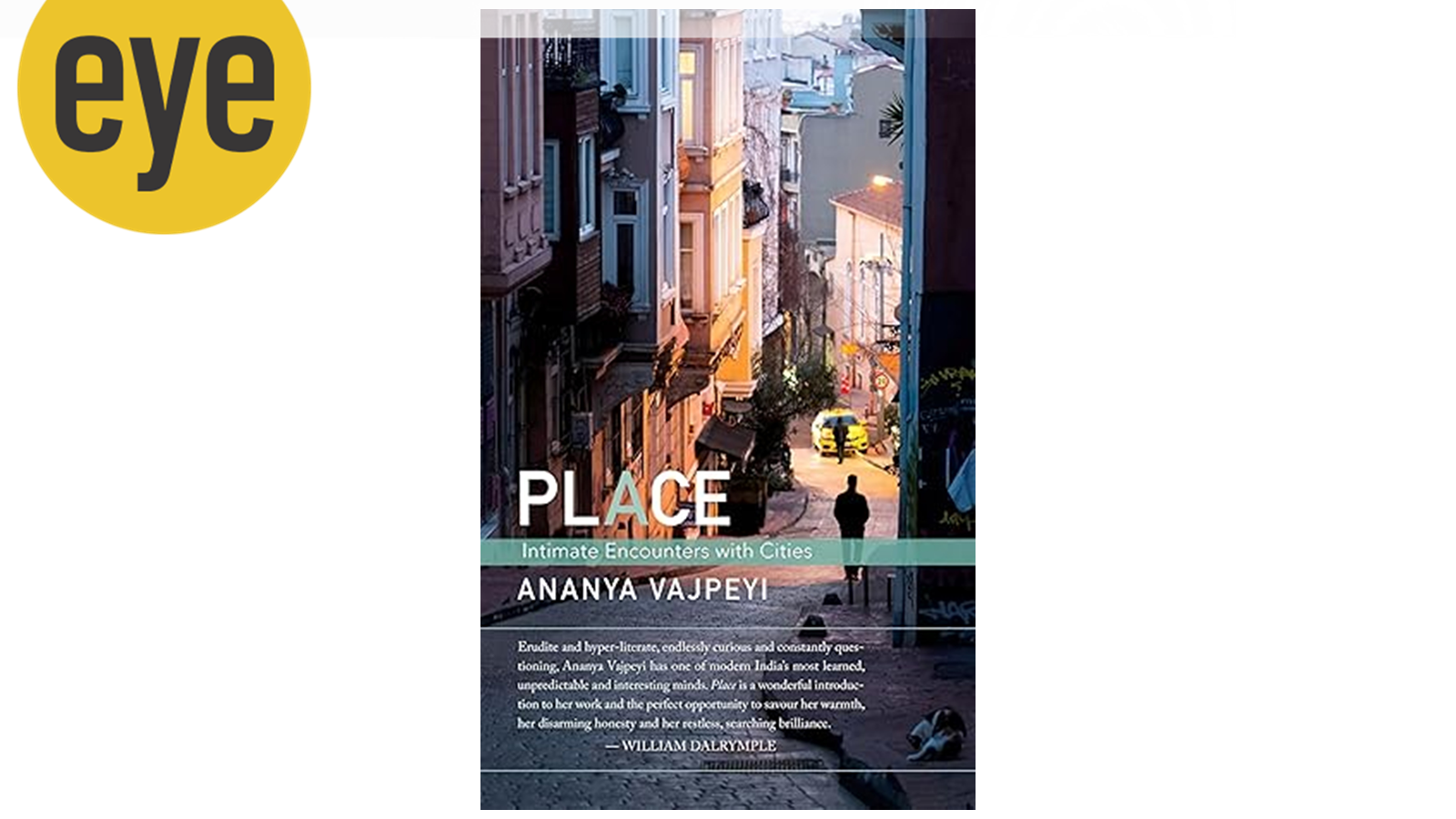
Neither a travelogue nor a memoir, Place is an invocation: to lost time and personal grief, tangled histories and changing politics.
Her despair over the continuing wound that is Gaza, the New India that is transforming into Bharat at an alarming speed, the othering faced by women who wish to study ancient languages such as Sanskrit in the long-held citadels of classical learning — all this and more limns her depiction of the cities she visits.
Place does not tell you what to do in a city; instead, the author shares her innermost feelings and experiences in cities as disparate as New York and Istanbul,Puneand Venice, Kashi andMumbai,Delhiand Dresden.
Political upheavals, environmental crises, urban renewal (sometimes decay) mirror and occasionally exacerbate her disquiet about a broken world.
About Delhi, the city of her birth, she writes: “The rate of change is apocalyptic, hastened along by climate change, unbridled air pollution and a regnant political ideology that knows only two ways to address history: either through erasure and denial, or through resentment and revenge.”
The theme of irretrievable loss runs like a leitmotif.
The author’s parents passed away in quick succession and with them, a way of life ended.
Intertwined with her personal loss is a sadness for a lost world — of values, uprightness as also curiosity, openness and dialogue.
In travelling the world but always homing back to memories of her parents’ home and circle of companionship, Vajpeyi is traversing the distance between the familiar and the unfamiliar, privilege and un-privilege.
And then there is her prose: lyrical, lilting, but always elegant, never flabby or self-indulgent.
In writing about Kashi, the ancient city she had visited with her parents, she says: “I no longer saw the filth or overcrowding that had so bothered me when I was younger.
I had taken a kashi karvat of sorts, turning towards Banaras, laying myself open to it.”
Through these “intimate encounters with cities” Vajpeyi holds up a mirror to the transformative power of journeys, of the ability of travels to trigger personal growth, to bring rest and renewal.
Read Place for its strength in the midst of clamorous pain, hurt, loss.
Related Stories



Source: This article was originally published by The Indian Express
Read Full Original Article →
Comments (0)
No comments yet. Be the first to comment!
Leave a Comment