
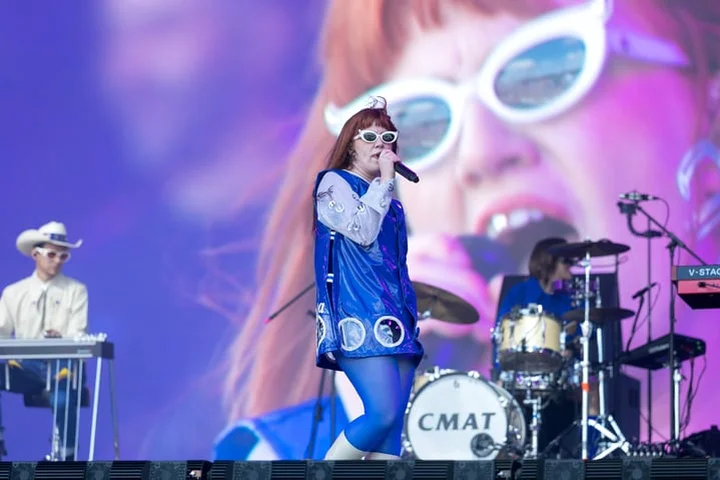
The cancellations of LIDO Festival and Wireless are just the latest in the ongoing battle over London’s summer music events
London music fans have received another blow following the news that the three-day LIDO Festival cannot go ahead as planned in June due to concerns over Victoria Park’s ground conditions.
A single-day event will take place in August instead, with many of the planned acts including CMAT and Bombay Bicycle Club dropping from the bill.
It comes fresh on the back of Finsbury Park’s Wireless Festival being cancelled over its controversial – and ultimately unworkable – booking of Kanye West as its headline act , at an estimated cost of £30 million to the London economy .
While ticket-holders will be left disappointed at missing out on the party vibe of watching live music in London’s parks , for many residents these huge music events are an affront to local life.
Last month, another battle line was drawn in the furious ongoing war over summer festivals taking place in Brockwell Park .
Despite receiving hundreds of public objections, Lambeth Council gave the green light for festivals including Field Day and Mighty Hoopla to go ahead.
It is a battle that is being replicated across London, with objectors increasingly likely to fight back with legal action than old-school petitions and marches.
The countryside charity Campaign to Protect Rural England has also waded into the fray, urging the Government to introduce London-wide restrictions on park events to prevent “over exploitation”.
Over in west London, Anton Henriksen braces himself for a weekend soundtrack of thumping background music whenever the hoardings start to go up around Gunnersbury Park and a convoy of lorries streams towards its gates.
Henriksen, 47, moved to the area in 2022, blissfully unaware that each summer the 200-acre, Grade II* listed open space is repurposed as a music venue.
Last summer it was the scene of concerts including The Libertines and The Smashing Pumpkins, as well as Pub in the Park, the Soho House Festival, Waterworks Festival and DnB Allstars Festival.
Objectors complain that, including set-up and clean-up, the park was partially closed for 116 days during 2025.
When he learned that Gunnersbury Estate CIC — the not-for-profit that manages the park and pays a £1-a-year peppercorn rent for the park and in return is given £500,000 council funding — had applied for a 10-year blanket planning application to use the park for up to 118 days per year for the next decade, Henrikson had had enough.
Henrikson and his fellow members of Gunnersbury Heritage are currently awaiting a response to a legal letter sent to the park’s freeholders, Hounslow and Ealing Councils, asking them to put a stop to the fun and games at Gunnersbury Park.
They point out that under a 1926 covenant, the park is reserved for recreation and community use.
Not for music events where VIP tickets routinely cost more than £100-a-head.
If their demands, which are backed by the Gunnersbury Park Garden Estate Residents’ Association, are not met, legal action could follow.
The group has urged the councils to cut the number of events held in the park back to 28 days per year, reduce gate numbers and slash noise levels.
Both groups have separately objected to the CIC’s planning application.
Peter Bainbridge, chair of the residents association, is frankly fed up with people accusing him and his neighbours of nimbyism.
Bainbridge, 48, has lived inthe area for nine years and has seen the number and scale of events crank up in that time in order to help fund a multi-million pound restoration.
“They want a blank cheque to run events in the park over the whole summer for 10 years,” he says.
“There is almost no engagement with the local community, and the CIC seems to wash its hands of everything happening outside the park.
Yes, you could call us nimbys, but it is our backyards that are being littered and urinated in.”
Yes, you could callus nimbys, but it is our backyards that are being littered and urinated in
“Impact on the local community and on plants and wildlife remains a top priority for us,” says Elizabeth Coningsby, head of commercial at Gunnersbury Park and Museum, adding that sound limits during advents had never been breached.
She adds: “Every incidence of reported antisocial behaviour outside the park boundaries that can be attributed to concert goers is treated seriously, and the CIC, event organisers and the two councils — Ealing and Hounslow — work with the police to respond to reports and to improve street management services.”
Park events, says Coningsby, create jobs for the local community and boost local businesses, and profits will be funnelled into upgrading the park, which is on Historic England’s “at risk” register and requires £20 million to £25 million worth of restoration.
A spokesman for Ealing and Hounslow councils said the public events provided vital funds to maintain the park, as well as supporting local businesses.
Most of the park remains open, even during events, and free tickets are given to some local residents on a raffle basis.
“We understand some residents hold strong views about events in the park and we take those concerns seriously,” he said.
“All events are subject to strict planning and licensing conditions… [and] every event is strictly monitored, in person, for its full duration.”
Fight for the right to their park
Campaigns against outdoor events in London have been going on for decades.
For years, long-term former Hampstead resident (and Victor Meldrew actor) Richard Wilson waged a spirited one-man war against the summer classical concerts with fireworks hosted at Kenwood House.
And there were mass objections to the equestrian events at the 2012 Olympic Games being held at Greenwich Park, on the grounds that the horses’ hooves would churn up the pristine green space.
But none had been so successful as the battle waged to keep Brockwell Park festival-free.
In 2024 a group of residents formed campaign group Protect Brockwell Park and raised some £50,000 via a crowdfunding platform.
They used the money to seek a judicial review against Lambeth Council’s decision to permit Brockwell Live to use the park for six separate summer festivals, shutting off part of the park for about five weeks per year and, they fear, damaging ancient trees in the process.
Lawyer Jen Hawkins, 44, has lived close to the park for the past 16 years and was aware Lambeth could be in breach of planning rules by not requiring event organisers to apply for full planning permission for the summer season.
It was in the habit of granting consent using less strict permitted development rules.
Last May the judicial review was upheld.
Lambeth Council promptly appealed, then backed down, having spent almost £200,000 on legal advice — an expenditure the council now characterises as “unfortunate”.
The solution it proffered was to request promoter Summer Events Ltd apply for planning permission for future events.
This summer’s events were duly given the green light last month, despite receiving hundreds of public objections.
“We are disappointed but not surprised,” says Hawkins, who will now need to consider future legal options.
For her, the argument is not about killjoys and nimbys but about proportionality.
“I would like to think that a public park is there for the use of the local public and the council holds the park in trust for the local people,” she says.
“One in three people in this part of London don’t have their own outdoor space.“
We are trying to protect a beautiful green space for the benefit of all local people.
The commercial events are ticketed and expensive and they exclude people from their own public space.”
Of course for every Londoner frustrated by the way parks are being commercialised, others are all in favour.
Filmmaker Ruth Sewell, 41, has lived close to Victoria Park all her life and appreciated the way money earned from summer events like All Points East and LIDO is invested in the park.
“Yes, it kind of destroys the grass for a bit, it’s loud, and it restricts public access,” she said.
“The flipside is that the money from these events helps to keep the park in the condition we want it to stay in.
London's hottest postcodes for 2026 where demand and house prices are rising fastest
Brockwell Park festival organisers submit planning application for first time after controversy
How Brixton’s gentrification gravy train is pushing locals aside
Emma Kirston moved to east London in 201 2, which is when she first discovered Victoria Park and started attending the Lovebox festival, which was held in the park between 2005 and 2017.
When, in 2014, Kirston was ready to buy a flat she picked Victoria Park village specifically because she wanted to live in the thick of a vibrant, fun community.
“I had a choice of being near the Tube, or somewhere which had community and spirit and fun going on, and that is what I chose,” says Kirston.
There has been some local pushback against events in Victoria Park over the years — last summer more than 200 people petitioned Tower Hamlets Council asking it to reduce the number of major event days in the park and stop using their “beloved green space” as a “cash cow”.
Kirston, 49, a freelance account director in the healthcare industry, firmly disagrees.
She enjoys the atmosphere of happy crowds in her neighbourhood.
“I like seeing life in London — there should be more of it,” she says.
“The events draw people into the area and it is great for the local shops and businesses.
If the wind is blowing in the right direction and the windows are open I can hear the music in my flat, but I like hearing people enjoy themselves.
People should do their research — if they don’t want that they should go and live somewhere else.”
Related Stories


Source: This article was originally published by Evening Standard
Read Full Original Article →
Comments (0)
No comments yet. Be the first to comment!
Leave a Comment