
Updated on: March 16, 2026 / 9:40 AM EDT/ CBS News
CBS News' Nancy Cordes asked White House Press Secretary Karoline Leavitt on Monday why other countries should answer President Trump's call to help safeguard ships in the Strait of Hormuz, given that they weren't consulted on or involved in the U.S.
and Israeli strikes on Iran that sparked the ongoing war.
"Because these other countries are benefiting greatly from the United States military taking out the threat of Iran," Leavitt responded.
"The rogue Iranian regime has long not just posed a threat to the United States of America, but of course, to our Gulf and Arab partners in the region.
So, these countries are absolutely benefiting from ensuring that Iran can never obtain a nuclear weapon.
This is something not just the United States, but the entire Western world has agreed with for many, many years."
Pressed on why Mr.
Trumptold the U.K.
earlier this monththat the U.S.
did not need British aircraft carriers sent to help with the war effort, Leavitt pointed to Mr.
Trump's remarks on Air Force One on Sunday evening, when he told reporters he wished Britain had stepped up sooner, and that he continues speaking with U.S.
allies, and "calling on them to do more."
Leavitt did not reveal what plans the White House might be formulating to address Iran's threat to shipping in the Strait of Hormuz if other countries decide not to help reopen the waterway.
Iran's embattled theocratic rulers remain "determined to defend the nation for as long as necessary, until the enemy realizes that it cannot start a war against Iran whenever it wishes, nor can it halt it at will," Esmaeil Baqaei, a spokesman for Iran's Foreign Ministry, said Monday in remarks broadcast on Iranian state TV.
Citing the previous U.S.-Israeli assault in June 2025, which, like the current war, was launched as Tehran engaged in negotiations over its nuclear program, Baqaei said Iran would not accept that its foes can "ignite a fire of war on our country, impose it, and then, whenever it suits them — whenever they face problems in supplying equipment or defending themselves — pose for a ceasefire, only to restart such aggression after a short time."
"We did not start this war.
Our nation will not accept that their country is attacked twice in nine months while they were diligently and in good faith engaged in diplomatic negotiations," Baqaei said.
Russia's widely read business newspaper Kommersant cited Kremlin spokesman Dmitry Peskov as saying Monday that the rise in global oil prices could help boost Russian state revenues.
Peskov cited the Iranian regime's stranglehold on the Strait of Hormuz specifically as leading to the spike in energy prices.
He noted the controversial decision by the Trump administration — seen as a bid to keep U.S.
gas prices in check — totemporarily ease sanctions against Russia, authorizing the sale of Russian oil already loaded onto tankers.
U.S.
Treasury Secretary Scott Bessent said when the move was announced that it would "not provide significant financial benefit to the Russian government, which derives the majority of its energy revenue from taxes assessed at the point of extraction."
British Prime Minister Keir Starmer says the U.K.
will not be drawn into a wider war in Iran, but that it will work with allies to create a "viable collective plan" to reopen the Strait of Hormuz to shipping traffic — a challenge he warns will be "not easy."
Mr.
Trump berated Starmer for a perceived lack of support for the war after the British leader declined to allow the U.S.
use of British bases to strike Iran.
He later granted permission for U.S.
forces to use three key bases, but only for what he said are defensive purposes, not to attack Iran.
Asked about any international effort afoot to reopen the Strait, Starmer said the U.K.
would "make sure it involves as many partners as possible."
"It is, to say the least, not easy," he said.
"But we have to make sure we have a credible plan in place.
As to what the precise options are, mine-hunting systems of ours are already in place in the region.
We have already spoken about anti-drone capabilities, but this is not just about what the U.K.
can do, this is how we can play a part in bringing all this together behind a viable plan.
We're looking through the options.
It is difficult, of course, let's not hide that.
Ultimately, we need to get the Strait to open, otherwise prices will keep going up."
The United Arab Emirates Ministry of Defensesaidthat the country "dealt with six ballistic missiles and 21 drones coming from Iran" on Monday alone.
"Since the start of the blatant Iranian attacks, the UAE's air defenses have dealt with 304 ballistic missiles, 15 mobile missiles, and 1627 drones" in total, the ministry said, noting that the attacks had killed two members of the UAE's armed forces, along with five civilians of Pakistani, Nepali, Bangladeshi and Palestinian nationalities.
The statement said the UAE "stands ready to deal with any threats and to firmly address all that aims to destabilize the security of the state, in a way that ensures the preservation of its sovereignty, security and stability, and protects its national interests and capabilities."
The maritime monitoring groupMarineTraffic saidMonday that, for the first time since the U.S.
and Israel launched their war with Iran, a non-Iranian cargo ship safely transited the Strait of Hormuz with its Automatic Identification System (AIS) switched on, "suggesting that select shipments may be receiving negotiated safe passage" from Iran.
The vessel tracking organization said its data showed the crude oil tanker "entered the Iranian Exclusive Economic Zone on 15 March at 11:33 UTC and crossed the Strait of Hormuz at 14:43 UTC.
The vessel is currently sailing in the Gulf of Oman at around 9.6 knots, having successfully passed through the strait with AIS active."
The group posted a map showing the ship's path through the strait, and said the journey followed "weeks of significantly reduced traffic through the strategic waterway."
First non-Iranian cargo transits Strait of Hormuz with AIS onThe Aframax tanker Karachi, carrying Abu Dhabi’s Das crude, has become the first non-Iranian cargo to transit the chokepoint while broadcasting its AIS signal, suggesting that select shipments may be receiving…pic.twitter.com/Q6j6W3Cxz3
Another member of the Iran women's soccer teamwho accepted a refugee visato stay in Australia has decided to return to her homeland, a sport official said Monday.
That leaves two of an initial seven squad members who'd accepted asylum as sticking with their original decisions.
The Iranian women's soccer team had yet to reveal plans to leave Malaysia when most of the seven squad members who created a diplomatic furor by accepting asylum in Australia a week ago had rejoined their teammates in Kuala Lumpur, the sport official said.
The squad flew from Sydney on March 10 after being knocked out of the Women's Asian Cup in Australia, leaving behind six players and a support staff member who had accepted protection visas.
Four players and the staffer have since rejoined the teamin Kuala Lumpur, the latest flying in on Monday.
No reasons have been given for the changes of heart, but the Iranian diaspora in Australia blames pressure from Tehran.
Israeli Defense Minister Israel Katz said Monday that forces had "begun a ground maneuver in Lebanon" and that hundreds of thousands of people forced to evacuate their homes across a vast swath of southern Lebanon "will not return to their homes" until the threat from the Iranian-backed group Hezbollah in the region is removed.
"Prime Minister Benjamin Netanyahu and I have instructed the IDF to act and destroy the terrorist infrastructure in the border villages in Lebanon - to prevent threats and Hezbollah's return to the place," Katz said, vowing that the U.S.
and Israeli-designated terrorist group would "pay heavy prices for its aggression and activity in the Iranian axis to destroy Israel."
He said Israeli leaders had "promised security to the residents of the north and that is exactly what we will do."
Katz accused Hezbollah's leader Naim Qassem of "hiding underground and turning over a million Shiites of his community into refugees in their own country."
The European Union is seeking more strategic clarity about the U.S.
and Israel's plans for Iran and when the conflict might end as the bloc weighs whether to send ships to help shore up security in the Persian Gulf.
Without confirming any specific international commitments, President Trump said in a social media post on Saturday that "many Countries, especially those who are affected by Iran's attempted closure of the Hormuz Strait, will be sending War Ships, in conjunction with the United States of America, to keep the Strait open and safe."
He said "hopefully China, France, Japan, South Korea, the UK, and others" would send warships to join a potential effort to escort ships through the Strait, which experts say would firstrequire a further degradation of Iran's offensive capabilities.
"It is in our interest to keep the Strait of Hormuz open, and that's why we are also discussing what we can do in this regard from the European side," Kaja Kallas, the EU's foreign policy chief, said Monday ahead of a meeting of the 27-nation bloc's foreign ministers in Brussels.
Kallas said the EU could expand its Operation Aspides naval mission to protect shipping in the Red Sea up into the Persian Gulf, or it could form a "coalition of the willing" with member nations contributing military capacity on an ad hoc basis.
France has said it is working with other countries on a possible international mission to escort ships through the strait, but has stressed it must be when "the circumstances permit," when fighting has subsided.
German Foreign Minister Johann Wadephul said it was important for the U.S.
and Israel to define "when they consider the military aims of their deployment to have been reached," adding: "We need more clarity here."
Luxembourg Foreign Minister Xavier Bettel said the EU remains uncommitted to any military action.
"The fact is, for the moment, the EU is not directly part of the situation.
So we need to decide if we are going to be part or not.
That's an important decision," Bettel said.
Israel's military said in a statement Monday that it had destroyed the plane used by Iran's supreme leader with a "precise strike" at Mehrabad Airport in Tehran.
"The aircraft was used by Ali Khamenei, the Supreme Leader of the Iranian terror regime, additional senior officials and Iranian military personnel," the Israel Defense Forces said, adding that "dismantling of the aircraft disrupts the Iranian regime leadership's coordination capabilities with axis countries, its military force build-up efforts and its ability to rehabilitate its capabilities.
As a result, another strategic asset of the regime has been degraded."
New Supreme Leader Mojtaba Khamenei, son of the last Iranian leader mentioned in the IDF's statement, has not yet been seen in public since he was handed the leadership more than a week ago.
Secretary of Defense Pete Hegseth said last week that the new leader was "wounded and likely disfigured," possibly in the same strike that killed his father, though U.S.
officials have not confirmed his condition.
Authorities in the United Arab Emirates said they were working Monday to contain a fire sparked by a drone strike on the Fujairah Oil Industries Zone.
The regional government for Fujairahsaidthere were no reported injuries, but it did not give any information on how much damaged may have been caused by the blaze to the coastal region's petroleum infrastructure.
Iran's retaliatory fire has targeted the UAE disproportionately, with some 309 missiles and around 1,600 drones aimed at the Gulf state since the war began.
Most of the weapons are intercepted or fall short, but seven people have been killed in the UAE so far, and there are rising concerns that at least some Persian Gulf nations are running dangerously low on the interceptors used to bring down Iranian missiles.
Israel's military said Monday that with the joint U.S.
war against Iran in its third week, the assault on the Islamic Republic had destroyed more than 70% of the regime's missile launchers and "neutralized over 85% of the regime's defensive and detection capabilities."
"We have struck more than 100 production and armament targets.
We have struck more than 500 command and control targets, which undermine the regime's ability to manage its attacks.
400 waves of strikes have been carried out all over Iran," Israel Defense Forces spokesperson Lt.
Col.
Nadav Shoshani said Monday.
"We continue to hold the operational advantage over the Iranian regime, establishing the first 24 hours and kept until now aerial security, suppressing their offensive capabilities in real time in a combination of intelligence advantage, aerial advantage, eye in the sky, and high-level intelligence in real time that is being produced by thousands of Israelis working around the clock," he said.
Shoshani said Israel was "focused on maximum accomplishments in a minimal time frame and ready to operate for as long as needed," claiming it had "identified a decline in morale and even refusals to carry out orders" among Iranian forces.
He said there had also been "significant blows to the Iranian missile production industry, effectively eliminating their ability to manufacture missiles."
The United Arab Emirates' air defense systems were intercepting Iranian missiles and drones on Monday, the Gulf nation's defense ministry said.
"UAE air defenses are currently responding to incoming missile and drone threats from Iran," the UAE Ministry of Defense posted on social media.
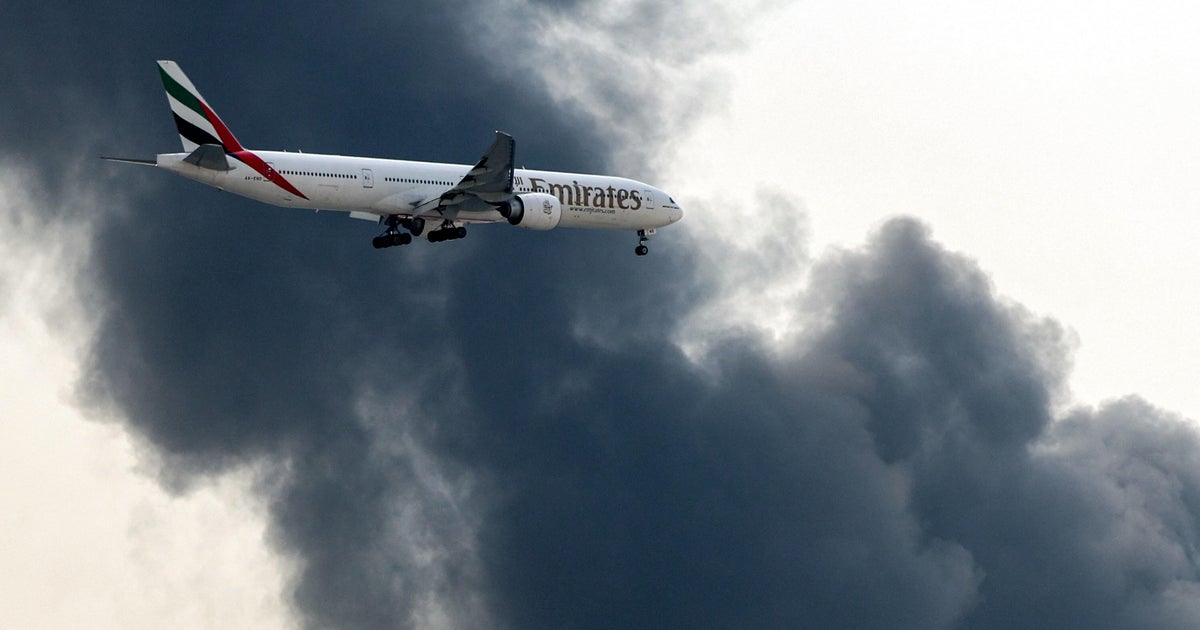
Earlier, Dubai authorities said a "drone-related incident" had sparked a fire near the airport and flights had been temporarily suspended.
A "drone-related incident" sparked a fuel tank fire near Dubai airport on Monday anddisrupted travelas Iran maintained its Gulf attacks, though authorities said flights were gradually resuming.
"Flights to and from DXB are gradually resuming to selected destinations, following the temporary suspension implemented as a precautionary measure," Dubai Airports said in a statement on social media.
The latest incident near what's usually the world's busiest airport for international travel affected a fuel tank, the Dubai media office said, later adding that authorities had contained a fire that broke out and reporting no injuries.
Two witnesses told AFP they saw a thick plume of black smoke rising from the direction of the airport at around 10:00 local Dubai time, hours after the incident.
A witness at Dubai airport told AFP that passengers awaiting their flights had been evacuated to a lower floor after the attack for several hours.
Later, the UAE's Defense Ministry said its forces were working to intercept another round of Iranian missiles and drones.
Saudi Arabia said it had intercepted a wave of 35 Iranian drones launched at its eastern region, home to major oil installations.
Israel's military said early Monday that Iran launched missiles toward Israel as well.
A Palestinian civilian was killed on the outskirts of the Emirati capital, Abu Dhabi, when a missile hit their car on Monday, authorities said, as Iran pressed on with strikes on Gulf nations following U.S.-Israeli attacks on Iran.
"Authorities in the Emirate of Abu Dhabi responded to an incident in the Al Bahia area involving a missile strike on a civilian vehicle, which resulted in the death of one Palestinian national," the Abu Dhabi Media Office said in a statement.
Israeli troops have "begun limited and targeted ground operations against key Hezbollah strongholds in southern Lebanon," the Israel Defense Forcessaid on social media Monday.
The IDF said the move is "aimed at enhancing the forward defense area" and is "part of broader defensive efforts to establish and strengthen a forward defensive posture, which includes the dismantling of terrorist infrastructure and the elimination of terrorists operating in the area, to create an additional layer of security for residents of northern Israel."
Texas GOP Rep.
Dan Crenshaw said sending U.S.
troops to the Middle East should not be taken as a "boots on the ground deployment, especially with only 5,000 troops."
The Pentagon plans to send up to 5,000 additional sailors and Marines to the Middle East as the conflict with Iran escalates, CBS News learned last week.
Crenshaw, who served as a Navy SEAL, said on"Face the Nation with Margaret Brennan"on Sunday that these troops could be deployed for various operations that might be needed, including evacuating American citizens out of Gulf allied countries.
"The rules of engagement will be very clear and in place and in writing for our troops," he said.
President Trump is suggesting he may delay his much-anticipated visit to China at the end of the month as he seeks to ramp up the pressure on Beijing to help reopen the Strait of Hormuz and calm oil prices that have soared during the Iran war.
In an interview Sunday with the Financial Times, Mr.
Trump said China's reliance on oil from the Middle Eastmeans it ought to help with a new coalitionhe's trying to put together to get oil tanker traffic moving through the strait after Iran's threats have throttled global flows of oil.
Mr.
Trump said "we'd like to know" before the trip whether Beijing will help.
"We may delay," he said in the interview.
The uncertainty underscores just how much the U.S.-Israeli strikes on Iran have reshaped global politics in the past two weeks.
Calling off the face-to-face visit with Chinese President Xi Jinping could have its own major economic consequences: Relations between Washington and Beijing have been fraught as both sides have threatened the other with steep tariffs over the past year.
The White House didn't immediately respond to requests for comment.
Lin Jian, a spokesperson for China's foreign ministry, told a press conference Monday that China and the U.S.
"are maintaining communication regarding President Trump's visit to China," but he didn't address Mr.
Trump's pressure on NATO allies and China to help reopen the Strait of Hormuz, according to French news agency AFP.
President Trump told reporters Sunday night that he has been in touch with "about seven" countries about assisting in reopening the Strait of Hormuz, but would not say which ones.
Mr.
Trump insisted, "It's something that we don't need.
And these countries do need."
Mr.
Trump said oil prices are "going to come tumbling down as soon as it's over, and it's going to be over pretty quickly," but did not provide a timeline.
"They're decimated.
But, I think that we've done damage to them, right now, if we left right now, it would take them 10 years and more to rebuild.
But I'm still not declaring it over," Mr.
Trump said.
Related Stories

Source: This article was originally published by CBS News
Read Full Original Article →
Comments (0)
No comments yet. Be the first to comment!
Leave a Comment