
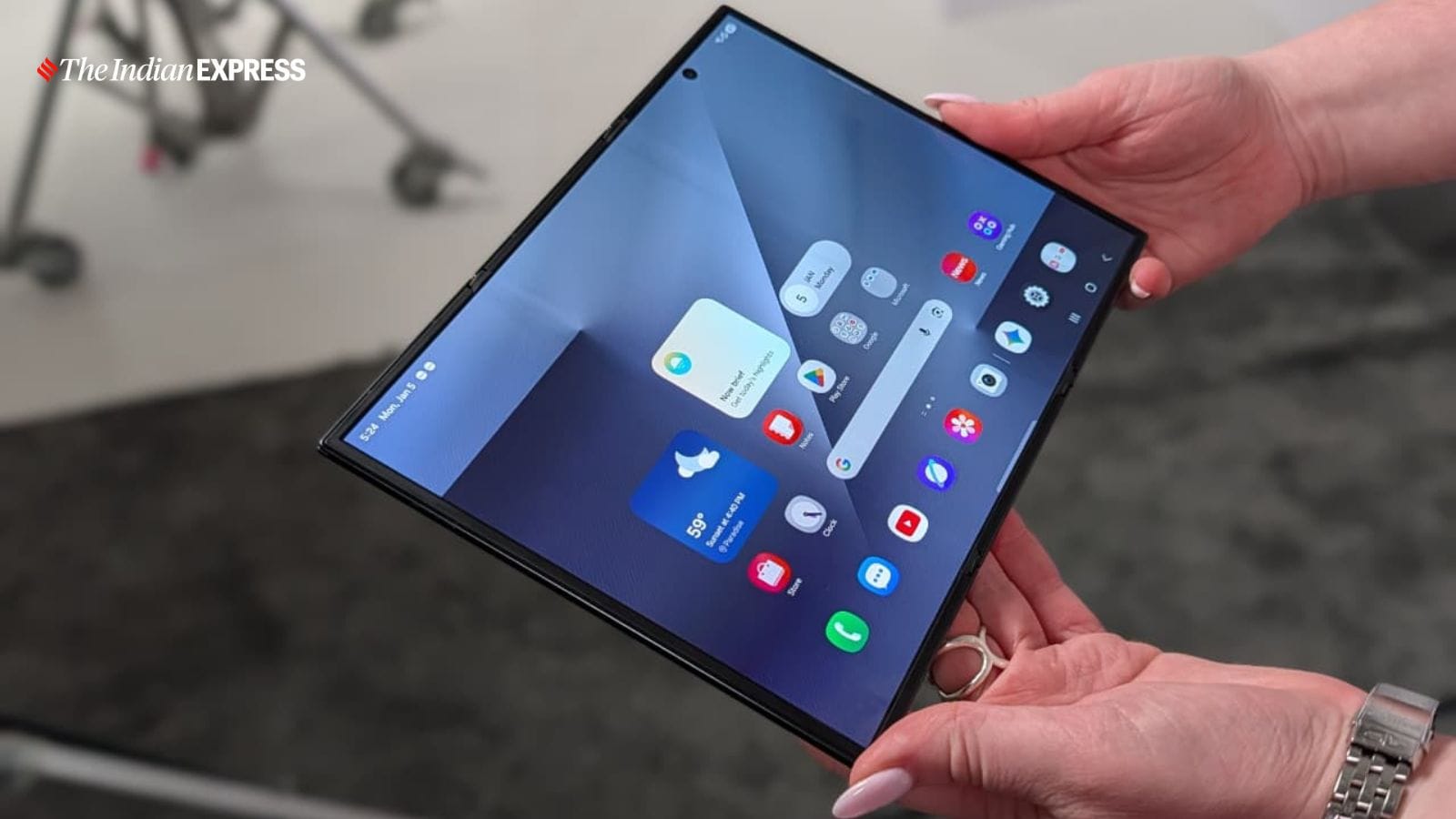
Truth be told, the Galaxy Z TriFold, which uses two inward-folding hinges to open into a 10-inch display, wasn’t even ready for adoption among enthusiasts.
Samsung is discontinuing sales of its Galaxy Z TriFold, an ultra-high-end foldable smartphone which had its global debut in January at the CES tech show in Las Vegas.
The discontinuation of its ambitious triple-folding phone, just three months after the device went on sale, raises questions about whether companies like Samsung have the bandwidth for experimental devices amid the memory crisis that is forcing mobile phone makers to remap their product strategies .
Bloomberg on Tuesday published a report stating that Samsung was done with the Galaxy Z TriFold and may soon cease production of the triple-folding phone, which costs $2,899 (approximately Rs 2,67,905) in select markets like the US and South Korea.
Samsung later confirmed to the publication that it was axing its first commercially available triple-folding phone.
Interestingly, Samsung’s US website stopped providing future restock updates for the foldable earlier this month, with the TriFold currently listed as “sold out” in the country—this itself was a sign that the discontinuation was already on the cards.
Samsung debuted its highly anticipated triple folding phone in December last year in South Korea, followed by the market availability in the, Singapore, China, Taiwan and the United Arab Emirates.
The US launch was announced at CES earlier this year.
Samsung, the world’s largest smartphone maker, was not the first company to sell a triple-folding smartphone – the credit goes to Huawei, which had been selling a cutting-edge triple-folding phone for years.
However, Samsung is a global phone maker, and bringing the device to the US market signalled that the triple-folding phone concept was ready for a wider audience.
While we still don’t know how widespread the issue was, the discontinuation of the TriFold also comes on the heels of the global memory crisis that has hit phone makers hard, including Samsung.
There is a possibility that Samsung has taken the decision to discontinue the Z TriFold, given the current rise in memory and component prices for consumer products, as production increasingly shifts towards AI data centres amid the boom in artificial intelligence companies.
Agreed, the Z TriFold has been the crème de la crème of smartphone form factors, but it’s also true that Samsung always intended the triple-folding phone to have a limited run in the market, with reportedly between 20,000 and 30,000 units produced.
Financially, and from a business standpoint, it makes little sense to sell an expensive smartphone that has limited takers in the market.
One also needs to be aware that the market for folding phones itself is tiny, and the triple-folding phone segment feels even more niche, with only Samsung and Huawei selling such devices.
That, however, doesn’t mean the end of foldable phones.
Brands like Samsung and Motorola will continue to launch foldables in the market.
However, don’t expect them to be willing to take risks and release experimental devices like the Z TriFold for some time.
Instead, they will focus on devices that are more mainstream and have wider acceptance, something like the Z Fold 7 , which, despite being priced on the higher side, has been well received by consumers.
Anuj Bhatia is a seasoned personal technology writer at indianexpress.com with a career spanning over a decade.
Active in the domain since 2011, he has established himself as a distinct voice in tech journalism, specializing in long-form narratives that bridge the gap between complex innovation and consumer lifestyle.
Experience & Career: Anuj has been a key contributor to The Indian Express since late 2016.
Prior to his current tenure, he served as a Senior Tech Writer at My Mobile magazine and held a role as a reviewer and tech writer at Gizbot.
His professional trajectory reflects a rigorous commitment to technology reporting, backed by a postgraduate degree from Banaras Hindu University.
Expertise & Focus Areas: Anuj’s reporting covers the spectrum of personal technology, characterized by a unique blend of modern analysis and historical context.
His key focus areas include:
Core Technology: Comprehensive coverage of smartphones, personal computers, apps, and lifestyle tech.
Deep-Dive Narratives: Specializes in composing longer-form feature articles and explainers that explore the intersection of history, technology, and popular culture.
Niche Interests: A dedicated focus on vintage technology and retro gaming, offering readers a nostalgic yet analytical perspective on the evolution of tech.
Authoritativeness & Trust
Anuj is a trusted voice in the industry, recognized for his ability to de-jargonize trending topics and provide context to rapid technological advancements.
His authority is reinforced by his on-ground presence at major international tech conferences and his nuanced approach to product reviews.
By balancing coverage of the world's most valuable tech brands with emerging startups, he offers a holistic and objective view of the global technology landscape.
Find all stories by Anuj Bhatia here.
You can find Anuj on Linkedin.
...
Read More
Related Stories



Source: This article was originally published by The Indian Express
Read Full Original Article →
Comments (0)
No comments yet. Be the first to comment!
Leave a Comment