
‘You know,’ I said to my friend as we traipsed to a nightclub, ‘I think in many ways, Liverpool after dark reminds me of Magaluf.’
As I’ll go on to explain, my views of Britain’s sixth largest city have very much evolved in the two years since I made that comment on a stag do.
But even then, I didn’t mean it as an insult.
Because for all of my adult life, to me Liverpool, like the sun-kissed Spanish holiday destination I’d compared it to, meant fun.
By the time I’d reached my mid-30s, I’d begun to lose count of the amount of lads weekends that I had spent there.
Over the years, I’ve come to associate Scouse City with a good time, if a very booze and sports orientated one.
When I pictured it, rather than the typical landmarks and Beatles-themed tourist destinations, I pictured the late-night Irish bar we always found ourselves in, the pool table that still bore marks from when we got heated playing killer, the Brazilian steakhouse we swore could cure any hangover.
Best of Metro Deals
Get deal now
Get deal now
Get deal now
I reckon by last summer I’d been to Liverpool around a dozen times.
But when I thought about it, I hadn’t really been to Liverpool.
I felt like I’d done it, but in truth, it had done me.
So when I was invited to check out a newly refurbished hotel in the city, I jumped at the chance (more on the hotel later).
This would be my opportunity to throw myself into the vibe of the place, to embrace visiting as a tourist, not on a stag do, and to finally see what, apart from brilliant nightlife, it had to offer.
Deliberately, and quite uncharacteristically for my visits to Liverpool, I woke the next morning to explore as much of the ‘traditional’ tourist activities as I could in a single day.
Liverpool, like Glasgow, feels like one of those places where the charm of the people is as important as the surroundings.
Peter Kay described open mic nights in the city where the crowd was almost always funnier than the comedians, and that’s in full effect during the stadium tour.
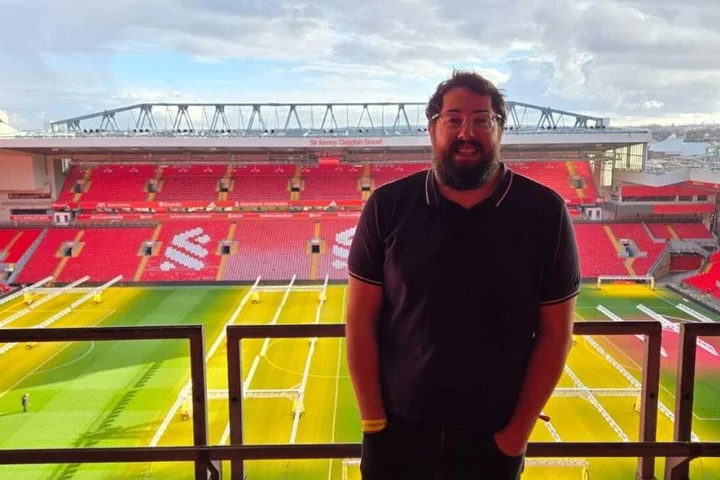
Not for them, the charmless corporate spiel about the club – the men and women who guide you round are full of not only useful facts and friendliness, but cheeky digs at the expense of the multi-millionaire football heroes who adorn the dressing room walls.
From Anfield, and the weight of history that makes even that gleaming modern arena feel as old as the city can get, we ambled down to what feels very much like ‘new’ Liverpool.
The Royal Albert dock may have been operational for the best part of 200 years, but it has been a major tourist attraction since the 1980s, with constant development giving it a thoroughly nouveau sheen.
No trip to Liverpool is complete without paying homage to the world’s most iconic band, so at the dock we visited the Beatles Story — billed very much as a living museum, where you are left to explore recreations of venues important to the Fab Four like Hamburg and the Cavern Club.
It’s an interesting mix of modern immersive experience and traditional memorabilia driven gallery, though it’s definitely one for the family or casual fans.
Further in from the river, in Matthew Street, the Liverpool Beatles Museum is a much more involved experience, focussing on the early years (if you detect an abundance of pre-Ringo drummer Pete Best, it’s because his relatives founded it).
If there is a real fan in your group, they are likely to get more out of it.
From one set of musicians who helped put this city firmly on the cultural map in the 60s, we turned to another — honouring the legacy of Gerry and the Pacemakers with a trip on the Mersey Ferry, which they famously sang an ode to.
It’s a relief that the song is played fairly sparingly on a 50-minute trip.
That means you get a genuine education as you complete the route round the shipyards and to Seacombe, with information about everything from football to the slave trade playing over the ship’s speakers, rather than an ‘It’s a Small World’ style refrain of Gerry Marsden’s novelty nautical ditty.
The spaceship-esque architecture, and the fact the area was a building site until a few years ago, seemed like a useful indicator that, despite teeming with history, this city is constantly changing, evolving, embracing shifting balances of power and punching well above its weight in terms of sport and culture.
It was a change I hadn’t appreciated in my endless loop of Scouse-themed stag parties, but relaxing back at the hotel at the end of my evening, I felt a sense of immense satisfaction.
At the 13th time of visiting, I’d finally done Liverpool.
The Radisson Red (NOT Radisson Blu) review
On arrival from the Avanti train, my first port of call was the Radisson Red, not to be confused with the nearby Radisson Blu.
In this city, those are colours that you quickly learn not to get mixed up.
In truth, the hotel, in a French Renaissance building adjacent to Lime Street station that dates back to 1871, is far nicer than you might expect.
By their nature, train station-adjacent hotels tend to be more miss than hit.
Often, their prime location means they have a captive audience, which can see them rest on their laurels, safe in the knowledge that a steady stream of travellers is guaranteed.
The exposed brick in the room contrasted nicely with the high-tech environs – that classic combination of a knock-out powerful shower and a coffee machine that feels like it needs a PhD to operate which is always reassuring in a hotel.
The in-house restaurant, Stoke Brasserie, is a grill concept that tries to find a bit of something for everyone.
A Greek Gyros specialty felt like a far elevated version of the kebabs I’m used to eating around this city after a night out, while my friend’s gnocchi was also rated highly.
Perhaps most impressively, despite being as city centre as city centre can be, the hotel’s communal areas (decked in the inevitable Liverpool art) still manages to suggest something of an urban hideaway.
Ross stayed at the Radisson Red Liverpool, where rooms start at £72 per night.
Tickets from Liverpool start at £26.
Visit the Avanti West Coast website
Related Stories



Source: This article was originally published by Metro UK
Read Full Original Article →
Comments (0)
No comments yet. Be the first to comment!
Leave a Comment