
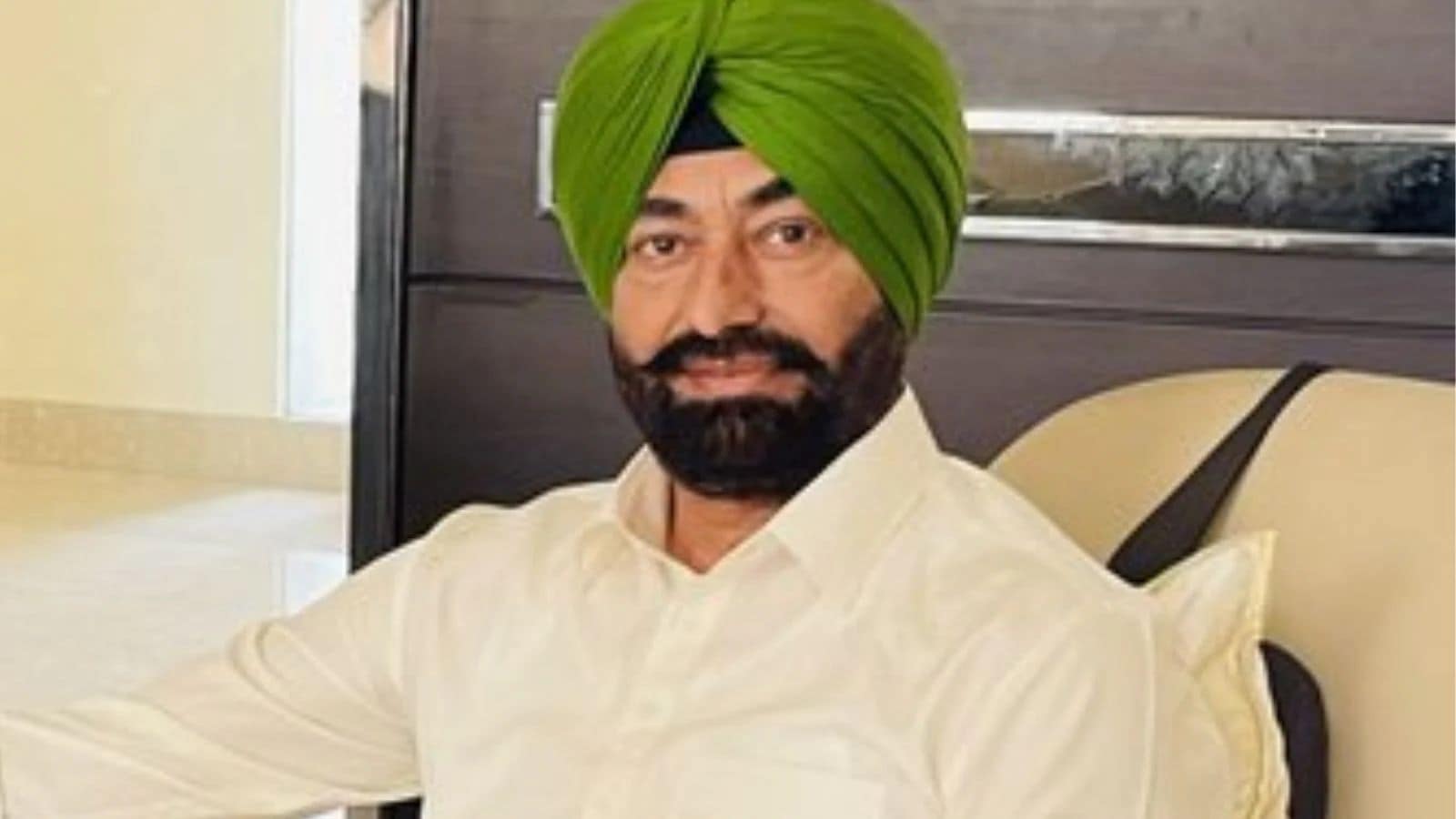
Congress Bholath MLA Sukhpal Singh Khaira’s alleged controversial remarks on women celebrating the AAP government’s Rs 1,000 monthly financial scheme and reportedly calling Finance Minister Harpal Singh Cheema and other AAP MLAs “bandhua mazdoor” (bonded labourers) not only hijacked his own party’s agenda to corner the government on various issues during the last Budget Session of the incumbent regime but also provided the much-desired ammunition to the ruling party to launch fresh attacks on the main Opposition.
Presenting theBudgeton March 8, Cheema announced the AAP government’s monthly stipend for women under the Mukh Mantri Mawan Dhiyan Satkar Yojna, under which women aged above 18 from the general category will receive Rs 1,000 per month and the Scheduled Caste category will receive Rs 1,500 per month as financial assistance from April 13.
The row stems from Khaira’s social media post, where he referred to the scheme questioned that “how women celebrating (including performing gidha) the Rs 1,000 dole could be expected to raise ‘brave sons’ or ‘warriors’ (soorme)”.
Khaira called the celebrations “scripted” and “AAP-orchestrated” for electoral gain.
Khaira explained in subsequent public comments that he was “paraphrasing words of a YouTuber”, but a lot of water had flown under the bridge since then.
AAP leaders, including Cheema, condemned the language as “derogatory and anti-women, anti-poor, and demeaning to beneficiaries, particularly from Dalit and economically weaker sections”, while portraying it as “an insult to women’s dignity and the House itself”.
The issue triggered high drama in the Assembly for three days from March 10-12.
AAP women MLAs stormed the well, leading to adjournments, slogan-shouting and chaotic scenes.
Khaira was accused of compounding matters with his “bandhua mazdoor” remarks in response to objections raised to his celebration remarks.
The House passed a resolution condemning Khaira’s remarks as “outrageous” and “insulting to women and the Assembly” via voice vote despite the Congress’s opposition to the move.
A separate privilege motion, moved by Cheema, was also adopted, referring Khaira’s conduct to the Special Privileges Committee for potential disciplinary action.
However, Khaira, who was attending the proceedings, “refused to apologise or retract”, insisting he intended to criticise policy, and not to insult women.
He accused the AAP of “fact-twisting, vendetta, and denying him a chance to speak”.
The Speaker barred him from addressing the House until an unconditional apology was offered.
This episode pushed the Punjab Congress on the back foot, prompting Leader of the Opposition Partap Singh Bajwa to publicly distance the party from the situation.
Bajwa said Congress members did not agree with Khaira’s comments and offered an apology on behalf of the party.
He also urged the Speaker to allow Khaira to clarify his remarks.
Despite these efforts to control the damage, Khaira’s refusal to apologise encouraged the AAP to repeatedly highlight the issue as evidence of the Congress’s “insensitivity toward women’s welfare and poor beneficiaries” — a potent narrative in the Punjab politics.
The public House condemnation, privilege referral, and external scrutiny from the Punjab State Commission for Women, which took suo motu notice, issued notices to Khaira and Punjab Congress chief Amarinder Singh Raja Warring for appearance on March 12, and sought a police report, amplifying the negative optics.
Congress leaders argue the controversy is being inflated to divert public attention from the governance failures and budget critiques, but the session’s disruptions — chaotic adjournments, protests, and focus on gender/welfare themes — forced the Opposition Congress to defend itself and Khaira, who refused to buzz.
With the Privileges Committee now involved and potential further fallout looming, the episode risks eroding the Congress’s credibility among key voter groups, particularly women, while the AAP leverages it to reinforce its pro-welfare image.
The controversy once again highlighted that Khaira charters his own course independent of the floor plan of the Congress legislative Party (CLP) in the Assembly and the party leadership’s inability to exert any course correction, keeping the bigger picture in mind.
It also underscores internal challenges faced by the Punjab Congress in managing its outspoken MLA amid sharp polarisation.
Stay updated with the latest -Click here to follow us on Instagram
Related Stories


Source: This article was originally published by The Indian Express
Read Full Original Article →
Comments (0)
No comments yet. Be the first to comment!
Leave a Comment