
Take a look at the essential events, concepts, terms, quotes, or phenomena every day and brush up your knowledge.
Here’s your UPSC Current Affairs knowledge nugget for today onCEC and Article 324.
(Relevance:The issue highlights the constitutional provisions related to the powers, functions, and independence of theElection Commission of IndiaunderArticle 324 of the Constitution of India.
It is important for understanding the appointment and removal procedure of the Chief Election Commissioner in theUPSC Civil Services ExaminationPolity syllabus.)
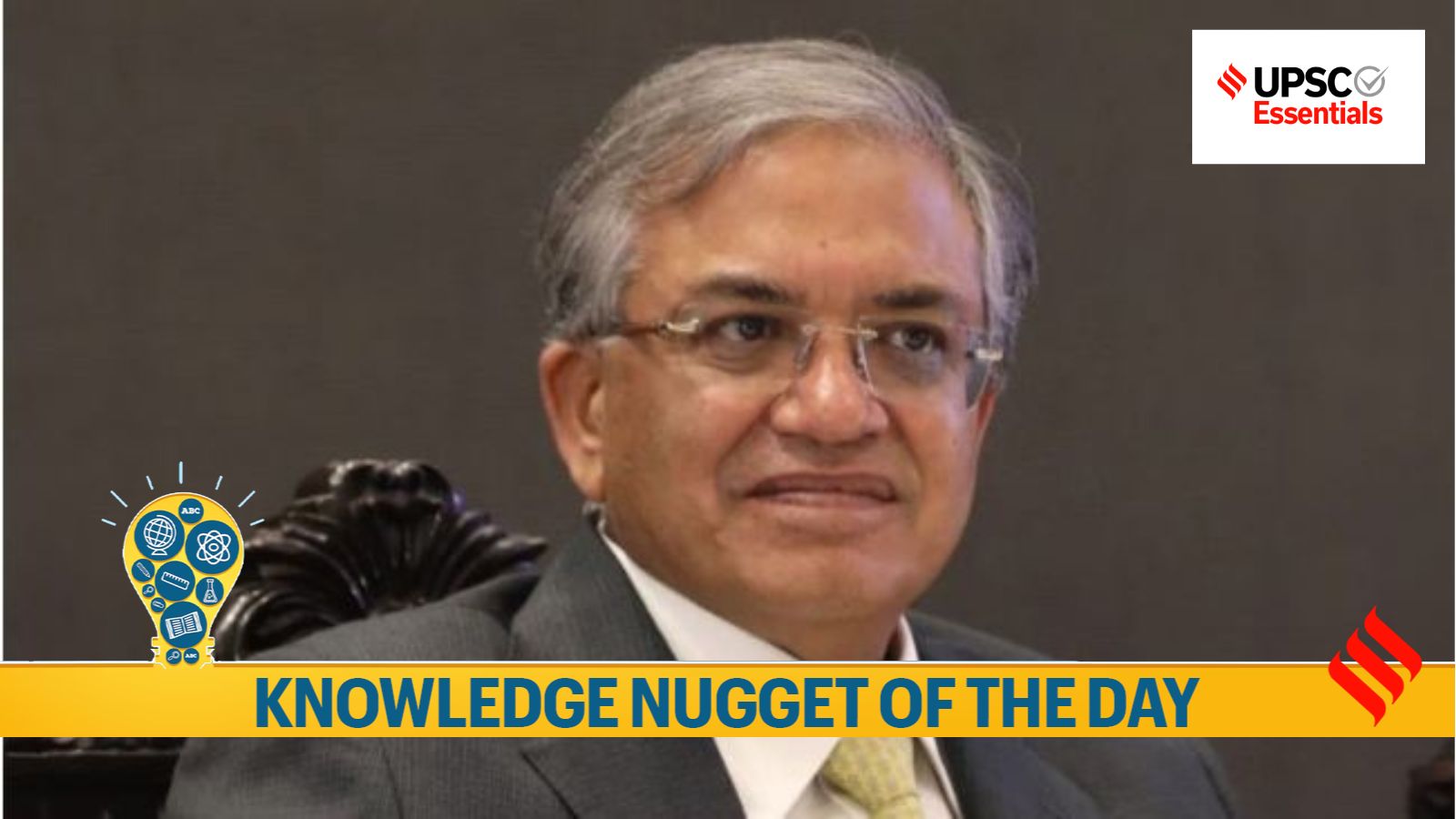
Citing charges including “partisan and discriminatory conduct” and “obstruction of investigation into electoral fraud and SIR” (Special Intensive Revision of electoral rolls), the Opposition on Friday submitted notices in both Houses of Parliament for animpeachment motion against Chief Election Commissioner(CEC) Gyanesh Kumar.
This brings Article 324 of the Constitution to the limelight.
Article 324 (1):“The superintendence, direction and control of the preparation of the electoral rolls for, and the conduct of, all elections to Parliament and to the Legislature of every State and of elections to the offices of President and Vice-President held under this Constitution shall be vested in a Commission.”
Article 324 (2):“The Election Commission shall consist of the Chief Election Commissioner and such number of other Election Commissioners, if any, as the President may from time to time fix and the appointment of the Chief Election Commissioner and other Election Commissioners shall, subject to the provisions of any law made in that behalf by Parliament, be made by the President.”
Article 324 (3):“When any other Election Commissioner is so appointed the Chief Election Commissioner shall act as the Chairman of the Election Commission.”
Article 324 (4):“Before each general election to the House of the People and to the Legislative Assembly of each State, and before the first general election and thereafter before each biennial election to the Legislative Council of each State having such Council, the President may also appoint after consultation with the Election Commission such Regional Commissioners as he may consider necessary to assist the Election Commission in the performance of the functions conferred on the Commission by clause (1).”
Article 324 (6):“The President, or the Governor of a State, shall, when so requested by the Election Commission, make available to the Election Commission or to a Regional Commissioner such staff as may be necessary for the discharge of the functions conferred on the Election Commission by clause (1).”
As per Article 324 (5) of the Constitution, the “Chief Election Commissioner shall not be removed from his office except in like manner and on the like grounds as a Judge of the Supreme Court.”
It also says that Election Commissioners can only be removed on the recommendation of the Chief Election Commissioner.
The article also states that this process is “subject to provisions of any law made by Parliament” on the matter.
Following from that, Parliament passed the Chief Election Commissioner and Other Election Commissioners (Appointment, Conditions of Service and Term of Office) Act, 2023 in December 2023.
Section 11 of the Act provides for the resignation and removal process.
It sticks to the same process as mentioned in the Constitution.
As per Section 3 of the Judges (Inquiry) Act, a motion for presenting an address to the President for removal of a judge must be signed by at least 100 members in the case of the Lok Sabha or 50 members in theRajya Sabha.
The Speaker of the Lok Sabha or the Chairman of the Council of States orRajya Sabhacan decide to admit or refuse the motion.
In the case the motion is accepted, the Speaker or Chairman have to set up a three-member committee to investigate.
The members of the committee have to include one judge of the Supreme Court, one Chief Justice of a High Court and a distinguished jurist.
The report of the committee is then to be submitted to the Speaker or Chairman.
In case the committee finds the judge guilty of misbehaviour or suffering from incapacity, the motion will be taken up by the House or Houses in which it is pending, the Act says.
If passed, the address to remove the judge is sent to the President.
The Chief Election Commissioner and other Election Commissioners (Appointment, Conditions of Office and Terms of Office) Act, 2023, passed in December 2023, establishes a selection committee comprising the Prime Minister, Leader of Opposition, and a Union Cabinet Minister to appoint CECs/ECs.
This new law replaced the Chief Justice of India (CJI) with a Cabinet Minister, contrary to a previous Supreme Court ruling, leading to immediate challenges in the Supreme Court.
As per Section 5 of the Chief Election Commissioner And Other Election Commissioners (Appointment, Conditions of Service And Term of Office) Act, 2023, the candidates for the post would be current or former Secretary-level officers.
It has provisions to set up a search committee chaired by the law minister and two other persons not below the rank of secretary, to prepare a panel of five persons for consideration of the selection committee for appointment as CEC or ECs.
As per Section 8, the Selection Committee shall regulate its own procedure in a transparent manner for selecting the Chief Election Commissioner or other Election Commissioners.
The Selection Committee may also consider any other person than those included in the panel by the Search Committee.
Consider the following statements with reference to the Chief Election Commissioner and other Election Commissioners (Appointment, Conditions of Office and Terms of Office) Act, 2023:
1.
This Act replaced the Chief Justice of India (CJI) with a Cabinet Minister in the selection committee as per Supreme Court judgement in Anoop Baranwal v Union of India case (2003).
2.
The Selection Committee may also consider any other person than those included in the panel by the Search Committee for appointment as CEC or ECs.
Which of the above given statements is/are true?
🚨Click Hereto read the UPSC Essentials magazine for February 2026.
Share your views and suggestions in the comment box or at manas.srivastava@indianexpress.com🚨
Manas Srivastava leads the UPSC Essentials section of The Indian Express (digital).
He majorly writes on UPSC, other competitive exams and education-related projects.
In the past, Manas has represented India at the G-20 Youth Summit in Mexico.
He is a former member of the Youth Council, GOI.
A two-time topper/gold medallist in History (both in graduation and post-graduation) from Delhi University, he has mentored and taught UPSC aspirants for more than five years.
His diverse role in The Indian Express consists of writing, editing, anchoring/ hosting, interviewing experts, and curating and simplifying news for the benefit of students.
He hosts the YouTube talk show called ‘Art and Culture with Devdutt Pattanaik’ and a LIVE series on Instagram and YouTube called ‘LIVE with Manas’.His talks on ‘How to read a newspaper’ focus on newspaper reading as an essential habit for students.
His articles and videos aim at finding solutions to the general queries of students and hence he believes in being students' editor, preparing them not just for any exam but helping them to become informed citizens.
This is where he makes his teaching profession meet journalism.
He is also the editor of UPSC Essentials' monthly magazine for the aspirants.
He is a recipient of the Dip Chand Memorial Award, the Lala Ram Mohan Prize and Prof.
Papiya Ghosh Memorial Prize for academic excellence.
He was also awarded the University’s Post-Graduate Scholarship for pursuing M.A.
in History where he chose to specialise in Ancient India due to his keen interest in Archaeology.
He has also successfully completed a Certificate course on Women’s Studies by the Women’s Studies Development Centre, DU.
As a part of N.S.S in the past, Manas has worked with national and international organisations and has shown keen interest and active participation in Social Service.
He has led and been a part of projects involving areas such as gender sensitisation, persons with disability, helping slum dwellers, environment, adopting our heritage programme.
He has also presented a case study on ‘Psychological stress among students’ at ICSQCC- Sri Lanka.
As a compere for seminars and other events he likes to keep his orating hobby alive.
His interests also lie in International Relations, Governance, Social issues, Essays and poetry....
Read More
Related Stories


Source: This article was originally published by The Indian Express
Read Full Original Article →
Comments (0)
No comments yet. Be the first to comment!
Leave a Comment