
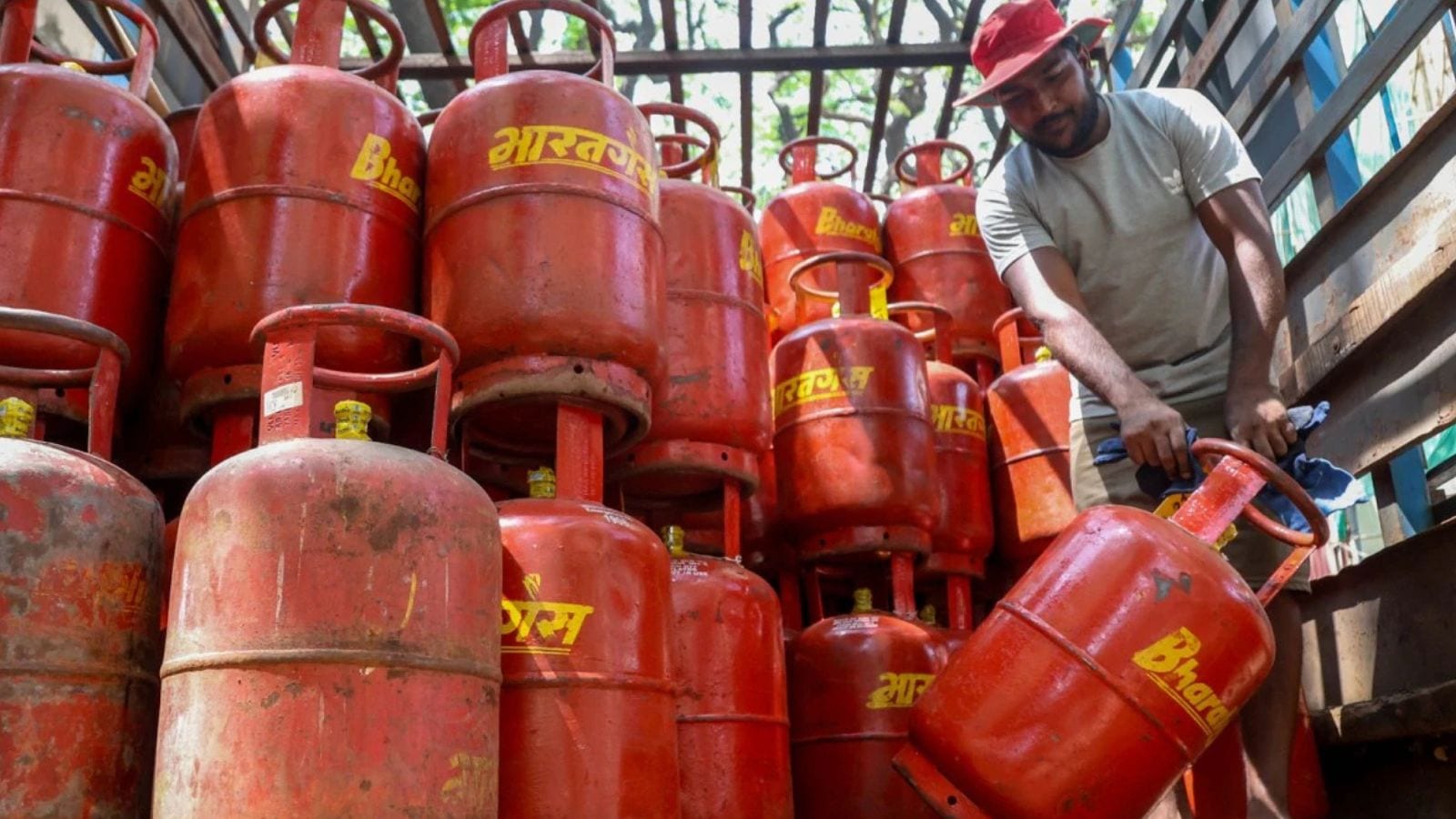
In a cramped workshop in Hupari, a small town in Kolhapur district, a craftsman sets down his gas torch and looks at a half-finished anklet.
There isno more LPGin his cylinder.
He will not light the torch again today, not until a fresh supply arrives, and no one knows when that will be.
Hupari is often called Maharashtra’s Silver City; it is home to over 25,000 artisans and around 200 small factories that collectively produce some of the country’s finest silver jewellery.
Its payals, traditional silver anklets, carry a Geographical Indication (GI) tag.
“Hupari’s anklets, chains, waist ornaments, toe rings, nose rings, ear pieces, and deity idols are sold across India and exported abroad,” said Dinkarrao Sase, Vice-President of the Hupari Silver Makers Association.
At the heart of this industry is a modest but indispensable fuel: Liquefied Petroleum Gas.
“Silver jewellery-making is a heat-intensive craft.
Raw silver must be melted before casting.
Worked metal hardens with repeated shaping and needs to be re-softened through annealing – a controlled heating process.
Joints must be soldered, moulds filled, and repairs made with a precise flame,” says Lalasaheb Desai, a veteran artisan.
“LPG fits all these needs.
It burns cleanly, produces a high-temperature flame, and can be controlled precisely through a small jeweller’s torch.
It is cheap and widely available, provides less soot compared to coal, and is easy to control,” Desai added.
It was not always LPG.
Desai recalls the coal-powered era, when heating was uneven and imprecise, used from the initial melt right through to the final stage of applying meena colours.
Coal gave way to kerosene stoves, and kerosene gave way to LPG.
The switch was a significant upgrade in efficiency and quality.
Mahesh Mali, owner of SilverKing Jewellery, describes the daily impact.
“We used to make silver ornaments of around 500 grams per day.
That has now reduced to around 250 grams – mainly because several artisans have shut their operations as LPG stocks get exhausted.
Those who still have some supply are working; others have closed their doors entirely.”
Sase says, “There has been a 35 to 40 per cent impact on the silver industry in Hupari due to the LPG shortage.
The town, which he describes as one of the biggest producers of silver anklets and chains in the country, has both artisans and traders affected at every level of the supply chain.”The shortage, Sase notes, has compounded a series of earlier pressures.
“The Ukraine war had already disrupted supply chains and contributed to a sharp rise in silver prices.
The LPG crunch has now hit the production side directly,” he added.
For Desai, the disruption goes beyond production numbers.
His workshop makes a range of ornaments – silver anklets, kardoras (waist chains), toe rings, nose nathnis, chawphuli (ear ornaments), and small silver deity idols, among others.
Each of these requires multiple rounds of heating, shaping, and finishing.“Due to the LPG shortage, production has been affected, and we will not be able to fulfil already-due orders,” he says.
One option being explored is the Hydromax machine, a device that uses water and electrical power to generate a flame, often supplemented with methanol to produce a cleaner, soot-free result suited to delicate silver soldering.But manufacturer Rajesh Waingate flags about its limitations.
“Operating costs with LPG run to around Rs 1,000 per kg.
With a Hydromax setup, that rises to approximately Rs 1,600.
Beyond cost, there is a skill barrier.
A different set of operating skills is required for the Hydromax machine,” says Waingate.
“In Hupari’s workshops, women form a significant part of the artisan workforce – many of them experienced with LPG torches but unfamiliar with this newer technology,” added Waingate.
Shubham Kurale is a journalist based in Pune and has studied journalism at the Ranade Institute.
He primarily reports on transport and is interested in covering civic issues, sports, gig workers, environmental issues, and queer issues.
X:@ShubhamKurale1...
Read More
Related Stories



Source: This article was originally published by The Indian Express
Read Full Original Article →
Comments (0)
No comments yet. Be the first to comment!
Leave a Comment