
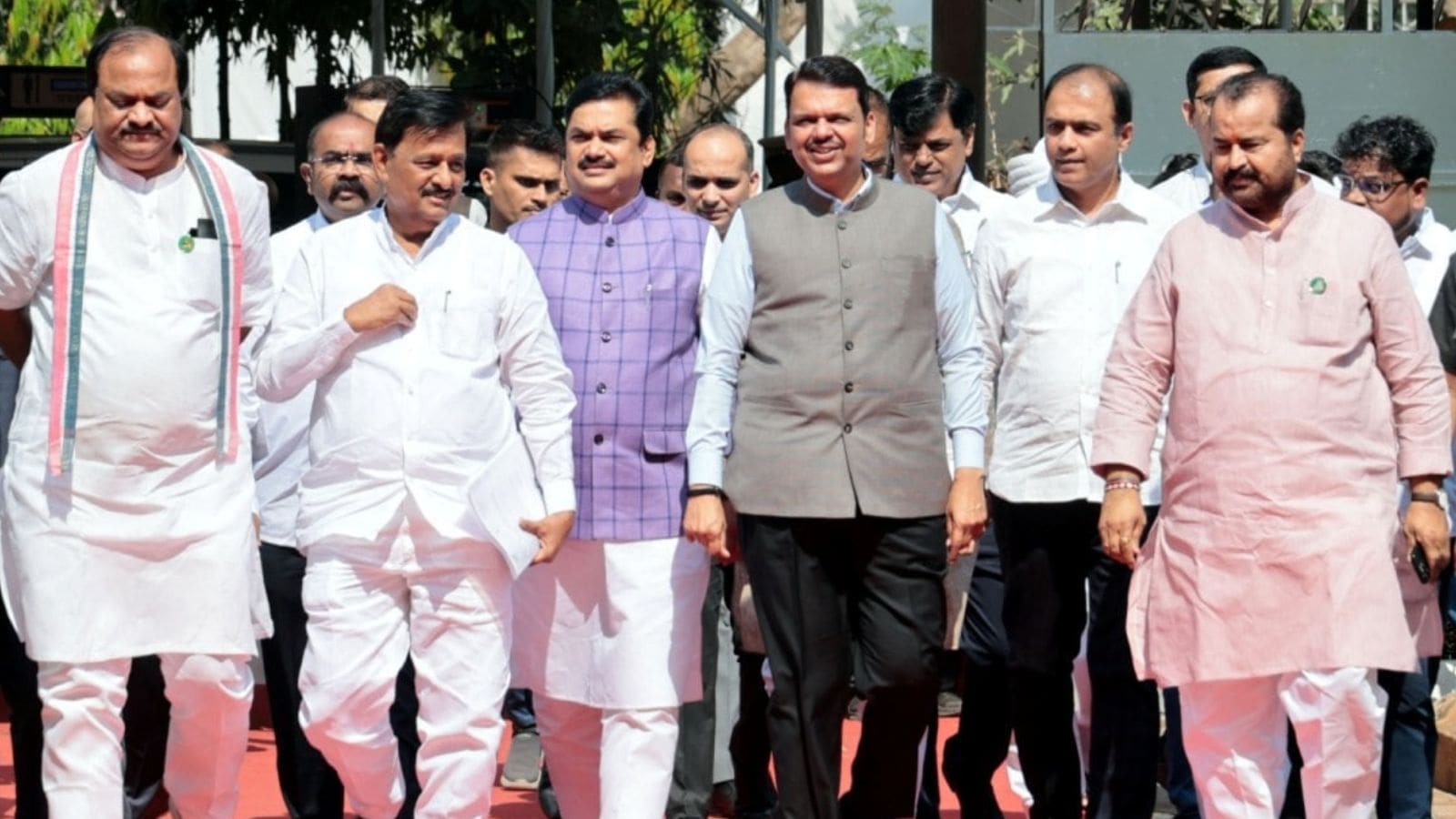
The proposed Maharashtra Dharma Swatantra Bill, 2026, which is to be tabled in the Maharashtra Legislative Assembly on Friday, mandates that individuals intending to change their religion must give a 60 day prior notice to the district magistrate and submit post conversion declarations, while prescribing prison terms up to seven years and fines up to Rs.5 lakh for violations, with stricter punishment of up to 10 years and Rs.
7 lakh fine for repeat offences.
Conversions through force, inducement prohibited
The bill, which will be tabled on Friday during the ongoingBudgetsession, seeks to prohibit unlawful conversion from one religion to another through force, fraud, coercion, misrepresentation, undue influence or inducement.
It prescribes imprisonment upto seven years and fines of up to Rs.5 lakh for violations, with enhanced punishment of up to 10 years imprisonment for repeat offences by an individual or an organisation.
According to the proposed legislation, “inducement” has been broadly defined to include offering gifts, money or other material benefits, employment, free education in religious institutions, promises of marriage, assurances of a better lifestyle or claims of divine healing intended to influence a person to change religion.
“Force” includes threats of divine displeasure, social boycott, intimidation or threats to life, property or reputation, along with any form of physical or psychological pressure.
The bill also treats conversion obtained through fraud or misrepresentation as unlawful.
This includes situations where a person conceals their religious identity, misrepresents the nature of religious beliefs or practices, or misleads a person about the purpose of a religious activity.
The legislation identifies certain categories of individuals as vulnerable persons, including women, minors and members of Scheduled Castes and Scheduled Tribes.
Conversions carried out by exploiting such vulnerability would attract stricter penalties.
The bill also contains provisions dealing with conversions linked to marriage.
If a person converts another through marriage or under the promise of marriage, the conversion would be treated as unlawful.
Where a marriage is undertaken solely for the purpose of religious conversion, the bill provides that a competent court may declare the marriage null and void.
Prior notice to district authorities mandatory
The proposed law introduces a system of prior declaration for individuals intending to change their religion.
Any person wishing to convert must submit a written notice to the District Magistrate at least 60 days before the proposed conversion.
The notice must include personal details such as the individual’s name, age, occupation and address, their present religion, the religion they intend to adopt, and details of the proposed conversion ceremony.
After receiving the notice, the District Magistrate or an authorised officer may conduct an inquiry to determine whether the proposed conversion is voluntary and not the result of force, fraud or inducement.
The district administration may also seek a police inquiry and invite objections regarding the proposed conversion.
The bill further requires that after the conversion ceremony, both the individual who has converted and the person or organisation conducting the ceremony must submit a declaration to the district authorities within 60 days.
The declaration must contain detailed information including the convert’s name, age, occupation, address, parents’ names, the religion previously professed, the religion adopted, the date and place of conversion, and the procedure followed during the ceremony.
District authorities will record such declarations and maintain an official register of conversions.
If the declaration is not submitted within the prescribed period, the conversion may be treated as invalid under the law.
Jail terms, fines and stricter penalties for vulnerable groups
The legislation also defines “mass conversion” as the conversion of two or more persons simultaneously.
Such cases would attract stricter punishment under the proposed law.
Offences under the bill would be cognisable and non bailable, and investigations would be conducted by police officers not below the rank of Deputy Superintendent of Police.
Complaints regarding unlawful conversion may be filed by the person who converted as well as by their parents, brother, sister or any other person related by blood, marriage or adoption.
For unlawful conversion, the bill prescribes imprisonment upto seven years and a fine of Rs.
1 lakh.
Where the offence involves a minor, woman or a person belonging to the Scheduled Castes or Scheduled Tribes, or those with unsound mind, the fine is increased to Rs.
5 lakh.
Mass conversion will also attract punishment up to 7 years of jail term and Rs.
5 lakh fine.
The proposed law also provides stricter punishment for repeat offenders including an individual or an organisation, with imprisonment that may extend up to 10 years and fines that may go up to Rs.7 lakh.
If an institution or organisation is found to have facilitated unlawful conversions, the government may cancel its registration and withdraw any financial assistance or grants provided to it.
The bill also places the burden of proof on the person who conducted the conversion, requiring them to establish that the conversion was voluntary and not carried out through force, fraud or inducement.
In addition, provisions have been included for the rehabilitation of individuals who have been subjected to forced or fraudulent conversions.
Victims may be provided assistance for rehabilitation, maintenance support and protection in matters relating to the custody of children.
What is the objective of the bill?
According to the statement of objects and reasons accompanying the bill, although the Constitution guarantees freedom of religion, the right is not absolute and is subject to public order, morality and health.
The government contends that instances of conversion through coercion, inducement or fraudulent means have been reported and that vulnerable sections of society are sometimes targeted.
The statement also notes that several states, including Uttar Pradesh, Madhya Pradesh, Gujarat, Himachal Pradesh, Karnataka, Uttarakhand and Arunachal Pradesh, have enacted laws regulating religious conversions.
The bill empowers the state government to frame rules for implementing the provisions of the law, which would subsequently be placed before the state legislature.
If enacted, the Maharashtra Dharma Swatantra Bill would introduce a system requiring prior notice to district authorities, administrative scrutiny of conversions and post conversion declarations while criminalising conversions carried out through coercion, fraud or inducement.
Vallabh Ozarkar is a Senior Correspondent with The Indian Express' Mumbai bureau, recognized as an authoritative and deeply knowledgeable voice on the politics, governance, and infrastructure of Maharashtra.
With more than nine years of experience in major news organizations, his reporting delivers high standards of Expertise and Trustworthiness.
Expertise & Authority
Current Role: Senior Correspondent, The Indian Express, Mumbai bureau.
Geographical Specialization: Provides exclusive and detailed coverage of Maharashtra politics and governance, operating at the epicenter of the state's decision-making in Mumbai.
Core Authority: His reporting demonstrates deep Expertise across critical and often complex state matters, including:
Political Dynamics: In-depth analysis of the ruling coalition (Mahayuti) and opposition (MVA), internal party conflicts, and crucial election updates, including local body polls and municipal corporation tussles.
Governance & Policy: Focused coverage on significant state policies, such as the overhaul of Mumbai's 'pagdi system' (rent control for old buildings) and social welfare schemes (e.g., Ladki Bahin Yojana accountability).
Infrastructure & Development: Reports on major urban and regional infrastructure projects, including the Mumbai Water Metro, Uttan-Virar Sea Link, and Thane Metro development.
Administrative Oversight: Follows legislative actions, cabinet decisions, and reports on issues of accountability and alleged fraud within state departments.
Experience
Current Role: His role at The Indian Express—a leading national daily—validates the credibility and standard of his reporting.
Career Foundation: Prior to The Indian Express, Vallabh contributed to other major metropolitan news outlets, including the Mumbai Mirror and DNA - Daily News & Analysis, providing a solid foundation in rigorous urban and political journalism.
Evidence of Impact: His work consistently breaks down complex political developments and administrative failures, such as exposing discrepancies in government welfare schemes, cementing his reputation as a trusted source for ground-level, impactful news from Maharashtra.
He tweets @Ozarkarvallabh...
Read More
Stay updated with the latest -Click here to follow us on Instagram
Related Stories



Source: This article was originally published by The Indian Express
Read Full Original Article →
Comments (0)
No comments yet. Be the first to comment!
Leave a Comment