
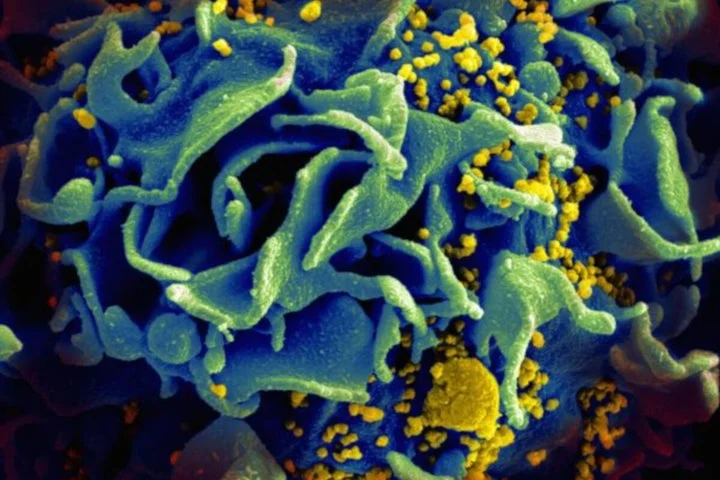
Stem cell transplant patient’s case could help find signs to predict long‑term remission, researchers say
An HIV patient in Oslo has been in remission for the past five years following a stem cell transplant from his brother, who was found to be resistant to the virus, marking what could only be the 10th case of a person being cured of the disease.
One of the main reasons HIV infections are persistent is that the virus can remain hidden in pockets of cells across various tissues, even when effective treatment keeps the virus under control.
This is why for many patients the virus tends to return when they stop antiretroviral medication.
But previous studies have suggested remission could be achieved after stem cell transplantation from a healthy donor containing a specific mutation – CCR5 Δ32/Δ32 – that removes the receptor proteins which HIV uses to infect cells.
This seems to explain the HIV remission of a 64-year-old man, who had been diagnosed in 2006 at the age of 44.
The man received a stem cell transplant from his sibling to treat his bone marrow cancer, and he was subsequently discontinued from antiretroviral medication 24 months afterwards.
The brother happened to have the CCR5 Δ32/Δ32 mutation, and his cells gradually replaced the patient’s immune cells in the blood, bone marrow, and gut tissues.
Subsequent tissue samples taken from the patient’s blood and gut two years after the transplant showed no HIV DNA integrated into the host DNA.
A comprehensive analysis of more than 65 million immune system cells from the patient showed no virus capable of multiplying, and no detectable HIV‑specific T-cell responses.
His HIV antibody levels also declined over four years after transplantation, researchers found.
“Replication-competent virus and HIV-specific T cell responses were absent, and HIV antibody responses showed a gradual decline,” researchers wrote in a study published in the journal Nature Microbiology on Monday.
“The absence of HIV-specific T cell responses in our data supports the hypothesis that such an absence correlates with sustained HIV remission,” researchers wrote.
Clinicians involved in the study point out that such a cure is an unlikely scenario that may not be replicated in other patients.
“A sibling has a 25 per cent probability of being a match for a transplant, and the frequency of CCR5Δ32/Δ32 is around 1 per cent” in northern European populations, explained study co-author Anders Eivind Myhre from Oslo University.
“He feels like he has won the lottery twice ...
He was cured of his bone marrow disease, which could be fatal, and he’s also now cured of HIV, most likely,” Marius Trøseid, another author of the study, told Live Science .
The case study shows that receiving donor cells resistant to HIV, combined with full replacement of immune cells across different parts of the body, may help to reduce or remove hidden HIV.
While stem cell transplantation may not be a practical approach for most people with HIV, studying these cases can help identify signs to predict long‑term remission, researchers say.
Join thought-provoking conversations, follow other Independent readers and see their replies
Related Stories



Source: This article was originally published by The Independent
Read Full Original Article →
Comments (0)
No comments yet. Be the first to comment!
Leave a Comment