
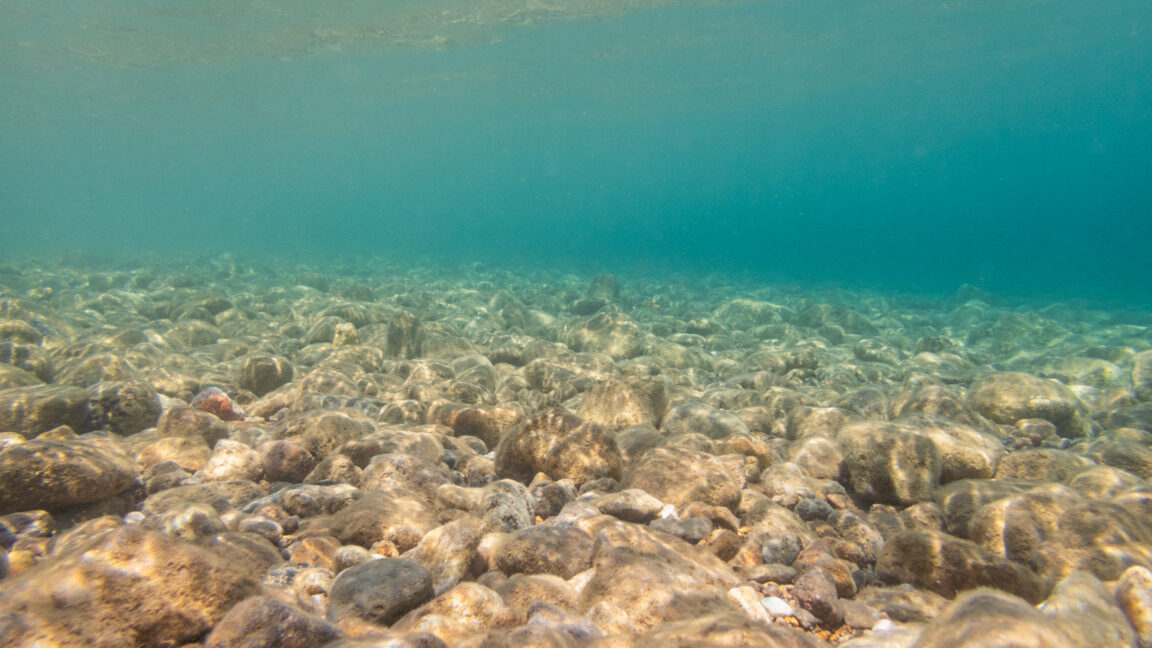
More than 13,000 feet below the surface of the Pacific Ocean, a more-than-70-ton machine trundled like a tank on its caterpillar tracks for a tenth of a mile—sucking up potato-sized nodules of rock packed with copper, manganese, cobalt, and nickel.
It was 2022, and that pilot run of a subsea harvester by a Canadian business, The Metals Company, was pronounced a success.
The company is working to get a green light to deploy similar machines for commercial harvesting over an area of 65,000 square kilometers, to extract over 600 million metric tons of nodules.
There are riches on the ocean floor—round deposits made up of tightly packed layers of critical minerals that have long been out of reach.
But not anymore.
The pursuits of The Metals Company are among 31 initiatives by companies, governments and state-owned enterprises—including China, India, and the Republic of Nauru, a tiny island nation in the southwestern Pacific Ocean—to collect nodules for analysis and to test mining equipment.
These untapped deposits, undisturbed over millions of years, are in the sights of these countries and companies as the world moves to operate sustainably in the face of climate change .
A large-scale shift to clean energy could quadruple demand for critical metals and rare earth elements, according to the International Energy Agency (IEA), an organization in Paris that provides advice and analysis on energy policy.
And there is sharp disagreement about where to obtain those extra resources.
Countries such as the United States, companies including The Metals Company and some scientists who study extractive industries argue that there aren’t enough easily accessible critical minerals on land to supply the growing demand.
Rather than opening numerous new terrestrial mines, the nascent deep-sea mining industry could help fill the gap, they say.
Related Stories


Source: This article was originally published by Ars Technica
Read Full Original Article →
Comments (0)
No comments yet. Be the first to comment!
Leave a Comment