
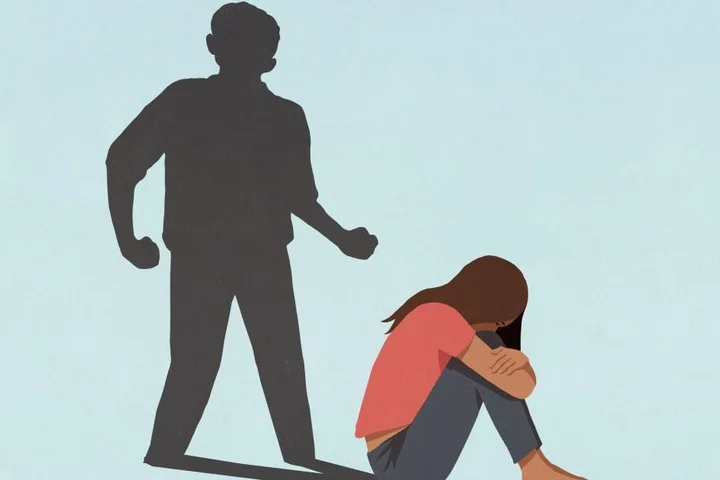
‘He’s going to kill me’.
It was two years ago when my daughter, Laura* – who is in her mid-20s and autistic – heard a woman scream this from the flat next door.
Terrified, she called me in a panic, so I told her to call the police and stay inside the flat.
But when the police turned up at her door, the neighbour immediately knew that it was her who called the police on him.
It turned out that he had hired a sex worker and was beating her up.
He didn’t even get charged for the offence.
Laura lives independently in her little flat and I help daily with things like shopping, cooking and cleaning.
She has led a happy life, until this moment.
We’ve had to call the police on a regular basis after he has smashed her windows, tried to climb through her bedroom window when she was sleeping and threatened to kill her multiple times.
He intimidates her at every opportunity.
This Is Not Right
On November 25, 2024 Metro launched This Is Not Right, a campaign to address the relentless epidemic of violence against women.
With the help of our partners at Women's Aid, This Is Not Right aims to shine a light on the sheer scale of this national emergency.
Read more:
- Introducing This Is Not Right: Metro's year-long violence against women campaign
- Remembering the women killed by men in 2024
Research indicates that one in four women will experience domestic abuse in their lifetime and that on average, one woman is killed every five years by an abusive partner.
But no statistics exist on abuse carried out by neighbours despite this impacting every single aspect of my daughter’s life.
I realised how bad it was when one night last year I went to pick Laura up in my car.
When she opened her front door, he came out of his flat swinging an empty whiskey bottle at the car – he threw it and just about missed Laura’s window – instead, it dented the car.
We drove away with my daughter screaming in panic.
We went back to my house after and called the police, who escorted us back to Laura’s flat.
When we got there, we saw the neighbour had smashed her front windows in, but we couldn’t convict him because it was our word against his.
From then, I told Laura to stay with me.
My daughter couldn’t continue to live like this and neither could I – surely they would do something, I thought.
Or if not, perhaps the council could move her.
But the police and the council said the best they could do was put a fire bag on the letter box to stop him from burning the place down.
Her neighbour also terrorises other people in the building – by smashing their windows and even threatening someone with a knife – but no one is brave enough to come forward.
I don’t blame them – especially, as I have learnt, when anyone who could help chooses not to.
Sarah didn’t return to her flat until six months later.
I would take her in, but I’m a full time carer for my younger daughter, so it just wasn’t feasible.
What to do if you're experiencing domestic abuse
If you are experiencing domestic abuse, you are not alone.
And whether you are currently coping with or have made the decision to leave, you do have options.
- If you are thinking about leaving, domestic abuse charity Refuge suggests starting a record of abusive incidents, which might include saving pictures or messages, or making notes of times, dates and details of incidents.
- The next step is to make copies of important documents such as court orders, marriage certificates, National Insurance Numbers and your driving licence.
- If you feel ready to leave, start by making a plan for a safe, reliable route out.
If you feel safe to do so, pack an emergency bag so that you leave in a hurry if needed.
- You can access a local refuge, either with or without children, for as long as you need to stay.
The address is confidential.
The National Domestic Abuse Helpline (0808 2000 247) is open 24-hours a day and has all the details of refuges in your area.
- In an emergency situation, ring 999 and ask for the police.
If you aren’t able to talk, try the Silent Solution: after dialling 999, listen to the questions from the operator and respond by coughing or tapping your device, if possible.
If prompted, press 55 to let the operator know it's an emergency – you'll be put through to the police.
Read more here.
In order to move her on a permanent basis, the council are now saying that they need the police to state that her neighbour will actually kill her – apparently, without that admission, there is nothing they can do.
But the police told us they had made a No Further Action decision – which indicates that the police or Crown Prosecution Service (CPS) are dropping a criminal investigation and will not bring charges against the suspect.
We are at a frustrating standstill.
No one replies to my emails or phone calls.
I put in a complaint via the IOPC and got a response that it would be dealt with informally.
After two weeks, I received a phone call from an officer only for him to tell me that he had no idea what my complaint was – he had just been told to call me.
It has been just over a year, and we are still waiting to see if the CPS will actually press charges.
Learn more about domestic abuse in the UK
- One in four women experience domestic abuse
- It takes an average of seven attempts for a woman to leave for good
- Police record a domestic abuse every 40 seconds.
- Less than 20% of women who experience partner abuse reported it to police
- 84% of domestic abuse victims are women – 93% of defendents are male
- Disabled women are twice as likely to experience domestic abuse
- Source: Refuge
Meanwhile, Laura is trapped.
She doesn’t go outside or use the back garden.
She’s too scared to have her windows fixed, in case she breaks them again – so for now, every window is boarded up with wood.
Because she is autistic, Laura doesn’t understand communication like most people do.
She tries to understand people’s intentions by facial movements, so if someone is smiling, she thinks everything is okay.
This is why it’s especially hard for her – when the neighbour, for example, said he was going to punch her in the face, he was smiling maniacally and she didn’t realise she was in danger.
It has taken over a year to teach her how to call the police when she feels scared – but it’s been a process.
My daughter lives in constant fear, and she is just expected to deal with it.
She is more vulnerable than most, but is being constantly failed by the system.
From start to finish, the way that our case has been handled is disgusting.
No one seems to care – it feels like because my daughter has special needs, and they don’t have the provisions to help her.
She could get killed tomorrow by the man next door and no one would have helped.
But lessons around domestic abuse need to be learned now, before another life is lost.
It shouldn’t be this hard to keep someone safe.
*Name has been changed
Related Stories


Source: This article was originally published by Metro UK
Read Full Original Article →
Comments (0)
No comments yet. Be the first to comment!
Leave a Comment