
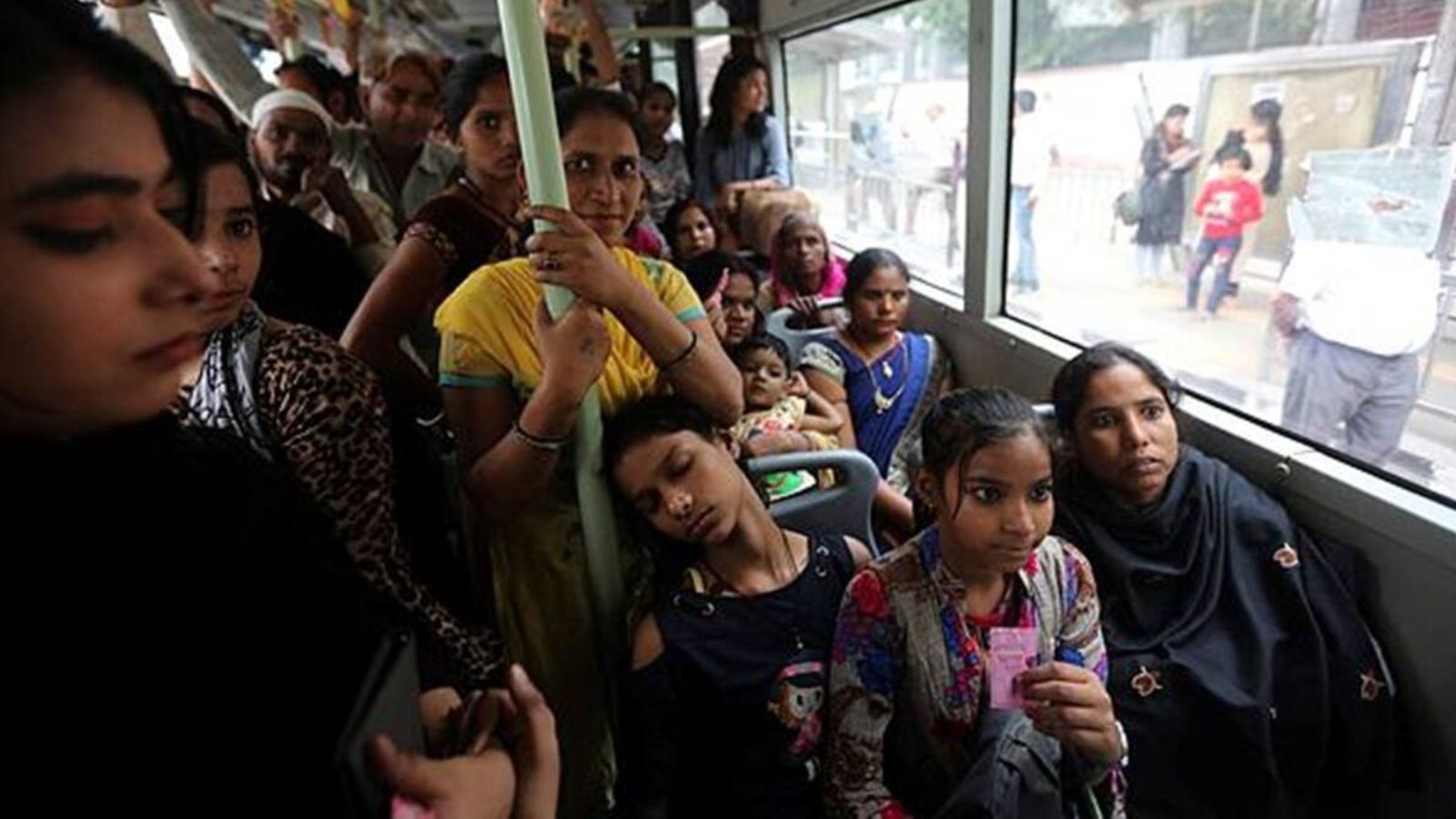
Parisar, an NGO based in Pune, submitted a report with recommendations to make city’s bus system safer and more inclusive forwomencommuters to Pune Mahanagar Parivahan Mahamandal Limited (PMPML).
The report titled “Gender Action Plan Framework forPune” was handed over to Alice Pore, Joint Managing Director of PMPML, by Tanzeel Allapur and Shweta Vernekar from Parisar on March 13.
The study draws on a survey of 540 women commuters, focus group discussions withwomenworking in the service sector, and infrastructure audits of seven bus stops in Hadapsar.
The research examines safety challenges across the entire journey chain – from walking to bus stops and waiting for buses to the on-board travel experience.
“In most cities, including Pune, women make up nearly half of public transport users.
Yet transport systems are rarely planned with their specific needs in mind.
Looking at mobility through a gender lens is therefore simply good public transport planning,” Shweta Vernekar, Senior Program Associate, Parisar said.
“If cities want safer and more inclusive transport, gender considerations must move beyond ad-hoc measures.
Institutionalising a gender action plan ensures that women’s mobility needs are built into the system itself,” said Tanzeel Allapur, Program Associate, Parisar.
The survey shows that public buses play a critical role in enabling women’s access to education and employment, particularly for students and early-career workers.
Over 55% of respondents were below the age of 34, and 41% were students, indicating that the reliability of public transport directly influences women’s access to opportunities.
More than 44% of women reported waiting over 10 minutes for a bus, while 22% reported waiting more than 30 minutes.
At the same time, 54% of women reach bus stops by walking, often through poorly lit or deserted streets, significantly increasing safety risks.
Over 57% of women reported feeling anxious while travelling by bus, and 11% reported experiencing or witnessing harassment in the past three months, including staring, unwanted physical contact, and verbal harassment.
However, very few incidents are formally reported due to limited awareness of complaint mechanisms and lack of confidence in institutional response.
Audits of seven bus stops in Hadapsar revealed that while most stops had shelters, none had emergency alert systems, CCTV signage, or visible helpline information.
Many stops also lacked adequate drainage, lighting, and visibility from surrounding areas, affecting perceived safety.
Women prefer safer public transport over segregated services Nearly 47% of women respondents said they do not want women-only buses, but instead prefer safer conditions in regular buses, highlighting the need for system-wide improvements rather than isolated services.
Mobility barriers have wider social and economic consequences.
The report highlights that 12% of respondents chose schools or jobs closer to home due to transport issues, while 8% reported that women they know left jobs or education entirely because of mobility constraints.
Related Stories



Source: This article was originally published by The Indian Express
Read Full Original Article →
Comments (0)
No comments yet. Be the first to comment!
Leave a Comment