
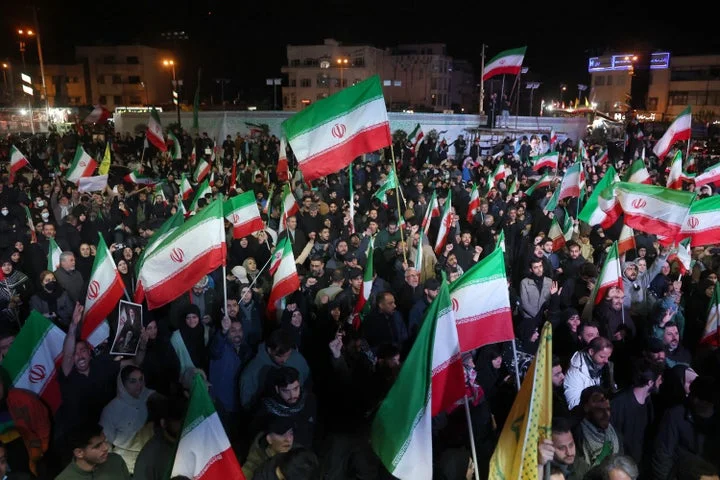
US president’s decision contingent on Tehran agreeing to two-week ceasefire and reopening Strait of Hormuz
Oil prices plummeted and Asian markets rose after the US and Iran agreed to a two-week ceasefire that could reopen the Strait of Hormuz .
South Korea’s Kospi rose about 5.8 per cent while Japan’s Nikkei 225 climbed roughly 5 per cent.
Australia’s S&P/ASX 200 advanced around 2.6 per cent, while Hong Kong’s Hang Seng rose about 2.6 per cent as trading resumed after a holiday.
China’s CSI 300 also moved higher.
Oil prices dropped steeply, with US crude falling more than $16 to around $96 a barrel and Brent crude down about $14 to below $95, still higher than the pre-war levels.
US crude oil futures also fell more than 15 per cent, while futures for the S&P 500 jumped 2.2 per cent by 8.05pm ET, and Dow futures rose 930 points or 2 per cent.
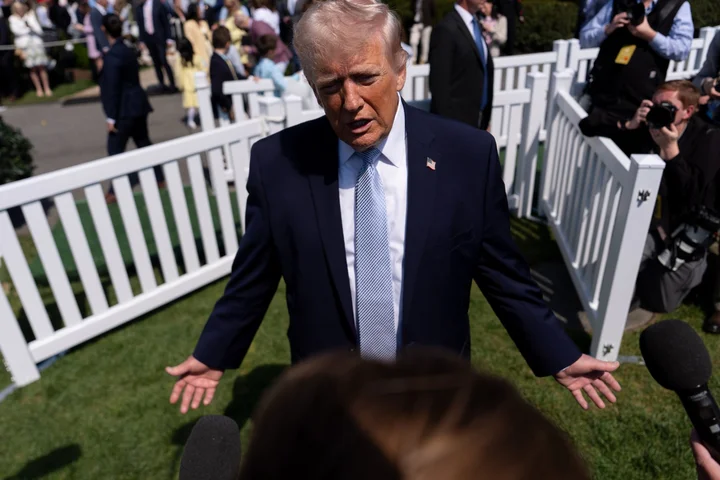
The market activity was driven by US president Donald Trump announcing that he would hold off on his threat of devastating attacks on Iran , adding that the decision was “subject to the Islamic Republic of Iran agreeing to the COMPLETE, IMMEDIATE, and SAFE OPENING of the Strait of Hormuz”.
Mr Trump had previously threatened strikes on Iranian bridges, power plants, and other civilian infrastructure .
Iranian foreign minister Seyed Abbas Araghchi announced, on behalf of the Supreme National Security Council, that his country’s armed forces would “cease their defensive operations”.
“It is emphasised that this does not signify the termination of the war,” the statement from the council said.
“Our hands remain upon the trigger, and should the slightest error be committed by the enemy, it shall be met with full force.”
Analysts said the market reaction reflected relief at the easing of immediate risks, although sentiment remained cautious.
“The mood remains one of cautious optimism rather than outright celebration,” Tim Waterer, chief market analyst at KCM Trade, told Reuters, noting the ceasefire was temporary and its impact on shipping flows would be closely watched.
Charu Chanana, chief investment strategist at Saxo, told the news agency the crucial test was whether negotiations would keep progressing over the next two weeks – and whether traffic through Hormuz would actually ease.
“That will determine whether this remains just a relief rally or starts to look more like a durable de-escalation,” she said.
Earlier, US stocks swung sharply during regular trading as uncertainty about the war increased following Mr Trump’s threat that a “whole civilisation will die tonight, never to be brought back again” if Iran did not meet his deadline of 8pm ET to open the Strait of Hormuz.
The S&P 500 fell as much as 1.2 per cent, but stocks rallied at the end of trading after Pakistan’s prime minister urged Mr Trump to extend his deadline for another two weeks and asked Iran to open up the strait for the same period.
The S&P 500 erased all its losses and ended with a modest gain of 0.1 per cent.
The Dow Jones Industrial Average dipped 85 points, or 0.2 per cent, and the Nasdaq composite added 0.1 per cent.
They are the latest swings to hit financial markets since late February because of deep uncertainty about when the fighting may end.
Oil prices were likewise shaky.
The price for a barrel of benchmark US crude to be delivered in May briefly climbed above $117 before settling at $112.95.
Oil prices have spiked because the war has snarled the production and transportation of crude in the Persian Gulf .
Much of that oil exits the Gulf through the Strait of Hormuz to reach customers around the world, but Iran has blocked it to its enemies.
The worry in markets is that a long-term disruption will keep oil prices high for a long time and send a painful wave of inflation crashing through the global economy.
Mr Trump kept traders on edge by making a series of threats to blow up Iranian power plants, only to delay several times.
The average price for a gallon of regular gasoline across the US has leapt to $4.14, according to the American Automobile Association.
It was below $3 a couple of days before the US and Israel launched attacks to begin the war in late February.
In the bond market, Treasury yields eased on word of a potential ceasefire.
The yield on the 10-year bond fell to 4.24 per cent from 4.30 per cent earlier on Tuesday.
That’s still well above its 3.97 per cent level from before the war and the rise pushes up rates for mortgages and other loans going to American households and businesses, slowing the economy.
Join thought-provoking conversations, follow other Independent readers and see their replies
Related Stories


Source: This article was originally published by The Independent
Read Full Original Article →
Comments (0)
No comments yet. Be the first to comment!
Leave a Comment