
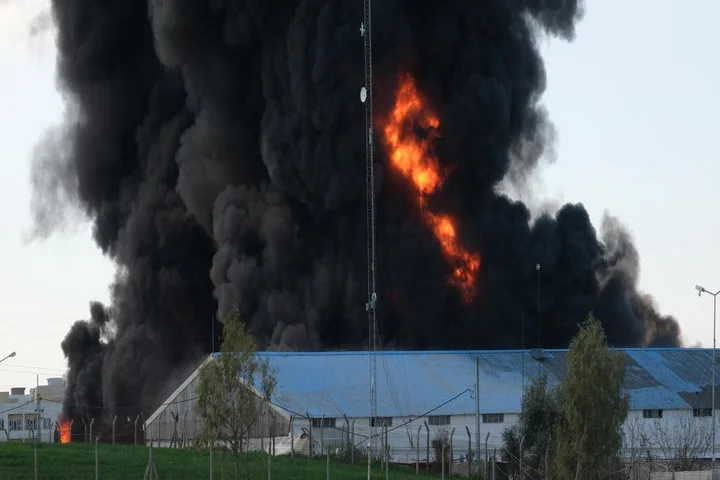
Updated on: April 2, 2026 / 4:47 PM EDT / CBS News
What to know about the Iran war today:
CENTCOM denies Iran shot down U.S.
fighter jet
U.S.
Central Command denied reports that Iran's Islamic Revolutionary Guard Corps shot down a U.S.
fighter jet on Wednesday.
"All U.S.
fighter aircraft are accounted for.
Iran's IRGC has made the same false claim at least half a dozen times," CENTCOM said on social media .
Iranian foreign minister says destroying "unfinished bridges" won't make Iran surrender
"Striking civilian structures, including unfinished bridges, will not compel Iranians to surrender," Iranian Foreign Minister Abbas Araghchi said Wednesday on social media .
His message appeared to be a response to a post from President Trump on Truth Social, in which Mr.
Trump wrote, "The biggest bridge in Iran comes tumbling down, never to be used again," along with a video of a bridge being destroyed.
Araghchi said such attacks "only conveys the defeat and moral collapse of an enemy in disarray.
Every bridge and building will be built back stronger.
What will never recover: damage to America's standing."
"There's one striking difference between the present and the Stone Age: there was no oil or gas being pumped in the Middle East back then," he said , again appearing to reference comments made by both Mr.
Trump and Defense Secretary Pete Hegseth saying the U.S.
would bomb Iran back to the Stone Age.
"Are POTUS and Americans who put him in office sure that they want to turn back the clock?" Araghchi wrote.
Pakistan's government on Thursday drastically raised fuel prices in response to spiking global energy prices caused by the Iran war, the country's petroleum minister said in a press conference.
The new prices mark an increase of 42.7% in gas prices and 54.9% in the price of diesel.
"The decision made today is that as per international markets, after the increase in the petrol prices, the new price will be Rs458.40 ($1.64 per litre), which will be effective from tomorrow," said Ali Pervaiz Malik.
Sen.
Murphy says "we are losing this war" following Trump address
Sen.
Chris Murphy, a Democrat from Connecticut, said in a statement the president's speech Wednesday night was "grounded in a reality that only exists in Donald Trump's mind."
"We are losing this war," Murphy said.
"We cannot destroy all their missiles or drones, nor their nuclear program.
Iran projects more power in the region than they did before the war, especially if they now permanently control the Strait of Hormuz.
We are spending billions we don't have and losing American lives in a war that is destabilizing the world and making us look feckless."
Trump urges Iran "to make a deal"
President Trump urged Iran on Thursday "to make a deal" before it's too late, and posted video he said showed Iran's biggest bridge crumbling.
"The biggest bridge in Iran comes tumbling down, never to be used again - Much more to follow!" the president said on Truth Social.
"IT IS TIME FOR IRAN TO MAKE A DEAL BEFORE IT IS TOO LATE, AND THERE IS NOTHING LEFT OF WHAT STILL COULD BECOME A GREAT COUNTRY!" he posted.
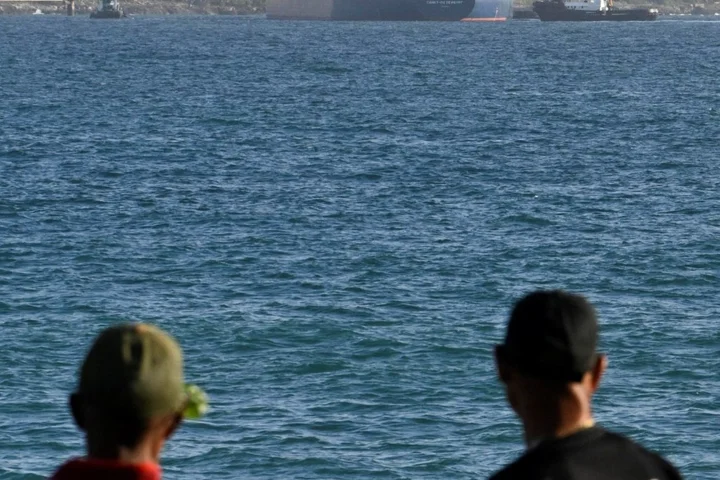
U.K.-led talks demand "immediate" reopening of Strait of Hormuz
British foreign minister Yvette Cooper said on Thursday that some 40 countries who joined a virtual meeting on the Strait of Hormuz crisis had demanded "the immediate and unconditional reopening" of the vital shipping route.
"Iran is trying to hold the global economy hostage in the Strait of Hormuz," Cooper said in a statement after the talks.
"They must not prevail.
To that effect, partners today called for the immediate and unconditional reopening of the Strait and respect for the fundamental principles of freedom of navigation and the law of the sea."
Stocks recover most of their losses but remain in negative territory
After a sharp selloff on Thursday morning, stocks recovered most of their losses by midday, although they remained in negative territory.
The S&P 500 sank 15 points, or 0.2%, to 6,560 in early afternoon trading, while the Dow Jones Industrial Average dropped 162 points, or 0.4%, to 46,403.
The tech-heavy Nasdaq slid 0.4%.
While stocks are sinking, they are not reaching new lows, said Bret Kenwell, a U.S.
investment analyst at eToro, a sign markets are taking news about the war in stride.
Corporate earnings also appear to be holding up despite the headwinds from higher energy prices, he added.
"Earnings estimates, they continue to inch higher day by day, week by week," Kenwell said.
"Earnings are going to be the real story here."
Gulf states seek U.N.
mandate for force to protect Strait of Hormuz
The secretary-general of the Gulf Cooperation Council (GCC) called Thursday for the U.N.
Security Council to authorize the use of force to protect the Strait of Hormuz from Iranian attacks.
"Iran has closed the Strait of Hormuz, prevented commercial vessels and oil tankers from transiting, and imposed conditions on some to pass through the Strait," said Jassem al-Budaiwi, head of the GCC.
He spoke in New York at the first Security Council meeting on cooperation with the GCC, which comprises Saudi Arabia, the United Arab Emirates, Bahrain, Qatar, Kuwait and Oman.
"We call upon the Security Council to assume its full responsibility and take all necessary measures to protect maritime routes and ensure the safe continuation of international navigation," al-Budaiwi said.
Bahrain has proposed a draft resolution that would greenlight states to use "all necessary measures" to assure free transit through the Strait of Hormuz.
However, the measure has divided the 15-member Security Council.
Austria rejects U.S.
requests for use of airspace
Austria has rejected U.S.
requests for use of its airspace since the start of the Iran war, due to Austria's neutrality law, a defense ministry spokesman told news outlets Thursday.
"There have indeed been requests and they were refused from the outset," Colonel Michael Bauer told the AFP.
Bauer said that every time a similar request "involves a country at war, it is refused."
Attack targets bridge near Tehran again, Iranian state TV says
U.S.-Israeli strikes hit a bridge near Tehran on Thursday, after the bridge was hit around an hour earlier, Iranian state TV reported.
"A few minutes ago, the American-Zionist enemy once again targeted the B1 bridge in Karaj," a city west of Tehran, state TV said, adding that the first strike had killed two people.
It said the latest attack took place as emergency teams were deployed to the site to help victims of the first strike.
Officials urged people to stay away from the site.
U.N.
chief: "We are on the edge of a wider war"
The secretary-general of the United Nations warned Thursday that the Middle East conflict risked spiraling into a wider war.
He also called for an immediate halt to U.S.-Israeli strikes on Iran and Iranian attacks on its neighbors.
"We are on the edge of a wider war that would engulf the Middle East with dramatic impacts around the globe," Antonio Guterres told reporters in New York.
Guterres previously called the war "out of control" and said it "this has gone too far."
"The conflict has broken past the limits even leaders thought unimaginable," he said last Wednesday .
Over 40 countries hold talks on Strait of Hormuz
Britain accused Iran on Thursday of holding the world's economy hostage as diplomats from more than 40 countries held talks on ways to reopen the Strait of Hormuz.
The U.S.
was not attending the virtual meeting, which comes after President Trump made clear that he thinks securing the waterway, closed as a consequence of the U.S.-Israeli war on Iran, is not America's job.
U.K.
Foreign Secretary Yvette Cooper said the talks, which focus on political and diplomatic rather than military means, showed "the strength of our international determination" to reopen the strait.
"We have seen Iran hijack an international shipping route to hold the global economy hostage," she said at the start of the meeting.
Stocks fell sharply Thursday, while oil prices surged more than 8%.
The S&P 500 sank 97 points, or 1.5%, after the opening bell, while the Dow Jones Industrial Average dropped 630 points, or 1.4%.
The tech-heavy Nasdaq slid 2.1%.
The decline comes after the stock market had rallied 3.5% over the previous two trading days on investor hopes that a clear end point to the war would stabilize the global energy markets.
Markets will be closed Friday in observance of the Good Friday holiday.
Oil prices jumped following President Trump's speech at the White House on Wednesday.
Brent crude, the international standard, rose 8.1% to $109.35 per barrel, while benchmark U.S.
crude climbed 12.9% to $113.03.
Pasteur Institute of Iran has been attacked, Iranian officials say
Iranian officials said Thursday that a medical research center in Tehran has been attacked, with one describing it as "utterly outrageous."
"Heartbreaking, cruel, despicable, and utterly outrageous: the American-Israeli aggressors have attacked the Pasteur Institute of Iran — the oldest and most prestigious research and public health center in Iran and the entire Middle East, founded in 1920 through an agreement," Iranian Foreign Ministry spokesman Esmail Baghaei said in a post on X .
A health ministry official slammed it as a "direct assault on international health security" and called on the World Health Organization and the International Committee of the Red Cross to support reconstruction.
The official, Hossein Kermanpour, who is head of public relations at Iran's health ministry, said the institute is "a century-old pillar of global health" as well as a member of the international Pasteur Network.
A U.S.
official told CBS News this was not a U.S.
strike.
The IDF said it was not aware of such strike on Thursday.
U.S.
offers up to $3 million for info on attacks in Iraq
The U.S.
State Department's Rewards for Justice program says it is offering up to $3 million for any information on attacks against U.S.
diplomatic facilities in Iraq.
"U.S.
Embassy Baghdad, U.S.
Consulate General Erbil, and the Baghdad Diplomatic Support Center have been the targets of repeated attacks," the Rewards for Justice program said on X .
"If you have information on these attacks, send us your tip."
The offer came shortly before the U.S.
embassy in Baghdad warned that Iraqi militia groups aligned with Iran could "intend to conduct attacks in central Baghdad in the next 24-48 hours."
That warning, posted on X around 3 a.m.
ET Thursday, urged Americans to leave Iraq, saying terrorist militias have targeted Americans for kidnapping.
American journalist Shelly Kittleson was kidnapped in Baghdad on Tuesday, according to two sources familiar with the matter as well as an Iraqi official.
Alex Plitsas, Kittleson's designated point of contact in the U.S.
and a CNN national security analyst, said the U.S.
government had warned Kittleson about a specific threat against her by the Iranian-backed paramilitary group Kata'ib Hezbollah, which was allegedly looking to kidnap or kill female journalists.
Dylan Johnson, an assistant secretary of state for global public affairs, said in a post on X that a person taken into custody by Iraqi authorities in connection with Kittleson's abduction had ties to Kata'ib Hezbollah.
Iran's parliament speaker says 7 million Iranians ready to defend country, "Locked, loaded and standing tall"
"Listen up," Mohammad-Bagher Ghalibaf said to open his message , before describing losing his brother on the battlefield after they both joined Iran's armed forces to defend the country from Iraq's 1980 invasion, which led to an eight-year war between the neighbors.
Weaving in American colloquialisms and rhetoric similar to the bullish warnings issued regularly by President Trump and his Cabinet, Ghalibaf ended with a warning, seemingly a reference to Mr.
Trump's lingering threat to send U.S.
ground forces into Iran.
Ghalibaf claimed 7 million Iranians had responded to a national mobilization campaign and "declared they're ready to pick up arms and stand in defense of our nation."
Iran commander calls Trump and Hegseth's threat to bomb Iran into the "stone ages" a Hollywood-fueled delusion
The commander of the Aerospace Force of Iran's Islamic Revolutionary Guard Corps on Thursday mocked threats wielded by Secretary of Defense Pete Hegseth and President Trump as "Hollywood illusions," and warned that any effort to destroy Iran would result in the deaths of more American forces.
"It is you who are taking your soldiers to the grave, not Iran, who you want to return to the Stone Age," he said.
UAE and Jordan fend off new missile attacks after Trump says Iran's launch ability "dramatically curtailed"
The United Arab Emirates Ministry of Defense said the country's air defenses intercepted 19 Iranian missiles and 26 drones on Thursday, following President Trump's remarks the previous night in which he again claimed Iran's ability to launch missiles and drones had been "dramatically curtailed" by a month of U.S.-Israeli strikes.
The Jordanian Armed Forces intercepted an Iranian missile, also, the kingdom's government said Thursday.
The UAE and Jordan said all of Iran's latest attacks were intercepted, and they reported no new casualties from falling debris.
Israeli military says dozens of Hezbollah targets hit as Lebanon raises death toll to over 1,300
Israel's military said Thursday that it had struck "dozens of headquarters, weapons storage facilities, launch sites, and anti-tank missile positions" belonging to the Iranian-backed Hezbollah group in Lebanon over the last 24 hours.
The IDF said it would continue to "operate decisively against the Hezbollah terror organization" in Lebanon "to remove the threat posed to Israeli civilians."
Israel rapidly stepped up its operations in Lebanon in parallel with its joint strikes with the U.S.
against Iran, as Hezbollah joined Iran in launching retaliatory missile and drone attacks at Israel.
Israeli forces had launched raids into southern Lebanon for years, during the war against Hamas in Gaza, and then as the current Iran war began, but the operations have expanded significantly in recent weeks.
Israeli Minister of Defense Israel Katz said Tuesday that the IDF would establish a security zone inside Lebanon after the Iran war "and will maintain security control over the entire area up to the Litani," referring to a river that runs east-west about 20 miles north of the Israeli-Lebanese border.
He added that "all the houses in the villages adjacent to the border in Lebanon will be demolished," mirroring actions by Israel in the Palestinian territories of the West Bank and Gaza.
As of Wednesday, the Lebanese Ministry of Health said at least 1,318 people had been killed by Israel's operations in the country since the Iran war began, including 125 children and 91 women.
Iran claims 2 more U.S.
MQ-9 Reaper drones "intercepted and successfully destroyed"
Iran's army claimed Thursday to have "intercepted and successfully destroyed" two U.S.
MQ-9 Reaper drones, a day after U.S.
officials told CBS News the American military had lost a total of 16 of the aircraft during the war.
"In the last few hours, two enemy American-Zionist MQ-9 drones were intercepted and successfully destroyed by the Army's air defense systems in Shiraz," the army said in a post on its Telegram channel, which included a photo showing purported drone wreckage.
Two U.S.
officials, speaking on the condition of anonymity, told CBS News on Wednesday that the U.S.
military had lost two more MQ-9 Reaper drones near Isfahan, in central Iran, bringing the total to 16 lost since the U.S.
and Israel launched their war on Iran.
The officials did not say exactly when the two drones were lost.
Isfahan is about 200 miles north of Shiraz, but it was not immediately clear if the U.S.
officials may have been referring to the same two drones Iran claimed to have shot down on Thursday, though Iran's powerful Islamic Revolutionary Guard Corps issued a separate claim on Monday to have "intercepted and destroyed" an MQ-9 over Isfahan.
Depending on the variant, a single Reaper can cost upwards of $30 million.
President Trump and Defense Secretary Pete Hegseth have said repeatedly that Iran's air defenses and missile launch capabilities have been virtually wiped out during a month of relentless U.S.-Israeli strikes.
The Iranian army said in its post Thursday that it had shot down a total of 154 U.S.
and Israeli drones since the war began.
Pakistan says it's still pursuing direct U.S.-Iran talks in diplomacy bid backed by regional partners
Pakistan's government is still actively pursuing "diplomatic efforts for cessation of hostilities in the Middle East, Persian Gulf, and Iran," the country's foreign ministry said Thursday.
Ministry spokesman Tahir Andrabi said the country, which has been acting as an intermediary between the Trump administration and leaders in Iran, had the "full support" of Saudi Arabia, Turkey, Egypt and Kuwait "on prospects of potential U.S.-Iran talks in Islamabad."
Andrabi said those nations and Pakistan had reaffirmed their "unity to contain the situation, reduce the risk of military escalations, and create conditions and structures for negotiations between relevant parties," calling diplomacy "the only viable pathway to prevent conflicts and promote harmony."
Andrabi said Pakistan's Prime Minister Shehbaz Sharif had spoken on the phone with his Iranian counterpart Masoud Pezeshkian and briefed him on Pakistan's peace initiative "stressed the need to build trust in order to facilitate talks and mediation."
President Trump claimed Wednesday, before his evening address to the nation, that Iran's president had asked for a ceasefire, but Tehran quickly denied it.
Both the Trump administration and Tehran have expressed a desire for a diplomatic resolution to the conflict, but their respective demands appear far apart, and Iran denies any direct negotiations have taken place.
China says U.S., Israeli attacks on Iran the "root cause" of Strait of Hormuz shipping blockage
China said Thursday that ongoing U.S.
and Israeli strikes on Iran were the "root cause" of the Strait of Hormuz blockage, after President Trump called on affected countries to seize the key shipping lane and blamed Iran for its de facto closure.
"The root cause of interruptions to navigation through the Strait of Hormuz is the United States and Israel's illegal military operations against Iran," Beijing's foreign ministry spokeswoman Mao Ning told a news conference, when asked about Mr.
Trump's comments.
The U.S.
president said Wednesday night that countries that receive oil through the strait "must take care of that passage," urging them to "just take it, protect it, use it for yourselves."
Iran has, through relentless missile and drone attacks across the Persian Gulf in retaliation for the war the U.S.
and Israel launched on Feb.
28, paralyzed commercial maritime traffic through the strait, which links the oil exporting nations of the Gulf with the Arabian sea and the lucrative Asian energy markets beyond.
Tehran says the strait is open to vessels not linked to the U.S.
or Israel, but it has begun charging steep fees to ships for passage, and a recent analysis shows the majority of tankers transiting the waterway over the last month have been Iranian or Iranian-linked.
Oil prices surge, stocks fall as Trump offers "far less than what the market expected"
Oil prices were sharply higher following Mr.
Trump's Wednesday evening remarks.
Brent crude, the international standard, jumped 6.9% to $108.15 per barrel before early Thursday.
Benchmark U.S.
crude rose 6.4% to $106.55 a barrel.
While renewed optimism earlier Wednesday for a possible end to the Iran war had pushed world stocks higher, after Mr.
Trump's Wednesday night address, Asian markets were down sharply on Thursday along with U.S.
futures.
Tokyo's Nikkei 225 fell 2.4% to 52,463.27.
South Korea's Kospi lost 4.5% to 5,234.05.
Hong Kong's Hang Seng fell 1.3% to 24,965.07, and the Shanghai Composite index was down 0.9% to 3,913.88.
Taiwan's Taiex was trading 1.8% lower, while India's Sensex lost 1.9%.
Australia's S&P/ASX 200 dropped 1.1% to 8,579.50.
U.S.
futures were down more than 1.2% ahead of Thursday trading.
"The market has shown disappointment because the speech President Trump made was far less than what the market expected," said Takashi Hiroki, chief strategist at Monex in Tokyo.
"There were no concrete details about the end of the hostilities with Iran."
"What the market wants is a clear outline for the ceasefire," he said.
Iran's President Masoud Pezeshkian appeals to Americans with open letter posted on social media
Hours before Mr.
Trump delivered his address on Wednesday, Iranian President Masoud Pezeshkian posted an open letter in English on his X account appealing directly to Americans and stressing that his country had tried to negotiate before the U.S.
halted diplomacy and launched the ongoing war.
"Attacking Iran's vital infrastructure — including energy and industrial facilities — directly targets the Iranian people," Pezeshkian said.
"Beyond constituting a war crime, such actions carry consequences that extend far beyond Iran's borders."
They sow "instability, increase human and economic costs," and plant "seeds of resentment that will endure for years," he continued.
"Exactly which of the American people's interests are truly being served by this war?"
Casting the conflict as costly for both sides, Pezeshkian asked if there had been "any objective threat from Iran to justify such behavior," as Israel and the Trump administration have insisted, and he questioned whether Washington entered the war "as a proxy for Israel, influenced and manipulated by that regime."
"Is 'America First' truly among the priorities of the U.S.
government today?" Pezeshkian asked.
In remarks he later walked back , Secretary of State Marco Rubio said on March 2, three days into the war, that the Trump administration "knew that there was going to be an Israeli action.
We knew that that would precipitate an [Iranian] attack against American forces, and we knew that if we didn't preemptively go after them before they launched those attacks, we would suffer higher casualties and perhaps even higher [number of] those killed, and then we would all be here answering questions about why we knew that and didn't act."
At least 2 people hurt in latest barrage of missiles launched at Israel
At least two people were wounded Thursday as Iran and its regional proxy forces launched another wave of missiles at northern Israel, medics said.
A spokesperson for the national Magen David Adom rescue agency said paramedics were providing treatment and transporting to a local hospital two men with relatively minor shrapnel wounds in the country's far north, not far from the border of Lebanon, from where Iranian-backed Hezbollah has launched repeated rocket attacks.
Saudi Arabia says 4 Iranian drones intercepted early Thursday
Saudi Arabia's Ministry of Defense said the kingdom's air defenses intercepted at least four Iranian drones Thursday morning, as Iran continued its attacks on Israel and America's Persian Gulf allies after President Trump repeated his assertion that the Islamic Republic "has been eviscerated."
Iran dismisses Trump's assessment of its capabilities as "incomplete," vows "more destructive" attacks to come
Iran's combined military command dismissed President Trump's assessment of the Islamic Republic's remaining capabilities as "incomplete," vowing Thursday to continue fighting against the U.S.
and Israel to inflict "permanent regret and surrender."
A spokesman for Iran's Khatam al-Anbiya central military headquarters was quoted by Iran's Tasnim news agency as saying the regime would deliver "more crushing, broader and more destructive" attacks.
Spokesman Ebrahim Zolfaqari's remarks matched rhetoric used by President Trump in his Wednesday night prime-time address, when the U.S.
leader vowed Iran would be hit "extremely hard" over the coming weeks, but insisted that its military capacity was "essentially decimated" and the U.S.
was on track to achieve its objectives in the war.
In a post on the Telegram messaging app, Zolfaqari reiterated his claim that U.S.
"information about our military power, capabilities, and equipment is incomplete," adding a warning not to "be under the illusion that you have destroyed our centers for producing strategic missiles, long-range attack drones, modern air defense and electronic warfare systems, and special equipment, because with such a notion, you will only deepen the quagmire in which you have trapped yourselves."
U.S.
embassy in Baghdad warns of attacks in city over next 24-48 hours
The U.S.
embassy in Baghdad warned Thursday that pro-Iran armed groups in Iraq may attack the city in the coming one or two days.
"Iraqi terrorist militia groups aligned with Iran may intend to conduct attacks in central Baghdad in the next 24-48 hours," the embassy said in a statement posted on social media, again urging Americans in the country to leave immediately.
The warning came two days after American journalist Shelly Kittleson was kidnapped in broad daylight in the Iraqi capital.
Two sources familiar with the matter confirmed her abduction to CBS News, as well as an Iraqi official.
Alex Plitsas, Kittleson's designated point of contact in the U.S.
and a CNN national security analyst, said Kittleson was kidnapped after being warned by the U.S.
government about a specific threat against her by the Iranian-backed paramilitary group Kata'ib Hezbollah, which was allegedly looking to kidnap or kill female journalists.
Dylan Johnson, an assistant secretary of state for global public affairs, confirmed in a post on X that a suspect taken into custody by Iraqi authorities in connection with Kittleson's abduction had ties to Kata'ib Hezbollah.
Trump says Iran war will end "very shortly," but pledges "extremely hard" strikes for 2-3 more weeks
President Trump said in a prime-time address Wednesday night that the U.S.
would achieve its military objectives in Iran "very shortly," adding that U.S.
forces have already achieved "overwhelming victories," but he did not offer a definitive timeline as questions swirl about when and how the war could wrap up.
The president, in his roughly 19-minute address from the White House, said the U.S.
will hit Iran "extremely hard" over the next two to three weeks.
He also renewed his threat to obliterate Iran's electric power plants and target its oil infrastructure if the country's leaders don't make a deal to end the war.
"I've made clear from the beginning of Operation Epic Fury that we will continue until our objectives are fully achieved," the president said.
"Thanks to the progress we've made, I can say tonight that we are on track to complete all of America's military objectives shortly, very shortly.
We are going to hit them extremely hard over the next two to three weeks.
We're going to bring them back to the stone ages, where they belong."
Related Stories

Source: This article was originally published by CBS News
Read Full Original Article →
Comments (0)
No comments yet. Be the first to comment!
Leave a Comment