
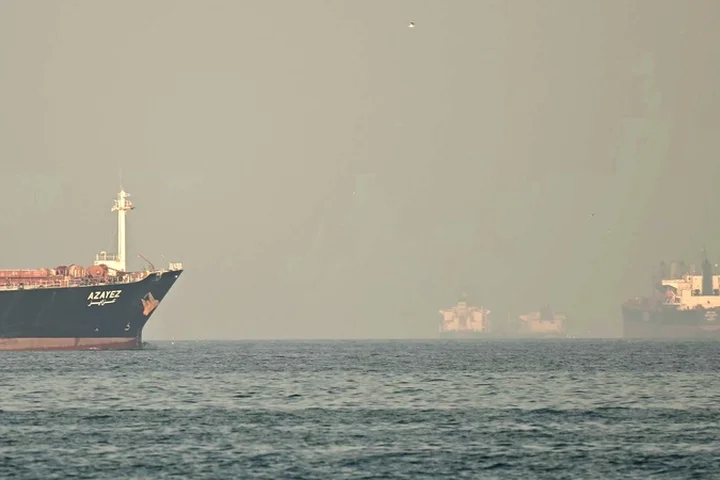
Oil prices were poised for their biggest weekly declines since last June despite today's modest gains on the back of fresh concerns over supplies from Saudi Arabia and flows through the Strait of Hormuz.
Brent crude futures rose 56 cents, or 0.58%, to $96.48 a barrel this morning.
West Texas Intermediate futures were up 65 cents, or 0.66%, at $98.52.
Both contracts have lost about 11-12% this week after Iran and the US agreed on Tuesday to a two-week ceasefire brokered by Pakistan.
However, fighting has continued and the flow of oil through the Strait of Hormuz remains heavily restricted, keeping futures prices near $100 a barrel and pushing prices in the physical market to record highs.
Traffic through the Strait of Hormuz remained less than 10% of normal volumes as Tehran asserted its control by warning ships to keep to its territorial waters.
"The Strait of Hormuz remains effectively constrained and operation of the global oil system is far from normal," said Saxo Bank analyst Ole Hansen, adding that futures markets have priced in a partial normalisation but the physical market is reflecting acute scarcity.
Iran wants to charge fees for ships to pass through the strait under a peace deal, a Tehran official told Reuters on April 7.
Western leaders and the UN's shipping agency have pushed back on the idea.
The crucial artery for oil and gas flows has been effectively shut down by the conflict, which began on February 28 when the US and Israel launched airstrikes on Iran.
Prices rose today after Saudi state news agency SPA reported yesterday that attacks on Saudi energy facilities have cut the kingdom's oil production capacity by about 600,000 barrels per day and reduced its East-West Pipeline throughput by about 700,000 bpd.
About 50 infrastructure assets in the Gulf have been damaged by drone and missile strikes over nearly six weeks since the conflict started, with approximately 2.4 million bpd of oil refining capacity taken offline, investment bank JPMorgan said.
Prices pared back some gains today after Lebanon said it intends to take part in a meeting with US and Israeli representatives in Washington next week to discuss and announce a ceasefire in the parallel war waged by Israel against Iran's Hezbollah allies in the country.
Related Stories


Source: This article was originally published by RTÉ News
Read Full Original Article →
Comments (0)
No comments yet. Be the first to comment!
Leave a Comment