
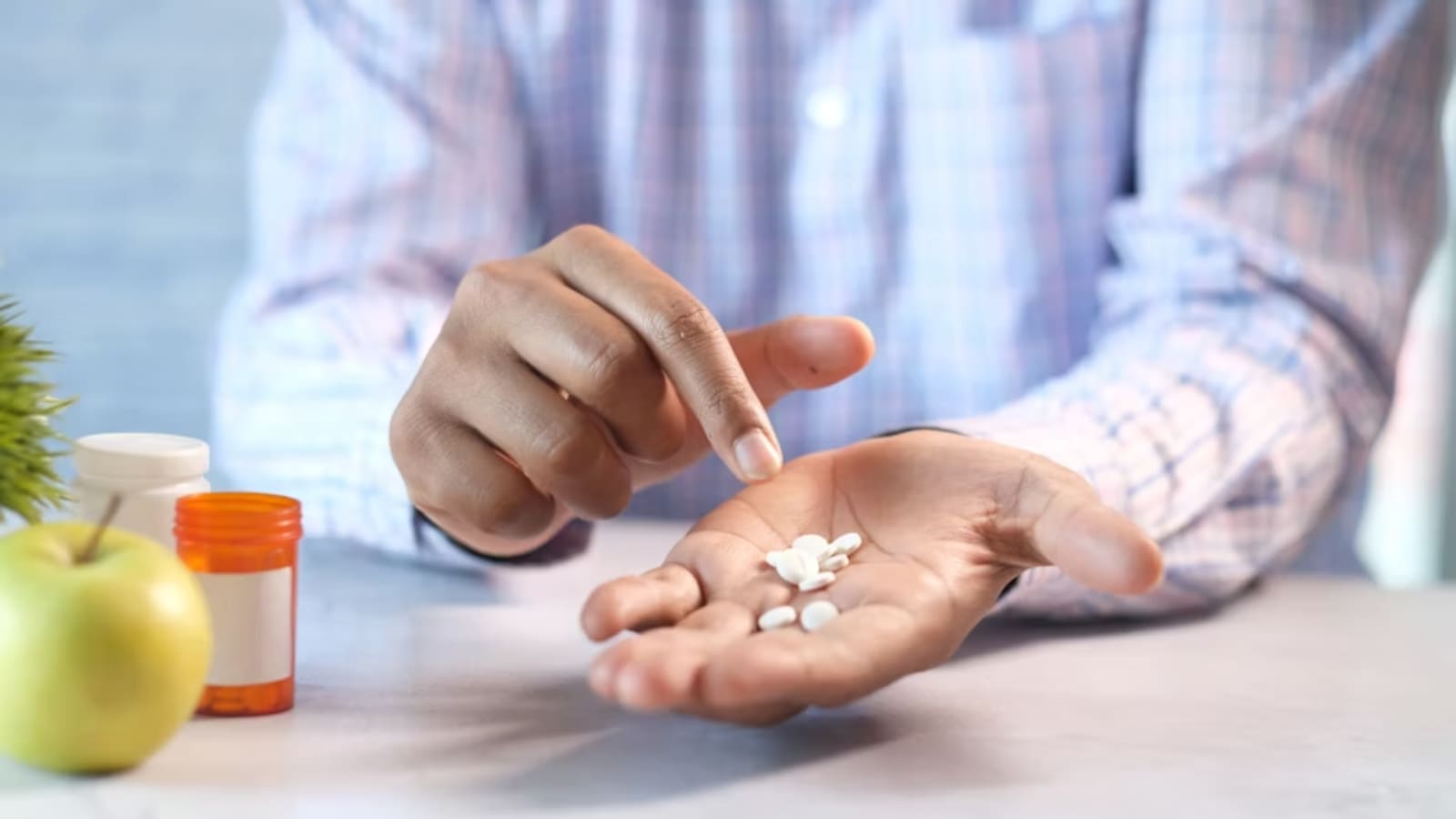
The curbs on supply of LPG and petrochemicals in view of the ongoing West Asia conflict have impacted the pharmaceutical and medical device industry, affecting the manufacturing of even the most common medicines like paracetamol and products such as gloves and syringes.
Industry bodies and think tanks have written to the Commerce Ministry, Petroleum and Natural Gas Ministry and the department of pharmaceuticals under the Ministry of Chemicals and Fertilisers, seeking exemptions such as the ones seen during the Covid pandemic — allowing manufacturing to continue considering them to be essential commodities.
Earlier this week, the Commerce Ministry called a meeting with industry representatives to assess their reliance on LPG and look for alternatives, according to persons in the know of the matter
The Indian Pharmaceutical Association, Indian Drug Manufacturers Association and the Federation of Pharma Entrepreneurs have submitted their representations to the ministries urging that there should be no disruption or rationing of LPG and PNG supply to the pharmaceutical industry.
Any disruption would immediately impact the manufacturing of critical medicines for the country as well as the global market, considering the gases are used for several critical processes in drug manufacturing.
An industry expert, who wished to remain anonymous, said, “You need LPG for several manufacturing processes such as boilers, granulation, sterilisation among others.
Most MSMEs — which constitute a large chunk of the industry — completely depend on LPG or PNG, whereas bigger companies may have provisions to use electricity for some of it.”
These disruptions, according to the expert, are likely to hit manufacturing immediately.
The impact on the market, however, is likely to be visible within a couple of months.
The expert said, “Most companies have a stock for 15 to 30 days, with the bigger companies maintaining stocks for three months, sometimes six.
But if manufacturing doesn’t continue, the effect is likely to be visible in a couple of months.”
Petrochemicals needed for medicines
The government order to curtail supply of certain petrochemicals in favour of increased production for household gas supply has also hit the production of several key medicines and medical equipment.
The most urgent of this shortage being that of refinery grade propylene — needed for the production of pharmacopoeia-grade Isopropyl Alcohol (IPA), which is needed for coating in several commonly used medicines.
The Reliance Industries refinery in Jamnagar, which provides the refinery grade propylene, has already implemented the government order, cutting off most IPA manufacturers.
The possibility of import is also unlikely from a Singaporean company as it has invoked a force majeure on propylene supply.
Around 200 manufacturers will have to stop production in the next seven to 10 days, latest by the end of the month, after they exhaust their stored supply, according to a representation to the pharmaceutical department by Centre for Domestic Economy Policy Research (CDEP).
“The challenge with pharmaceutical grade IPA is that it cannot really be imported because of its susceptibility to getting contaminated.
And the LPG gain with this measure is not worth stopping production of critical medicines.
Diverting all the propylene needed for IPA production will only add 0.36% to the national monthly LPG demand but it will lead to complete shutdown of IPA manufacturing and consequently disrupt production of drugs in at least 14 therapeutic categories listed in the National List of Essential Medicines,” said Dr Jaijit Bhattacharya, president, CDEP.
The organisation also pointed out that disruption in the supply of benzene — and consequently other materials whose synthesis depends on it — affected the manufacturing of several active pharmaceutical ingredients, including the common fever medicine paracetamol.
Propylene and benzene are needed for several medical products, including gloves, PPE kits and syringes.
“The manufacturing of these items will also be impacted if the petrochemicals do not become available,” according to another source.
Anonna Dutt is a Principal Correspondent who writes primarily on health at the Indian Express.
She reports on myriad topics ranging from the growing burden of non-communicable diseases such as diabetes and hypertension to the problems with pervasive infectious conditions.
She reported on the government’s management of the Covid-19 pandemic and closely followed the vaccination programme.
Her stories have resulted in the city government investing in high-end tests for the poor and acknowledging errors in their official reports.
Dutt also takes a keen interest in the country’s space programme and has written on key missions like Chandrayaan 2 and 3, Aditya L1, and Gaganyaan.
She was among the first batch of eleven media fellows with RBM Partnership to End Malaria.
She was also selected to participate in the short-term programme on early childhood reporting at Columbia University’s Dart Centre.
Dutt has a Bachelor’s Degree from the Symbiosis Institute of Media and Communication, Pune and a PG Diploma from the Asian College of Journalism, Chennai.
She started her reporting career with the Hindustan Times.
When not at work, she tries to appease the Duolingo owl with her French skills and sometimes takes to the dance floor....
Read More
Related Stories



Source: This article was originally published by The Indian Express
Read Full Original Article →
Comments (0)
No comments yet. Be the first to comment!
Leave a Comment