
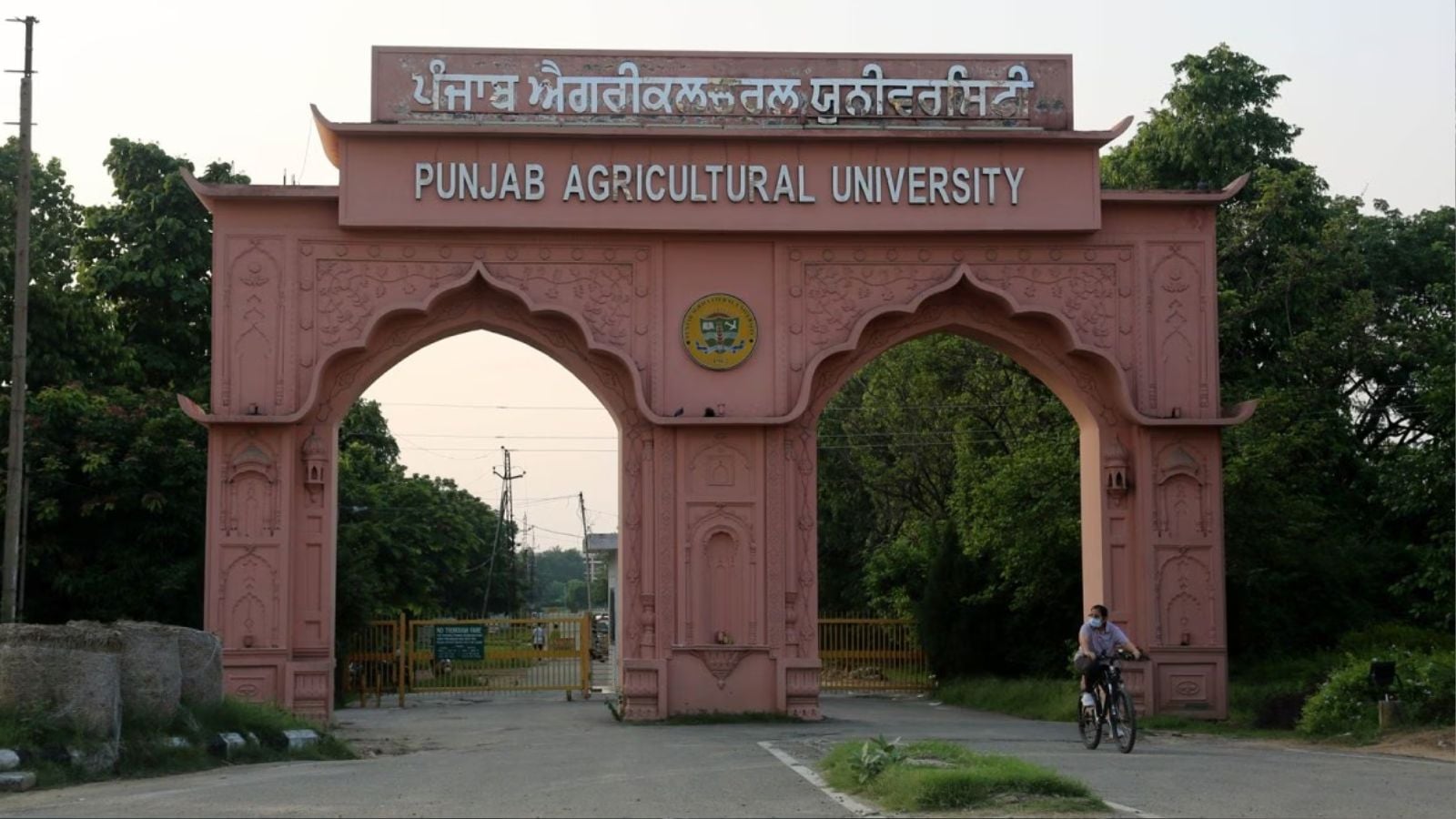
Punjab Agricultural University (PAU) recommended several improved vegetable, fruit and field crop varieties to farmers to encourage diversification towards high-value crops during the Sauni (Kharif) Kisan Mela organised at the Regional Research Station (RRS), Ballowal Saunkhri in SBS Nagar district.
PAU Vice-Chancellor Dr Satbir Singh Gosal inaugurated the mela organised under the theme “Kheti Vibhinnata Apnao, Wadmulla Vataavaran Bachao” (Adopt Agricultural Diversification, Protect the Environment).
Addressing the gathering, Gosal emphasised the urgent need for crop diversification to conserve depleting groundwater resources and highlighted the potential of ginger cultivation in the Kandi belt.
During the technical session, PAU scientists highlighted improved vegetable varieties suitable for the Kandi region.
The hybrid muskmelon variety MH-56 was recommended for its yield of about 90-95 quintals per acre and higher sweetness.
For protected cultivation, hybrid brinjal variety PCDH-1, a seedless type yielding about 40 quintals per acre, was suggested for net polyhouses.
Farmers were also advised to grow Kali Tori varieties PSHG-1 and PSHG-2 and pumpkin varieties PBOG-5 and PBOG-18, which can produce up to 230 quintals per acre.
Among peas, varieties Matar Ageta-8, yielding 30-35 quintals per acre, and Punjab-90, capable of producing around 60 quintals per acre and suitable for mechanical harvesting, were recommended.
In fruit crops, improved peach (Aaru) varieties and Punjab Nectrine-2, about 12-13 per cent sweeter than other varieties, were suggested.
Farmers were also encouraged to raise nursery plants of loquat and dragon fruit for diversification.
PAU scientists also shared recommendations for field crops, including paddy variety PR 133, a medium-duration cultivar resistant to bacterial leaf blight and producing high-quality rice.
For cotton growers, the desi cotton variety PBD-88 with a yield potential of about 28 quintals per hectare and tolerance to drought-related diseases and whitefly was recommended, along with the maize hybrid NK-7328.
Production technologies such as raising paddy nurseries on beds, using wheat straw mulch in direct-seeded rice, and adopting cropping systems like maize – pigeon pea – wheat were also discussed.
Scientists also shared guidance on managing rice dwarf disease and the judicious use of fertilisers and pesticides in crops such as potato, sugarcane and amla.
Member of Parliament from Shri Anandpur Sahib Malwinder Singh Kang, who was the chief guest, praised PAU’s role in addressing challenges such as declining water resources, soil fertility and shrinking cultivation areas.
Stay updated with the latest -Click here to follow us on Instagram
Related Stories



Source: This article was originally published by The Indian Express
Read Full Original Article →
Comments (0)
No comments yet. Be the first to comment!
Leave a Comment