
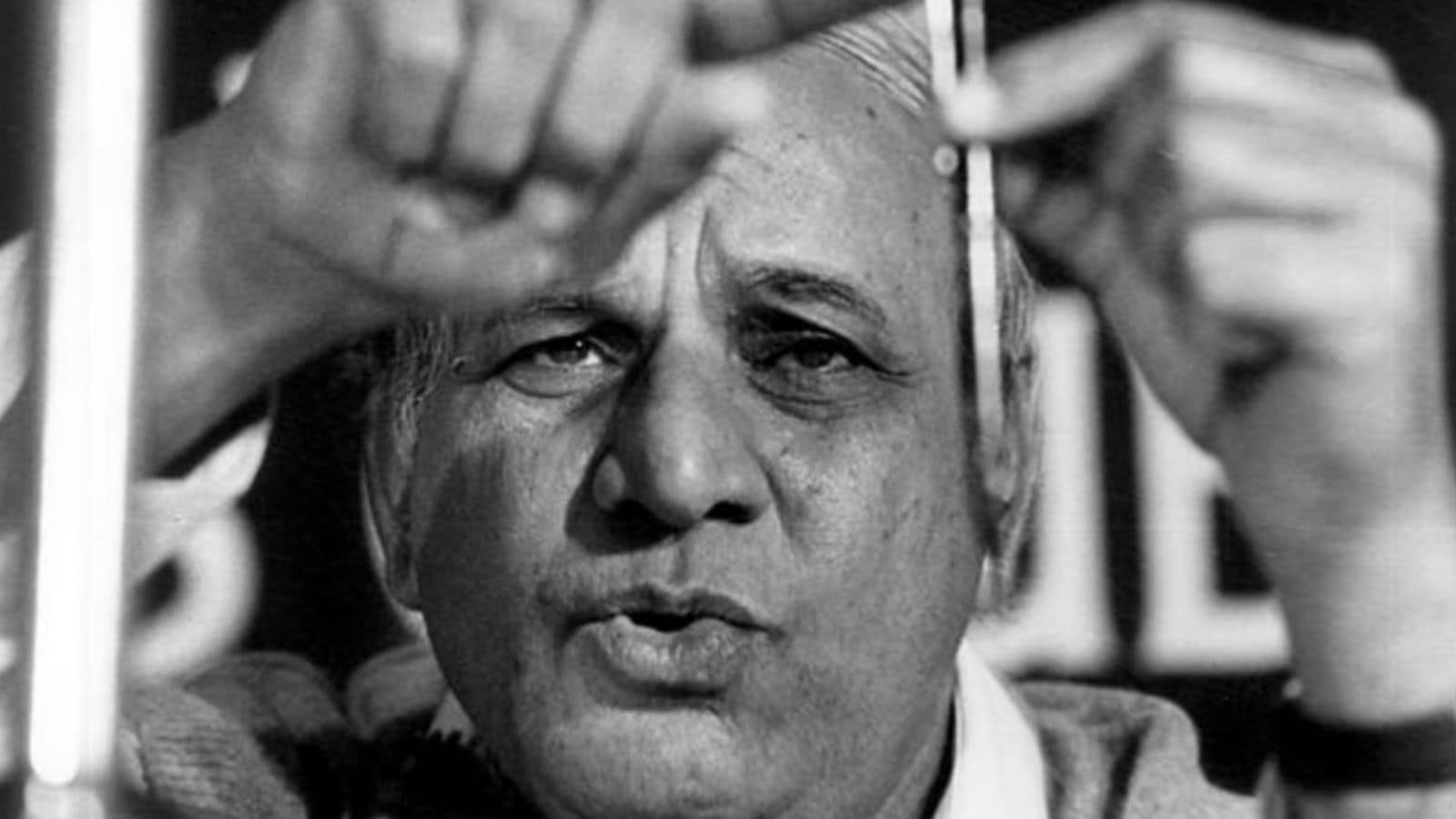
Leader of Opposition Rahul Gandhi demanded a Bharat Ratna be conferred on Dalit icon Kanshi Ram posthumously, and said it would recognise his immense contribution to our nation.
Writing a letter to Prime Minister Narendra Modi on Sunday, which was also the Bahujan Samaj Party founder’s birth anniversary, Gandhi said the Bahujan leader had transformed the nature of Indian politics by raising political awareness among Bahujans and the poor and strengthening democratic participation.
“As we commemorate the birth anniversary of Kanshi Ram ji today and reflect on his legacy and contributions, I write with a request that he be awarded the Bharat Ratna posthumously,” Gandhi wrote.
His letter comes two days after a resolution demanding the honour for the Bahujan leader was passed in his presence at a programme inLucknow.
Arguing that Kanshi Ram “transformed the nature of Indian politics”, Gandhi wrote that “through his movements, he raised political awareness among the Bahujan and the poor”.
“He reminded them that their vote, voice, and representation are important, and that this country belongs to everyone equally.
Because of his efforts, many people who had never considered entering public life began to see politics as a means to achieve justice and equality,” said Gandhi.
Gandhi also said the Indian Constitution promises equality, dignity and participation for every citizen, and that Kanshi Ram devoted his life to making these ideals meaningful for those at the bottom of society.
“In doing so, he strengthened the foundations of Indian democracy and made our political system more representative and just,” the letter said.
The Congress leader noted that Dalit intellectuals, leaders and activists have for years demanded that Kanshi Ram be conferred India’s highest civilian award.
While speaking at a ‘Samvidhan Sammelan’ in Lucknow Friday, Gandhi said had India’s first Prime Minister Jawaharlal Nehru been alive he would have made Kanshi Ram chief minister of Uttar Pradesh.
“Recently, I attended a programme in Lucknow where this demand was reiterated strongly by the leaders and participants present, reflecting a widespread sentiment,” Gandhi wrote in his letter to Modi.
“Conferring the Bharat Ratna on him posthumously would recognise his immense contribution to our nation.
It would honour the aspirations of millions of people who continue to see him as a symbol of empowerment and hope,” Gandhi wrote, adding that he hoped the government would seriously consider the request.
Over the last few days, asKanshi Ram’s birth anniversary approached, several parties — from the Congress to the Samajwadi Party (SP) to Dalit leader and Aazad Samaj Party (Kanshi Ram) Chandrashekhar Azad, and the Bahujan Samaj Party itself — sought to invoke the legacy of the leader, who is seen to have reshaped Dalit politics in North India.
With elections in Uttar Pradesh and Punjab next year, where Kanshi Ram’s followers form a sizeable chunk of the electorate, Congress leaders say Gandhi’s efforts to invoke Kanshi Ram’s legacy is part of a broader attempt by the party to reconnect with the Dalit support base it once commanded before the rise of the BSP.
The party’s increased outreach to the Dalit community in UP is also an attempt by it to increase its bargaining power with the Samajwadi Party before the 2027 polls.
With the BSP being left to the margins of UP’s politics, the Congress sees an opportunity in UP to seize the Dalit vote — which constitutes around 20% of the electorate in the state — and is in line with Gandhi’s nation-wide push to reach out to Dalit, Tribal and Backward community votes.
Gandhi has been advocating for a nation-wide caste census, which happens to have been Kanshi Ram’s political philosophy, rooted in his slogan, “Jiski jitni sankhya bhaari, uski utni hissedari (greater the population, greater the share)”.
The Congress’s pitch around the “threat to the Constitution” before the 2024 Lok Sabha elections had helped the party get votes from the Dalit community in UP and across the country.
Maulshree Seth is an Assistant Editor with The Indian Express, based in Lucknow.
With over 15 years of experience in mainstream journalism, she has built a formidable reputation for her on-ground reporting across Uttar Pradesh.
Her expertise spans a wide array of critical beats, including state politics, governance, the judiciary, and rural development.
Authoritativeness Maulshree’s work is characterized by depth and historical context.
Her coverage of high-stakes state elections and landmark judicial rulings has established her as an authoritative voice on the intersection of law and politics in Northern India.
She is frequently recognized for her ability to gain access to primary sources and for her nuanced understanding of the socio-economic factors that drive the world's most populous sub-national entity.
Trustworthiness & Ethical Journalism Her reporting is rooted in rigorous fact-checking and a steadfast dedication to neutral, unbiased storytelling.
By prioritizing field-based verification—often traveling to the most remote corners of the state—she ensures that her readers receive a truthful and comprehensive view of events....
Read More
Asad Rehman is with the national bureau of The Indian Express and covers politics and policy focusing on religious minorities in India.
A journalist for over eight years, Rehman moved to this role after covering Uttar Pradesh for five years for The Indian Express.
During his time in Uttar Pradesh, he covered politics, crime, health, and human rights among other issues.
He did extensive ground reports and covered the protests against the new citizenship law during which many were killed in the state.
During the Covid pandemic, he did extensive ground reporting on the migration of workers from the metropolitan cities to villages in Uttar Pradesh.
He has also covered some landmark litigations, including the Babri Masjid-Ram temple case and the ongoing Gyanvapi-Kashi Vishwanath temple dispute.
Prior to that, he worked on The Indian Express national desk for three years where he was a copy editor.
Rehman studied at La Martiniere, Lucknow and then went on to do a bachelor's degree in History from Ramjas College, Delhi University.
He also has a Masters degree from the AJK Mass Communication Research Centre, Jamia Millia Islamia....
Read More
Stay updated with the latest -Click here to follow us on Instagram
Related Stories


Source: This article was originally published by The Indian Express
Read Full Original Article →
Comments (0)
No comments yet. Be the first to comment!
Leave a Comment