
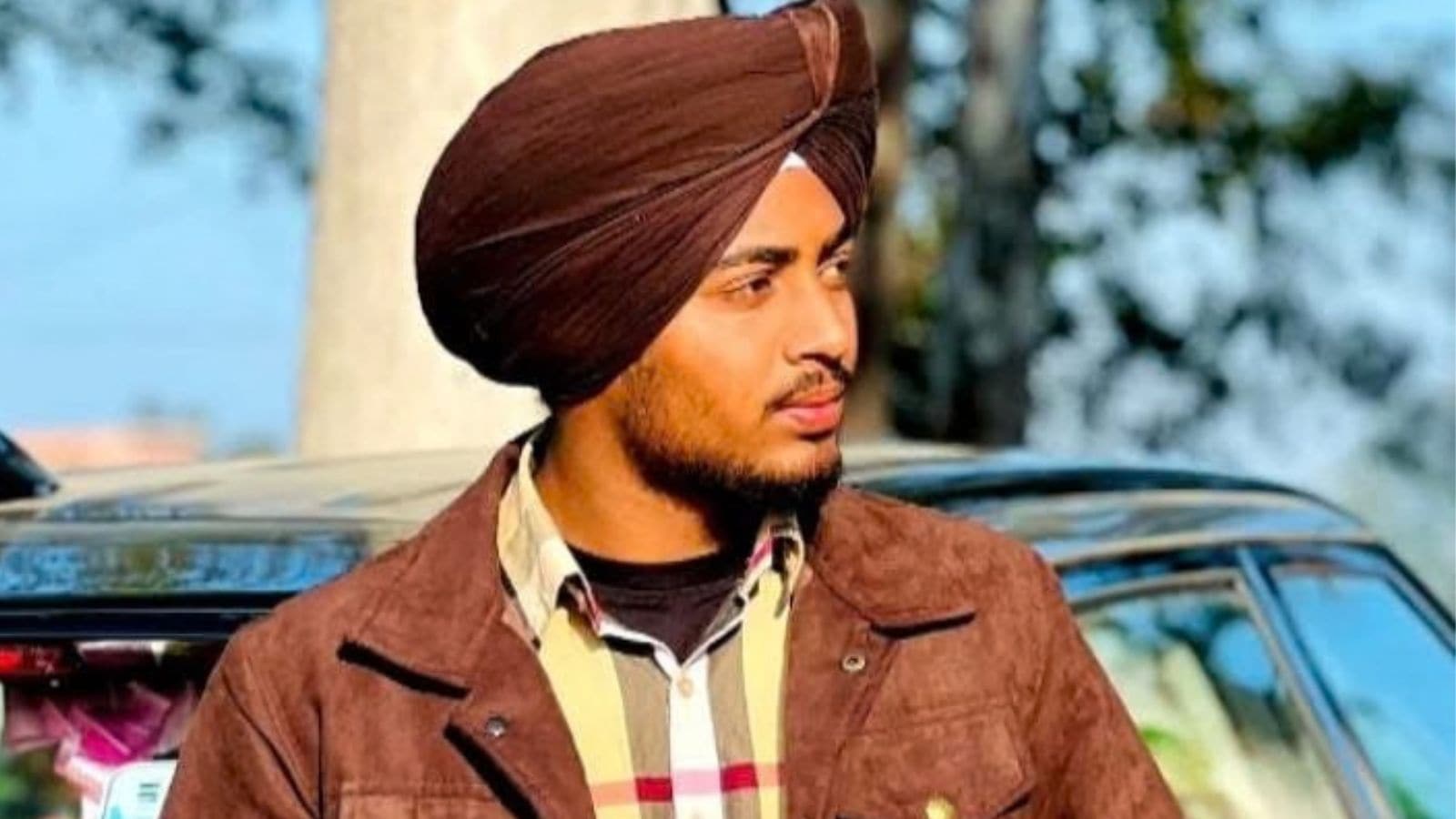
The post-mortem report of 19-year-old Ranjit Singh, killed in an alleged police encounter in Punjab’s Gurdaspur on February 25, has revealed that bullets entered the chest from the front and exited from the back.
Ranjit Singh, a resident of Adhian village in Gurdaspur, was one of the three youths named by the Punjab police in the sensational February 22 double murder of an assistant sub-inspector and a Home Guard jawan at a joint checkpost in Adhian village, barely 2 km from the Pakistan border.
He had been working inDelhiand had returned home on a fortnight’s leave when he was killed.
The Punjab Police claimed that he had been recruited by Pakistan’s ISI and paid to murder ASI Gurnam Singh and India Reserve Battalion Constable Ashok Kumar.
What the post-mortem report says
The post-mortem examination was conducted on March 3 — six to seven days after Ranjit’s death on February 25 — at Civil Hospital, Gurdaspur, by a three-doctor panel comprising Dr Sukhdeep Singh (Medical Officer), Dr Satinder Pal Singh (Associate Professor), and Dr Harsh Kumar (Senior Resident).
The examination was conducted in the presence of Magistrate Surekha Dadwal, CJM Gurdaspur, as well as Ranjit’s mother, Sukhjinder Kaur, and uncle, Chandanjit Singh.
The report documents six injuries on the body.
The two most significant findings are the firearm entry wounds — both located on the front of the chest.
The first entry wound is on the right side of the chest and the second on the left side, near the left nipple.
Both bullets passed through the chest from front to back in a downward direction, exiting through the back.
The right lung and left lung were both lacerated, with approximately one litre and 800 ml of blood, respectively, collected in the two pleural cavities, stated the report.
The doctors concluded that these four firearm injuries — two entry wounds at the front and two exit wounds at the back — were sufficient to cause death in the ordinary course of nature.
Beyond the gunshot wounds, the report also documents a blunt force head injury — a diffuse reddish swelling on the left side of the head with underlying blood collection beneath the scalp and a black left eye.
This injury has no corresponding firearm wound, raising the question of when and how it was sustained.
The report further notes a dry, hard abrasion on the right leg, 12 cm above the ankle, which forensic convention suggests was sustained some time before death.
No defensive injuries were recorded on the hands, arms, or wrists.
Swabs were collected from the body for Gunshot Residue (GSR) analysis and sent to the Forensic Science Laboratory, Mohali.
The results are still awaited.
GSR analysis will be critical in establishing whether Ranjit Singh fired a weapon at any point.
‘Shooter positioned higher than the deceased’
Meanwhile, human Rights activist Sarabjit Singh Verka, who is closely associated with the case, said, “Both entry wounds are on the front of the body, with the bullet tracks directed downward from front to back.
This means both shots were fired from the front, with the shooter positioned higher than the deceased at the time of firing”.
Verka pointed out that the report records the body arriving at Civil Hospital at 7.30 am on February 25, while the official time of death is recorded as 7.45 am — 15 minutes later.
“The family has filed an application seeking CCTV footage from the hospital for that day to check if he was brought alive or dead.
It is almost impossible to survive two bullet wounds to the chest and survive that long.
The report records no injuries, burns, or marks on the hands or fingers of the deceased — findings that would typically be expected on someone who had fired a weapon,” said Verka.
‘Doctors haven’t mentioned all injuries on body’
Verka said that, “We are not satisfied with the postmortem report as doctors have not mentioned all the injuries on the body figure in the report.
Also, the injury signs on the neck recorded in videography are not explained in the report.
What caused the injury in the brain?
Why were the hands of Ranjit Singh in his pockets?
There are many questions.
We will raise these questions in court,” said Verka.
Kamaldeep Singh Brar is a Principal Correspondent at The Indian Express, primarily covering Amritsar and the Majha region of Punjab.
He is one of the publication's key reporters for stories involving the Akal Takht, the Shiromani Gurdwara Parbandhak Committee (SGPC), and the sensitive socio-political issues of the border districts.
Core Beats & Specializations
Religious & Panthic Affairs: He has deep expertise in the internal workings of the Akal Takht and SGPC, frequently reporting on religious sentences (Tankhah), Panthic politics, and the influence of Sikh institutions.
National Security & Crime: His reporting covers cross-border drug smuggling, drone activities from Pakistan, and the activities of radical groups.
Regional Politics: He is the primary correspondent for the Majha belt, covering elections and political shifts in Amritsar, Tarn Taran, and Gurdaspur.
Recent Notable Articles (Late 2025)
His work in late 2025 has been centered on judicial developments, local body elections, and religious controversies:
1.
Religious Politics & Akal Takht
"Akal Takht pronounces religious sentences against former Jathedar Giani Gurbachan Singh" (Dec 8, 2025): Covering the historic decision to hold the former Jathedar guilty for granting a pardon to Dera Sacha Sauda chief Gurmeet Ram Rahim in 2015.
"YouTube suspends SGPC’s channel for a week over video on 1984 Army action" (Nov 20, 2025): Reporting on the digital friction between global tech platforms and Sikh religious bodies.
"As AAP govt grants Amritsar holy tag, a look at its fraught demand" (Nov 28, 2025): An analytical piece on the long-standing demand for declaring Amritsar a "holy city" and its political implications.
2.
Crime & National Security
"Mostly Khalistanis on Amritpal’s hit list: Punjab govt to High Court" (Dec 16, 2025): Reporting on the state government's claims regarding jailed MP Amritpal Singh orchestrating activity from prison.
"Punjab man with links to Pakistan’s ISI handlers killed in encounter" (Nov 20, 2025): Detailing a police operation in Amritsar involving "newly refurbished" firearms likely sent from across the border.
"15 schools in Amritsar get bomb threat emails; police launch probe" (Dec 12, 2025): Covering the panic and police response to mass threats against educational institutions.
3.
Political Analysis & Elections
"AAP wins 12 of 15 zones in SAD stronghold Majitha" (Dec 19, 2025): Highlighting a significant shift in the 2025 rural elections where the Akali Dal lost its grip on a traditional fortress.
"Tarn Taran bypoll: woman faces threats after complaining to CM Mann about drug menace" (Nov 9, 2025): A ground report on the personal risks faced by citizens speaking out against the illegal drug trade in border villages.
"AAP wins Tarn Taran bypoll, but SAD finds silver lining" (Nov 14, 2025): Analyzing the 2025 assembly by-election results and the surprising performance of Independents backed by radical factions.
4.
Human Interest
"Two couples and a baby: Punjab drug addiction tragedy has new victims" (Nov 20, 2025): A tragic investigative piece about parents selling an infant to fund their addiction.
"Kashmiri women artisans debut at Amritsar’s PITEX" (Dec 8, 2025): A feature on financial independence initiatives for rural women at the Punjab International Trade Expo.
Signature Beat
Kamaldeep is known for his nuanced understanding of border dynamics.
His reporting often highlights the "drug crisis in the underprivileged localities" (like Muradpur in Tarn Taran, Nov 9, 2025), providing a voice to marginalized communities affected by addiction and administrative neglect.
X (Twitter): @kamalsbrar...
Read More
Stay updated with the latest -Click here to follow us on Instagram
Related Stories



Source: This article was originally published by The Indian Express
Read Full Original Article →
Comments (0)
No comments yet. Be the first to comment!
Leave a Comment