
Steady picture for inflation does not yet reflect impact of US-Israel war against Iran on cost of living in UK
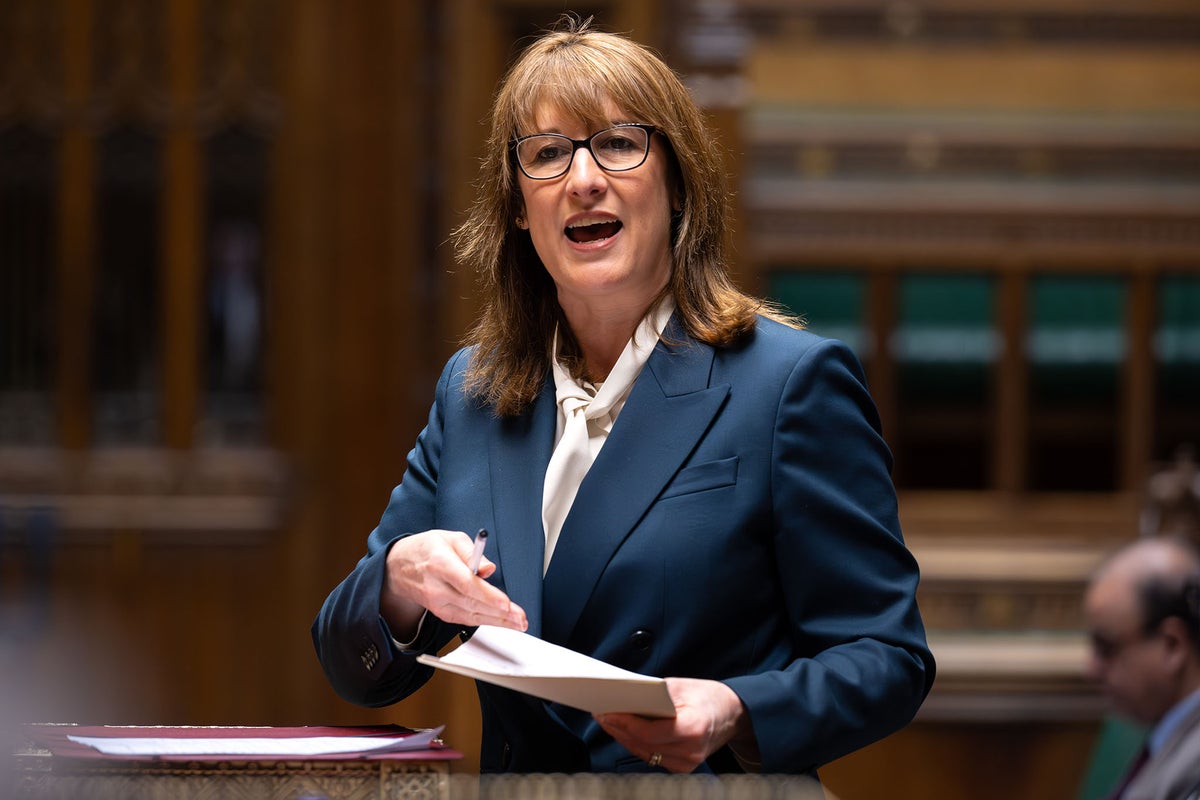
Rachel Reeves has warned the conflict in the Middle East may cause ”significant” economic challenges for Britons as prices are set to soar.
UK inflation remained steady at 3 per cent on Wednesday – but this does not yet reflect the impact of the US-Israel war against Iran on the cost of living in the UK .
Economists said inflation is now set to accelerate over the coming months as the impact of the conflict feeds into the price of goods.
Oil and gas prices have jumped in recent weeks, and other goods prices are set to be affected by disruption to shipping through the Strait of Hormuz.
The chancellor promised on Tuesday that contingency planning is underway for energy bill support “for those who need it most”.
Following the release of the latest inflation figures, she insisted the “right economic plan” is in place amid an “uncertain world”.
Reeves warns Middle East conflict may cause 'significant' economic challenges in UK
Chancellor Rachel Reeves has said the economic challenges from the Iran war may be “significant” and contingency planning is under way for energy bill support “for those who need it most”.
The crisis in the Middle East has pushed up oil and gas prices, hitting motorists as they fill up at the pumps and potentially pushing up domestic energy bills later this year.
Ms Reeves said work is under way on targeted help for households when the current energy price cap expires at the end of June and global prices could push up domestic bills.
She told MPs on Tuesday: “Contingency planning is taking place for every eventuality so that we can keep costs down for everyone and provide support for those who need it most, acting within our iron-clad fiscal rules to keep inflation and interest rates as low as possible.
“This is not a war that we started, nor is it a war that we joined… but it is a war that will have an impact on our country.
“The challenges may be significant but I promise to do what is right and fair, being responsive in a changing world and responsible in the national interest.”
Outlook for inflation has ‘radically changed’ with Bank of England ‘clearly worried’
An economist has warned the outlook for inflation has “radically changed” since the Middle East conflict broke out and the Bank of England is “clearly worried” about what this now means for the index.
Luke Bartholomew, deputy chief economist at Aberdeen, said: “Today’s inflation report is little more than a relic of the world before the Iran conflict.
While the February report was broadly in line with expectations, and confirms that inflation was on a path back to 2 per cent, the outlook for inflation has radically changed.
“Yesterday’s PMIs offered the first sign of how much the energy price shock is changing the inflation outlook, and this will start to show up in next month’s data, before building later this year when the energy price cap moves higher.
“Clearly, the Bank of England is worried about inflation.
And while the underlying weakness of the economy means rate cuts would be painful, policymakers may decide they do not have the luxury of ‘looking through’ higher inflation, especially if the conflict does last longer than the market currently seems to be hoping.”
Looking beyond inflation – morning update on oil and markets
Business and money editor Karl Matchett reports:
In looking beyond inflation figures to the numbers that might affect it in future, oil is the big one right now of course.
This morning, Brent crude is at $95.60 – a drop of around 4 per cent compared to yesterday.
It is still very high, but sticking below that $100 marker might be psychologically important as much as an indication that gently trending downwards suggests an end to the Iran war might be in sight, in the eyes of some.
Elsewhere, the closely-watched 2-year UK bond yield has dropped back a little from its spike on Monday – that is what led to the headlines you will have seen around 'three or four interest rate hikes this year'.
It is certainly not all the way back to where it was, and has actually inched back higher than yesterday – but regardless, few economists actually foresee the Bank of England raising rates at this moment.
It does mean government borrowing costs are higher though, a concern to Rachel Reeves and co.
Shortly, stock markets around Europe will open and we will see what the day brings – overnight in Asia most indices were higher, including Japan, South Korea and India.
Food and Drink Federation raises concerns latest inflation figures are 'calm before the storm'
The Food and Drink Federation (FDF) has warned the latest inflation figures could represent the “calm before the storm”.
Karen Betts, chief executive of the FDF, said: “While food inflation fell slightly in February 2026, I am concerned that this is the calm before the storm.
The longer the conflict in the Middle East goes on, the bigger its impact will be on food prices.
With food and drink price inflation already running above historical averages, heightened energy, maritime fuel and fertiliser costs will put further pressure on prices.
“Food and drink is an essential, bought by every household, every week.
While it can take several months for cost rises to filter fully through to shop shelves, the cost of the Iran conflict will be felt by shoppers this year.
If government is serious about tackling the rising cost of living, it must provide our industry with at least the same support as other manufacturing sectors.
The current energy shock is yet another structural shock our industry will have to absorb, on top of the Ukraine war, the costs of realigning food law with the EU once again, and new regulatory burdens."
Analysis: The concern is this inflation data is already somewhat out of date
Consumer Prices Index (CPI) inflation was already at 3 per cent for the 12 months to January, which marked the lowest level of inflation in the UK since March 2025.
However, despite the overall level remaining the same for the year to February, there were some differences in individual areas of goods and services.
The 12-month cost of clothing and footwear rose to its highest point since March of last year, while food and non-alcoholic beverages slowed compared to January.
Ironically, so too did transport costs – that is set for a sharp reversal though, when the next set of data comes through.
That is the overall concern here – that this data is already somewhat out of date.
We already know that fuel has increased, we've been told how bad it could get with energy prices and there is a whole raft of additional areas that still face unknown price hikes depending on how long the situation goes on.
That goes for everything from the very much day-to-day, such as grocery bills, to items that on first glance seem to have very little connection, like buying new mobile phones or your chances of getting a raise at work.
That is how impactful, ultimately, something like this can be through the chain of oil supply, energy bills, inflation, interest rates, wage growth and the wider economy.
Full story: Inflation stays at 3% but Iran war set to send prices spiralling
Starmer to face MPs as planning to reopen Strait of Hormuz continues
The prime minister will face MPs on Wednesday as the UK works to develop a plan to reopen the vital Strait of Hormuz.
Sir Keir Starmer will undergo his weekly grilling at Prime Minister’s Questions a day after Rachel Reeves warned the economic impact of the Iran war could be “significant”.
Central to that impact is Tehran’s effective blockade of the Strait of Hormuz, a vital shipping route for oil and gas.
The blockade has seen oil prices soar above 100 US dollars a barrel and prompted Shell boss Wael Sawan to warn at an industry conference on Tuesday that Europe could face oil shortages by next month if it remains closed.
Donald Trump has repeatedly demanded other nations take a role in opening the strait, and the UK is currently leading efforts to formulate a plan to achieve that objective.
In a call with Saudi Arabia’s crown prince Mohammed bin Salman on Tuesday night, Sir Keir said the UK was “now working with partners on what a viable plan could look like to ensure the flow of goods through the key maritime route”.
However, any deployment of naval vessels is understood to be unlikely to take place while Iran continues to threaten ships in the strait with missiles and drones.
For its part, Iran insists the strait remains open to ships not aligned with nations it deems hostile.
ONS chief's statement: 'Annual inflation unchanged in February after last month's slowdown'
ONS chief economist Grant Fitzner said: “After last month’s slowdown, annual inflation was unchanged in February as various price movements offset each other.
“The largest upwards driver was the price of clothing, which rose this month but fell a year ago.
“This was offset by falls in petrol costs, with prices collected before the start of the conflict in the Middle East and subsequent rise in crude oil prices.”
Iran war set to send prices spiralling in UK
The steady picture for inflation does not yet reflect the impact of the conflict in the Middle East on the cost of living in the UK, with the first attacks taking place at the very end of February.
Oil and gas prices have jumped in recent weeks due to the conflict and other goods prices could also be affected by disruption to shipping through the Strait of Hormuz.
With the Iran war still upending the flow of oil around the world, the UK is set to see prices head back upwards.
Oil has risen from around $70 before the war starting to just shy of $100 now, though has spiked well above that milestone on more than one occasion over the past few weeks.
That is expected to feed through into not just higher energy bills but also transport and production costs going up, pushing inflation back in the opposite direction.
Prior to the war starting, the Bank of England had signalled inflation was on course to reach the government-set target of 2 per cent by spring.
Meanwhile, the Institute of Grocery Distribution (IGD) has warned food inflation could surpass 8 per cent by June of this year, if “disruption to global energy markets persists”.
Chancellor insists 'right economic plan' in place amid 'uncertain world'
The chancellor has insisted the “right economic plan” is in place amid an “uncertain world”.
Rachel Reeves said: “In an uncertain world we have the right economic plan, taking a responsive and responsible approach to supporting working people in the national interest.
“We’re taking £150 off energy bills and providing targeted support for those facing higher heating oil costs.
“We’re also acting to protect people from unfair price rises if they occur, bring down food prices at the till, and cut red tape to boost long-term energy security – building a stronger, more secure economy.”
Join thought-provoking conversations, follow other Independent readers and see their replies
Related Stories



Source: This article was originally published by The Independent
Read Full Original Article →
Comments (0)
No comments yet. Be the first to comment!
Leave a Comment