

American companies that end up getting up to $165 billion or so in refundsfor PresidentDonald Trump's newly voided "reciprocal" tariffs should give that money to their workers as bonuses or raises,U.S.
Trade Representative Jamieson Greersaid Friday.
Greer's suggestion, made in an interview on CNBC's "Squawk Box,"comes as hundreds of American importers, includingCostcoandFedEx, havefiled lawsuitsseekingrefunds for the money they paid in tariffsthat wereruled illegal by the Supreme Court in a 6-3 vote on Feb.
20.
AU.S.
Customs and Border Protectionofficial told aCourt of International Trade judge in a filing on Thursdaythat development of an online system that will process refund claim requests is 70% completed.
While that system remains under development, the judge's prior order that CPB begin refunding the tariffs with interest remains suspended.
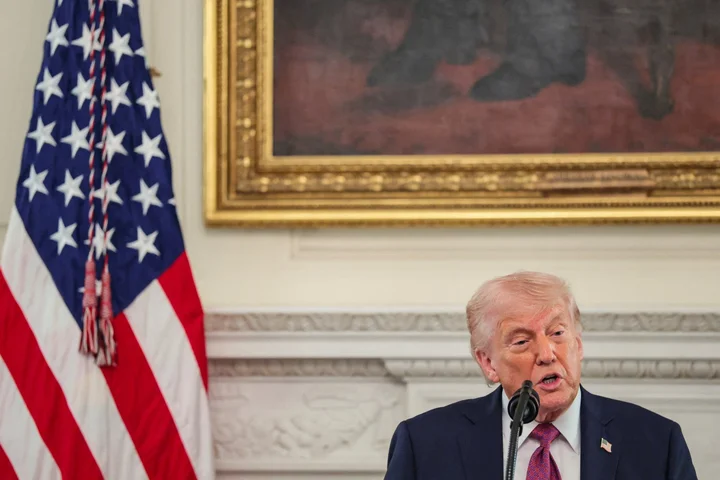
"If I were these companies, and somehow they get this windfall, the most important thing and the smartest thing they should do is give it as bonuses to their workers," Greer told CNBC on Friday.
"The whole reason the president imposed these tariffs was to try to reshore, affect our massive imbalance in trade that we've experienced over many years because of China, Vietnam, the EU and others," Greer said.
"If the companies are going to get this windfall, they should pass it along to their workers as a bonus or a raise, because that's the purpose of the program.
It's always been the purpose of the program.
And the American people should get it, and the company should give it to their workers."
The Supreme Court, in its ruling last month, said Trump did not have the authority he invoked under the International Emergency Economic Powers Act, or IEEPA, to impose tariffs on imports from most countries in the world.
Treasury Secretary Scott Bessenthas said he expected tariffs to return by August to the levels seen before the Supreme Court decision, as the Trump administration uses a range of other authorities to impose duties on imports.
On Wednesday and Thursday,Greer's office opened trade investigationsinto a total of nearly 80 countries and economies underSection 301of the Trade Act of 1974.
Among those under investigation are China, Japan, India, Mexico and the European Union.
Section 301 allows the United States to tariff imports from nations found to have engaged in unfair trade practices.
Trump invoked Section 122 of the Trade Actto impose global tariffs of 10% on imports.
Those tariffs last for only 150 days unless Congress approves an extension.
Got a confidential news tip?
We want to hear from you.
Get this delivered to your inbox, and more info about our products and services.
©2026Versant Media, LLC.
All Rights Reserved.
A Versant Media Company.
Data is a real-time snapshot *Data is delayed at least 15 minutes.
Global Business and Financial News, Stock Quotes, and Market Data
and Analysis.
Related Stories

Source: This article was originally published by CNBC
Read Full Original Article →
Comments (0)
No comments yet. Be the first to comment!
Leave a Comment