
The way that vast amounts of fake news about London is posted online is been revealed in new research from City Hall.
“Poisonous” narratives about “ London in decline” have increased by between 150-200 per cent in the last two years, while those making negative claims about migrants in the capital have increased by more than 350 per cent.
A report, from the Greater London Authority’s City Intelligence unit, said there were “clear signs of coordinated and inauthentic activity” that included “high volume, repetitive posting and the use of AI-generated content to produce and amplify misleading, emotive or unverified claims”.
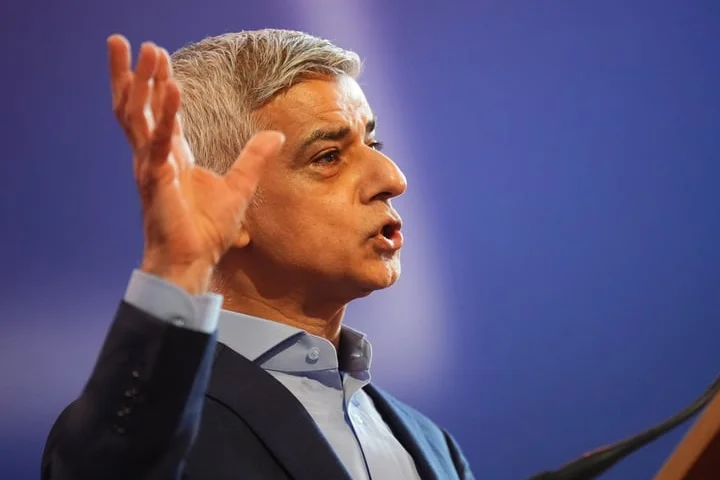
London mayor Sir Sadiq Khan, in a speech on Thursday evening at King’s College, said the capital was facing a “dark blizzard of disinformation” as he called on social media companies and the Government to do more.
It analysed posts between March 2024 and March 2026 on mainstream platforms - such as X, Facebook, Instagram, Reddit and YouTube - and fringe platforms such as Telegram, VK and Weibo.
Lies about London that were spread online
Three monetised X accounts repeated the same false claim about London New Year’s Eve celebrations within four hours on 1 January 2026, generating more than 155,000 views.
A network of 32 Facebook pages (one per London borough) was repurposed on 17 May 2024 from Ulez-focused pages to appear as local activist groups.
A Vietnam-based Facebook network, with a combined following of around 1.25 million, targeted London and the mayor, framing the city as a site of governance failure and housing injustices.
A Sri Lanka-based content farm produced monetised AI-generated posts.
A Nigeria-based cluster impersonated UK media outlets.
Many posts focused on public disorder, violence against women and girls, and phone snatching and knife crime.
Others mentioned false claims about “no go zones”, Sharia law or “Islamisation”.
According to the City Hall research, extreme-Right wing (ERW) and UK ERW groups, Russian-aligned or “Pro-Kremlin” groups, Beijing-aligned groups and MAGA (Make America Great Again)-aligned groups were “assessed as active in promoting or amplifying misleading content related to London”.
In the sample studied, analysts found that extreme Right-wing networks were responsible for 39 percent of activity driving narratives about knife crime in the capital.
Last year, London’s homicide rate fell to a record low on a per capita basis, though there has been a spate of killings in the last fortnight.
AI tools were making it quicker and easier to create and spread fake news, while the use of chat groups and distrust of the mainstream media added to the problem – and the difficulty of correcting falsehoods, the report said.
Sir Sadiq said that disinformation had become an industry – “an outrage economy… which allows people to profit from poison”.
He said: “As extremists erode trust in our city and its institutions, it gets easier and easier for them to twist online anger into offline violence.”
The GLA City Intelligence’s report said that misinformation and disinformation were now part of the UK’s “chronic risk landscape” and posed risks to marginalised groups, democratic functioning, the economy and national security.
The report said: “London is particularly exposed given its global visibility, diversity and political prominence.
“Evidence shows that mis/disinformation can reduce trust in institutions, contribute to tensions between communities, and place pressures on public health and frontline services.
“Misleading narratives can also shape international perceptions of the capital, with potential economic impacts (eg, on investment and tourism).”
Disinformation refers to the deliberate creation and sharing of false or manipulated information, intended to mislead or cause harm.
Misinformation refers to the unintentional spread of false or misleading information.
According to the report, concerns about safety and stability in London are now a recurring feature of some international engagement.
Laura Citron, chief executive of London & Partners, the tourism and investment agency, said: “Last year’s narrative about rising crime in London showed how false information, largely circulating on social media, can shape perceptions of the city.
“During that period, we saw an increase in safety related enquiries from our international audiences.”
Sadiq Khan spends £30m on late-night youth clubs in bid to prevent repeat of Clapham disorder
14-year-old shot dead in Woolwich is pictured for the first time as three teenagers arrested
In letters to the heads of major social media platforms, the mayor called for greater transparency and an end to "opaque algorithms designed to maximise engagement at any cost".
Meta has said it works "constantly working to disrupt" coordinated inauthentic behaviour.
It highlighted that it had removed over 200 networks globally and does not allow fake accounts or the artificial boosting of content.
A spokesperson told the BBC the company was reviewing the research and was in contact with the mayor's office.
Telegram told the broadcaster it supports "peaceful free speech" and calls to violence were “forbidden and are removed whenever discovered”.
Social media firms are required under the Online Safety Act to remove illegal misinformation and Ofcom had strong powers to act if platforms fail to comply, a Department for Science, Innovation and Technology spokesperson said.
Related Stories

Source: This article was originally published by Evening Standard
Read Full Original Article →
Comments (0)
No comments yet. Be the first to comment!
Leave a Comment