
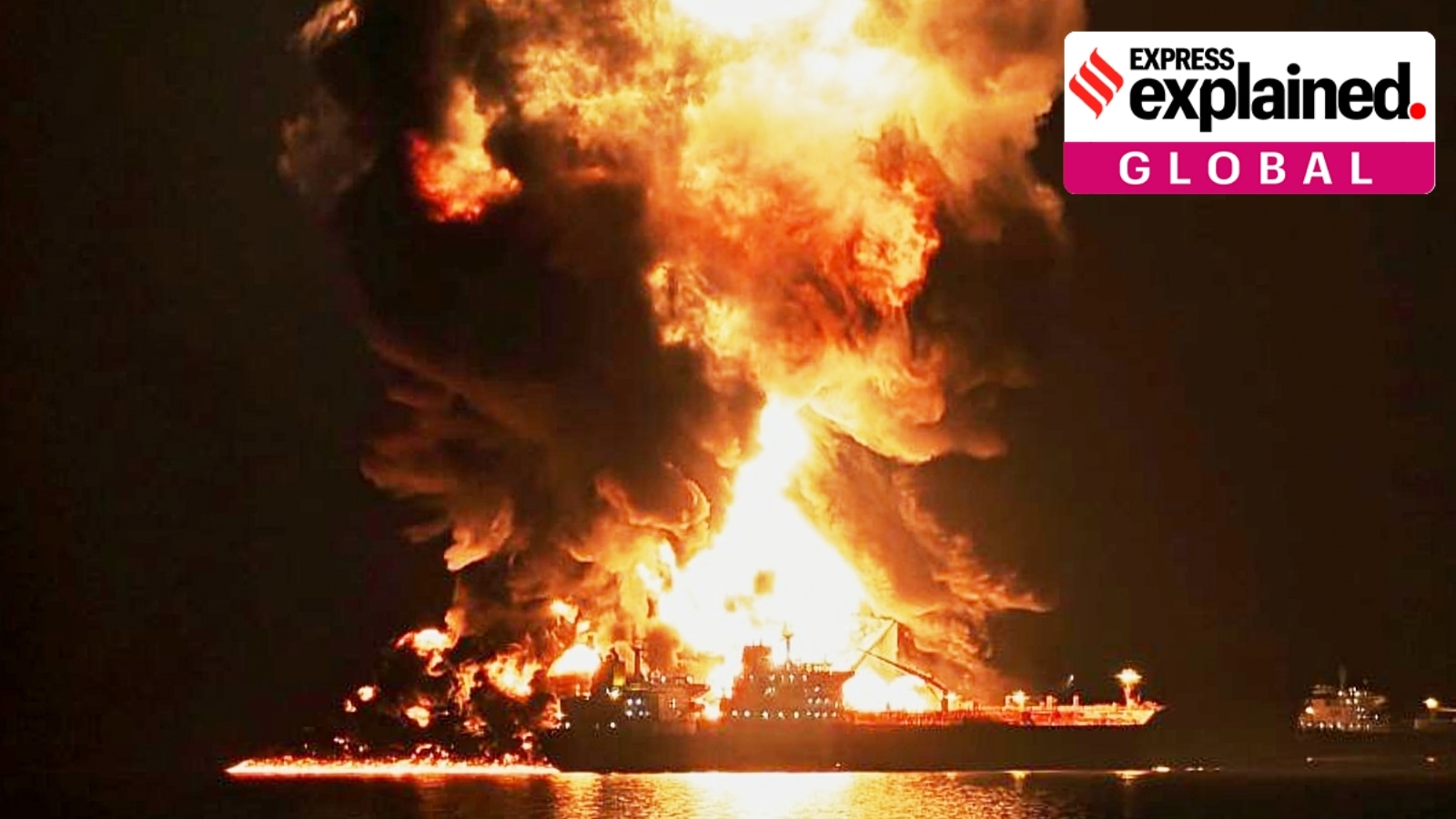
This war has no winners, except maybe one that is not even fighting in it.
As Iran effectively chokes off theStrait of Hormuzin its escalating response to the US and Israel’s attacks,Russia is making a windfallon the back of the increased demand for crude oil as well as its spiralling prices.
According to aFinancial Timesreport, Moscow is estimated to have earned around $150 million a day in extra oil revenue since the effective closure of the narrow transit passage for a fifth of the world’s energy supplies.
Till a few days back, millions of barrels of Russian crude were languishing on the high seas with few willing buyers, thanks to US efforts to starve Moscow of oil revenues that could fund the Ukraine war.
Now, America’s own war against Iran has taken precedence.
After issuing a30-day “waiver” to Indianrefiners last week for buying Russian crude that is already sitting in tankers on water, the US has now extended it to other countries too.
“To increase the global reach of existing supply, @USTreasury is providing a temporary authorization to permit countries to purchase Russian oil currently stranded at sea.
This narrowly tailored, short-term measure applies only to oil already in transit and will not provide significant financial benefit to the Russian government, which derives the majority of its energy revenue from taxes assessed at the point of extraction,” US Treasury Secretary Scott Bessent posted on social media platform X early Friday (India time).
We explain the significance of this move, and what it means for India.
First, how will the waiver on buying Russian oil work?
The easing of sanctions, which will be in place for a month, means that the US will have no problem if countries import Russian crude that was loaded on or before 12:01 am eastern daylight time, or 9:31 am India time, on March 12.
While this move could help other countries secure some oil supplies, it is likely to help NewDelhias well as the India-specific waiver was for oil loaded on tankers before March 5.
According to industry watchers, the US could be forced to ease sanctions further on Russian crude if the disruption to the global oil supplies via the Strait of Hormuz persists for an extended period.
Experts see these moves from Washington as part ofDonald Trump’s effort to prevent a further and sustained spike in international oil prices — and the consequent rise in domestic fuel prices in the US — given the midterm elections later this year.
“So far, there is only one winner in this war — Russia.
It steadily undermines Ukraine’s position by flouting international law.
It gains new resources to finance its war against Ukraine as energy prices rise,” European Council President António Costa said earlier this week at the European Union Ambassadors Conference in Brussels.
And while Bessent said in his X post on Friday that the temporary easing of sanctions on Russian oil on water will not provide significant financial benefit to Moscow, he reportedly said earlier that the financial gains that Russia would accrue would be “unfortunate”.
How this is a windfall for Russia
The West Asia war has led to a spurt in crude oil prices, which remain extremely volatile.
At noon on Friday, Benchmark Brent crude was around $100 per barrel, almost 37% higher than nearly $73 per barrel just before the US and Israel launched military strikes on Iran on February 28.
So, like any other oil producer who is able to sell crude in this market, Russia gains from higher oil prices.
But that’s not all.
The price of Russian crude grades — mainly its flagship Urals — have appreciated more given the availability in an otherwise tight market and buyer interest.
Notably, Russian oil used to trade at a discount to crude benchmarks.
The discounts have now largely disappeared, and there are reports of Russian oil even selling at a premium in some cases.
Add to that the fact that the easing of sanctions by the US has made large volumes of Russian crude kosher for international buyers that were earlier staying away to avoid sanctions from Washington.
Around 130 million barrels of Russian crude was estimated to be on ships on water as of early March.
Some of those volumes would have already been gobbled up by India and China, the biggest buyers of seaborne Russian crude.
Additional volumes are likely to have come on water over the past couple of weeks as well.
With the US now keen on getting the global supply gap bridged partly by Russian oil, the offtake of Moscow’s crude is expected to accelerate.
“From a market perspective, Russian crude currently acts as one of the best supply hedges for Asian refiners.
With persistent risks around the Strait of Hormuz and Middle East supply routes, refiners in Asia are naturally looking for barrels that are more secure and priced competitively, and Russian crude fits that role,” said Sumit Ritolia, Lead Research Analyst, Refining & Modeling at Kpler, a commodity market analytics firm.
All this means that Russia could rake in billions of dollars more due to the West Asia conflict.
And the longer the West Asian oil flows remain heavily constricted, the better it would be for Moscow, whoseBudgetdeficit has been expanding due to high expenditure on the Ukraine war even as the Russian economy is slowing down.
Indian refiners lap up Russian barrels
With the conflict — now in its 14th day — effectively suspending maritime traffic through the critical chokepoint of the Strait of Hormuz, India’s Russian oil imports have shot up.
In the first 11 days of the month, India imported 1.5 million barrels per day (bpd) of Russian oil, up around 50% from February levels, as per ship tracking data from Kpler.
These volumes could rise if regular West Asian oil volumes through the strait are not resumed soon.
Around 2.5-2.7 million bpd of India’s crude imports — accounting for around half of the country’s total oil imports — have crossed the Strait of Hormuz in recent months; the longer-term average is around 40%.
This oil is mainly from Iraq, Saudi Arabia, the UAE and Kuwait.
India had, in recent months, significantly cut down its oil imports from Russia, its largest oil supplier, amid trade negotiations with the US, as Washington made it a prerequisite for scrapping its 25% additional penal tariff.
In February, India had imported just over one million bpd of Russian crude, almost half of the 2025 peak of over 2 million bpd.
Loadings of Russian crude for Indian ports, which averaged 1.7 million bpd last year, was just 0.7 million bpd in February.
India is the world’s third-largest consumer of crude oil and depends on imports to meet over 88% of its oil requirement.
But now the American administration is counting on India to buy more Russian oil.
On Wednesday, US Ambassador to India Sergio Gor said: “India has been a great partner in maintaining stable oil prices around the world.
The United States recognizes ongoing purchases of Russian oil are a part of this effort.
India is one of the largest consumers and refiners of oil and it is essential for the United States and India to work hand in hand for market stability for Americans and Indians.”
A senior government official had said last week that India never stopped buying Russian crude, and the so-called waiver for India appeared to be more for Washington’s own legal and procedural requirements considering the Trump administration had imposed sanctions on various suppliers and tankers involved in Russian oil trade, and had also issued executive orders pertaining to penal tariffs against India.
Even before the so-called waiver was announced, there were signs that India was increasing its intake of Russian crude by tapping cargoes already on water.
According to Ritolia, at this stage the latest US move doesn’t immediately change much for Russian oil buyers like India, China, and Turkey, as they were already buying Moscow’s oil despite the Western sanctions framework.
However, there is now bound to be increased competition for Russian barrels, which would have an impact on prices.
In the prevailing circumstances, however, price is no consideration with India prioritising energy security.
“What it can do for existing buyers is to remove the layer of uncertainty.
Also, this gives an upper handle to the seller and premiums on Russian barrels would be trending higher.
What the waiver does is reduce some of the uncertainty around the trade and could potentially open the door for other Asian buyers who had stayed away (from Russian oil) since 2022,” he said.
Sukalp Sharma is a Deputy Associate Editor with The Indian Express and writes on a host of subjects and sectors, notably energy and aviation.
He has over 16 years of experience in journalism with a body of work spanning areas like politics, development, equity markets, corporates, trade, and economic policy.
He considers himself an above-average photographer, which goes well with his love for travel....
Read More
Related Stories


Source: This article was originally published by The Indian Express
Read Full Original Article →
Comments (0)
No comments yet. Be the first to comment!
Leave a Comment