
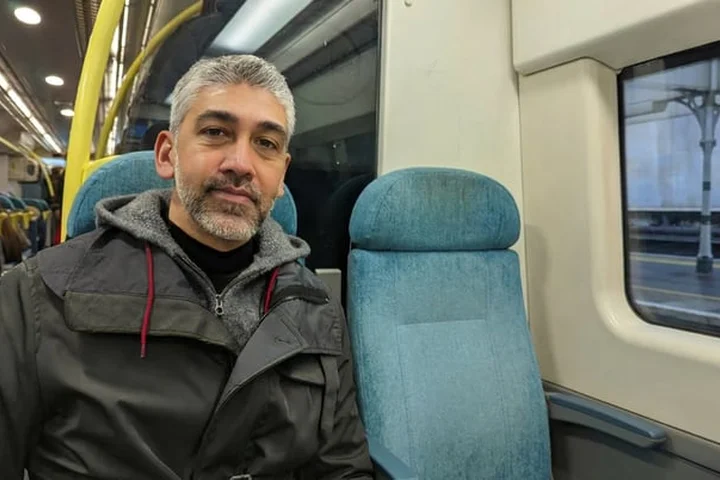
The turning point came in a hospital bed.
Salam Raja had spent nearly a decade working in a dry-cleaning business in south London .
It was steady work, but far removed from the creative life he had imagined growing up.
Then a serious workplace accident forced him to stop.
Lying in hospital, he made a decision.
“I knew something had to change.”
“I don’t know how it happened exactly — just a twist of fate.
But it was through film.
That’s how I unexpectedly became a surgical supplier.”
Now 46, Raja is focused on something bigger.
His London-based startup, NeuraBrand, builds AI -powered avatars designed to act as brand ambassadors.
These avatars guide customers through digital experiences, replacing traditional film crews, spokespeople or influencers.
“The lightbulb moment came when I saw how people were starting to engage with digital characters — virtual influencers, avatars in games.
I realised that AI avatars weren’t just gimmicks.
They were the future of brand storytelling.”
The company launched in January 2026 and has a team of five.
It already works with clients across the luxury travel and logistics sectors.
Creating a custom avatar costs between £3,000 and just over £10,000, while ongoing video subscriptions range from £1,500 to £2,500.
“When you compare this to traditional film crews, equipment, and teams, it’s incredibly cost-effective — while still delivering cinematic quality.”
Raja says the business is already profitable and is aiming for a revenue run rate of £250,000 by the end of the year.
NeuraBrand operates on a hybrid model, with a commercial team in London and developers based overseas.
He says this keeps costs under control while maintaining a presence in a key global hub.
“London is thriving for AI.
Global companies are setting up research hubs here, investment is accelerating.
It’s a fantastic place to grow.”
The startup has also developed its own in-house avatar, Raven Cinemore.
Originally conceived as an AI film reviewer, she is now being adapted for fashion campaigns.
Raja sees her as a clear example of the technology’s potential.
Garbage cover The Cure at London gig for the Teenage Cancer Trust
Half a million gather in London for biggest anti-far right demo, say organisers
Thousands gather in capital for biggest ever anti-far right demo, say organisers
Discover a hidden island paradise in the Indian Ocean
“She’s become a symbol of what’s possible — a brand ambassador who connects with audiences and opens new worlds.”
There is still scepticism about whether AI avatars can truly feel authentic.
Raja says that is something he takes seriously.
“We focus on giving each avatar a real personality, a narrative, so they feel human — like a companion, not just a graphic.”
He is realistic about the scale of what he is trying to build.
But after a career shaped by unexpected turns, he appears comfortable with uncertainty.
“In five years, AI avatars will be a staple — just like a website or a social media channel.
Every brand will have an avatar guiding their customers through a unique digital journey.”
He still comes into the office at weekends.
“Building these avatars, crafting those worlds — this is the life I want to create.
That’s what keeps me inspired.”
Related Stories


Source: This article was originally published by Evening Standard
Read Full Original Article →
Comments (0)
No comments yet. Be the first to comment!
Leave a Comment