
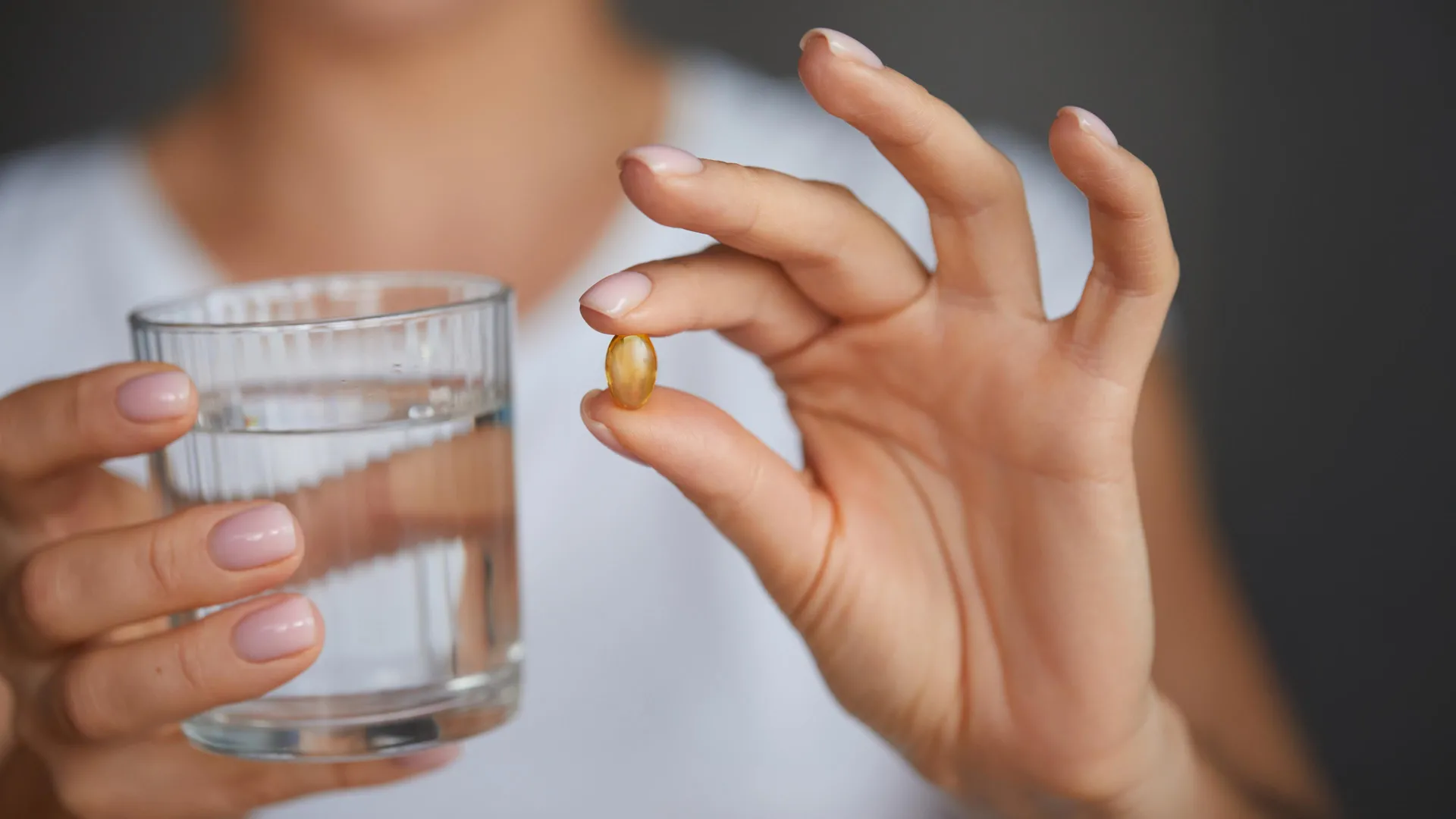
A major trial found that high-dose vitamin D did not make COVID-19 infections less severe.
However, researchers spotted a possible signal that the supplement may reduce the chances of developing long COVID.
Credit: Shutterstock
Findings from a large study led by Mass General Brigham suggest scientists should continue investigating whether vitamin D supplements could influence long COVID.
The research showed that taking high doses of vitamin D3 did not make COVID-19 infections less severe, but it may have a possible connection to long COVID outcomes.
The results were published in The Journal of Nutrition.
"There's been tremendous interest in whether vitamin D supplements can be of benefit in COVID, and this is one of the largest and most rigorous randomized trials on the subject," said senior author JoAnn Manson, MD, DrPH, of the Mass General Brigham Department of Medicine.
"While we didn't find that high-dose vitamin D reduced COVID severity or hospitalizations, we observed a promising signal for long COVID that merits additional research."
The VIVID Trial and Vitamin D Supplementation
Vitamin D is often linked to immune health, though studies examining its role in COVID-19 have produced mixed results.
To help clarify its potential benefits, researchers launched the Vitamin D for COVID-19 (VIVID) Trial.
The study evaluated whether high dose vitamin D3 supplementation could influence outcomes in people recently diagnosed with COVID-19 and in members of their households.
The trial included participants in both the United States and Mongolia.
In total, 1,747 adults who had recently tested positive for COVID-19 and 277 household contacts were randomly assigned to take either vitamin D3 or a placebo daily for four weeks.
The supplementation protocol used vitamin D3 (9,600 IU/day for two days followed by 3,200 IU/day).
The U.S.
portion of the trial ran from December 2020 through September 2022, while the Mongolia study took place from September 2021 to April 2022.
On average, participants began taking vitamin D supplements or placebo about three days after receiving their positive COVID-19 test.
Alongside Manson, lead authors Davaasambuu Ganmaa, Kaitlyn Cook and their colleagues used stratified randomization and statistical weighting to balance factors known to affect COVID-19 outcomes (including age, sex, body mass index, race/ethnicity and COVID-19 vaccination status) between the two groups.
No Improvement in COVID Severity or Transmission
Over the four week study period, the researchers found no meaningful difference between the vitamin D and placebo groups in terms of healthcare utilization or death.
Healthcare utilization included hospital stays, clinic visits either in person or virtual, and emergency room visits.
Symptom severity was also similar in both groups.
High dose vitamin D supplementation also did not lower the chance that household contacts would become infected with COVID-19.
Possible Signal for Reduced Long COVID Symptoms
When researchers analyzed participants who consistently followed the vitamin D regimen, they noticed a potential signal related to long COVID.
These individuals appeared somewhat less likely to report persistent symptoms eight weeks after infection compared with those who received placebo.
Among participants taking vitamin D, 21% reported at least one lingering symptom, compared with 25% in the placebo group.
The difference was considered borderline statistically significant.
"Long COVID, which can include symptoms of fatigue, shortness of breath, brain fog, other cognitive challenges and more, continues to significantly impact people's lives," said Manson.
"We hope to conduct further research in larger populations on whether long-term vitamin D supplementation reduces the risks and severity of long COVID."
Authorship: In addition to Manson and Ganmaa, Mass General Brigham authors include Allison Clar, Michael Rueschman, Aditi Hazra, Howard D.
Sesso, Valerie E.
Stone, Patricia Copeland and Georgina Friedenberg.
Additional authors include Cook, Polyna Khudyakov, Dorjbal Enkhjargal, Tsolmon Bilegtsaikhan, Kenneth H.
Mayer, Raji Balasubramanian, Douglas C.
Smith, Quanhong Lei, Todd Lee, Emily G.
McDonald, Tserenkhuu Enkhtsetseg, Erdenebaatar Sumiya, Yansanjav Narankhuu, Myagmarsuren Erdenetuya, Dalkh Tserendagva, Rikard Landberg, Niclas Roxhed and Susanne Rautiainen.
Funding: The study received anonymous foundation support and philanthropic support from Jon Sabes of Minneapolis, Minn.
The authors also acknowledge support from the Tishcon Corporation, which donated the vitamin D and placebo study capsules; Takeda; and Capitainer cards.
The authors have not declared a specific grant for this research from any funding agency in the public, commercial or nonprofit sectors.
Materials provided by Mass General Brigham .
Note: Content may be edited for style and length.
Researchers Have Uncovered a Missing Piece in Life’s Origin Story
The Genetics of Living Longer: Study Challenges Decades of Aging Research
Popular “Miracle” Supplement Linked to Birth Defects
Scientists Discover Ice Age Forests in the North Sea’s Sunken “Lost World”
Related Stories



Source: This article was originally published by Science Daily
Read Full Original Article →
Comments (0)
No comments yet. Be the first to comment!
Leave a Comment